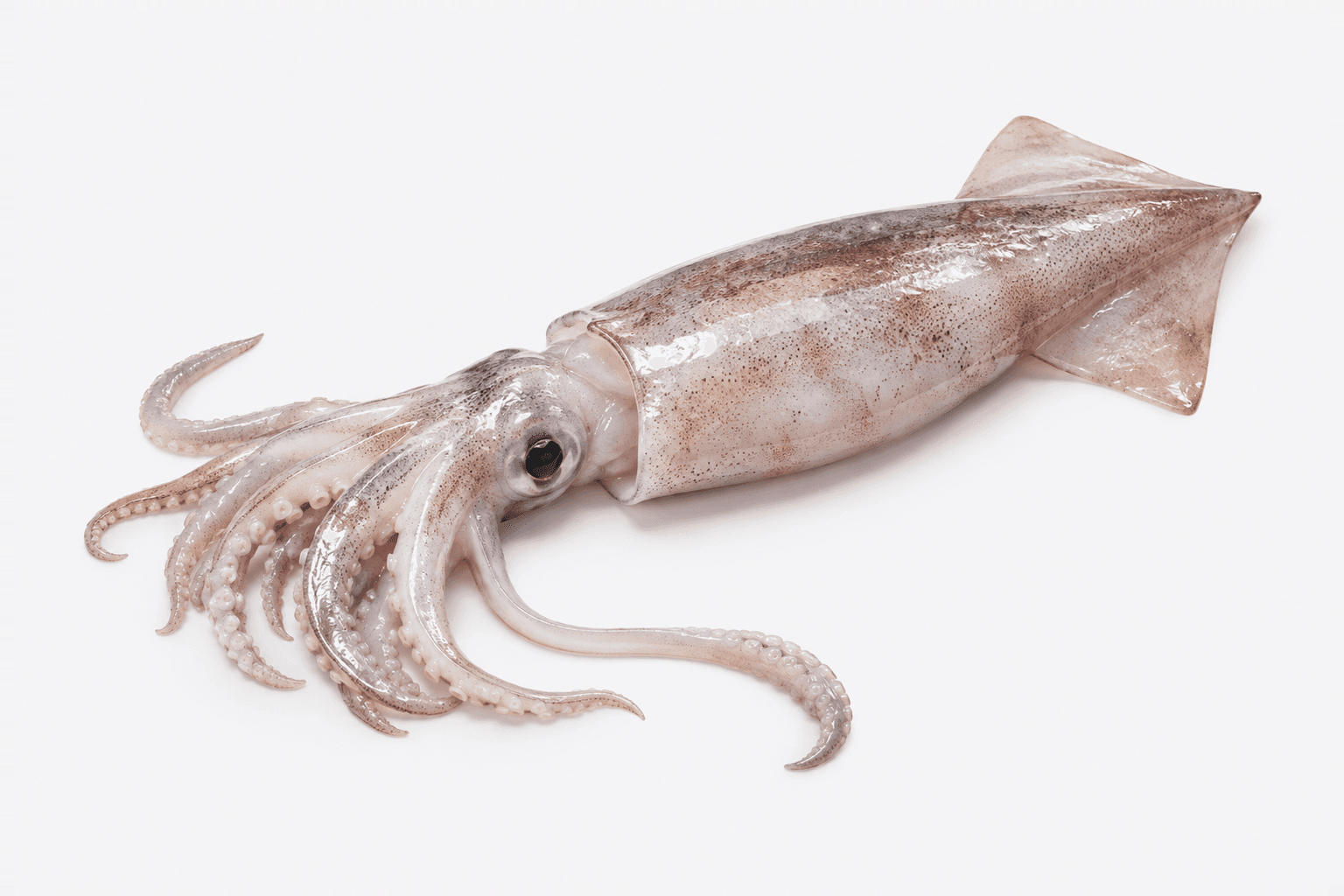
Seafood
Moderate evidenceSquid
Per 100 g it carries 15.6 g of protein and only 1.38 g of fat. Cholesterol is high at 233 mg — but in a shrimp trial, what mattered more was the rest of the meal.
Squid has to come out within two minutes. Past that it turns rubbery, and getting it tender again takes another half hour.
2 servings20 min
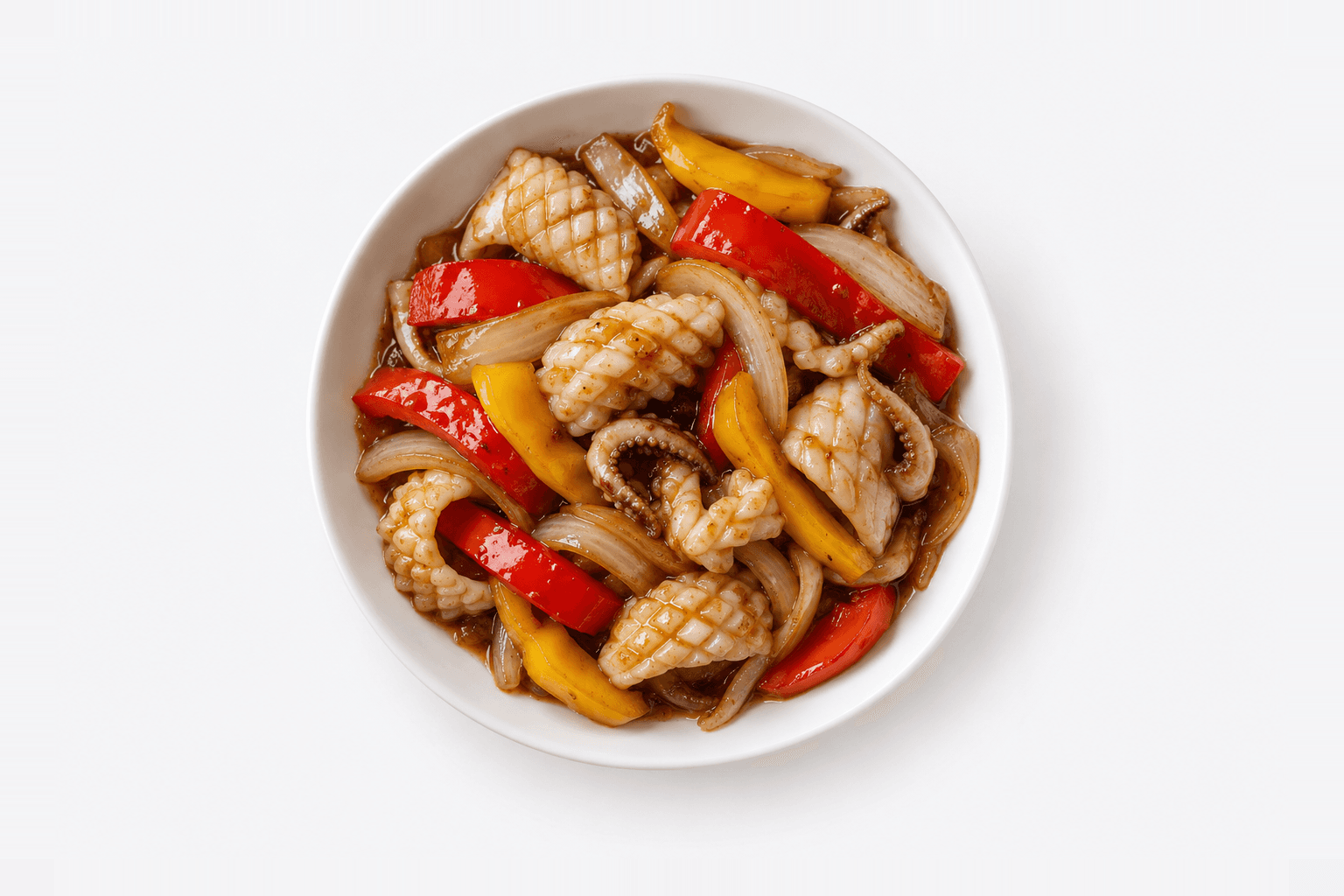
Split the squid body, remove the innards and peel the skin. Score the inside closely on the diagonal and cut into bite-size pieces.
Cut the peppers into wide strips and the onion along the grain. Slice the garlic.
Heat the pan thoroughly over high heat — until the oil just begins to shimmer and smoke.
Fry the garlic for 20 seconds, then add the onion and peppers and stir-fry for a minute. They should still be crisp.
Add the squid and stir-fry for 90 seconds to 2 minutes. When the scored pieces open up and start to curl, it is done.
Add the soy sauce, chilli flakes and pepper, toss for another 30 seconds and take it off the heat.
Squid turning rubbery runs on a timetable. Under two minutes it is tender; after that the muscle proteins contract and toughen it; past thirty minutes the collagen dissolves and it softens again. There is no middle ground. Stir-fry means the first window; a braise means the second.
The scoring is not decorative. It lets heat in evenly so the squid cooks faster, and the extra surface holds the seasoning.
The peppers go in near the end. Their vitamin C (128 mg per 100 g) is sensitive to heat and water, and a long fry costs most of it. Crispness left in the pepper is the signal that vitamin C is still there too.
In fairness, though: there is no evidence that vitamin C prevents colds. The Cochrane review found no difference in incidence in the general population (relative risk 0.97).
Squid carries 233 mg of cholesterol per 100 g. With dyslipidaemia, keep this plate to once or twice a week.
Seafood
Moderate evidencePer 100 g it carries 15.6 g of protein and only 1.38 g of fat. Cholesterol is high at 233 mg — but in a shrimp trial, what mattered more was the rest of the meal.
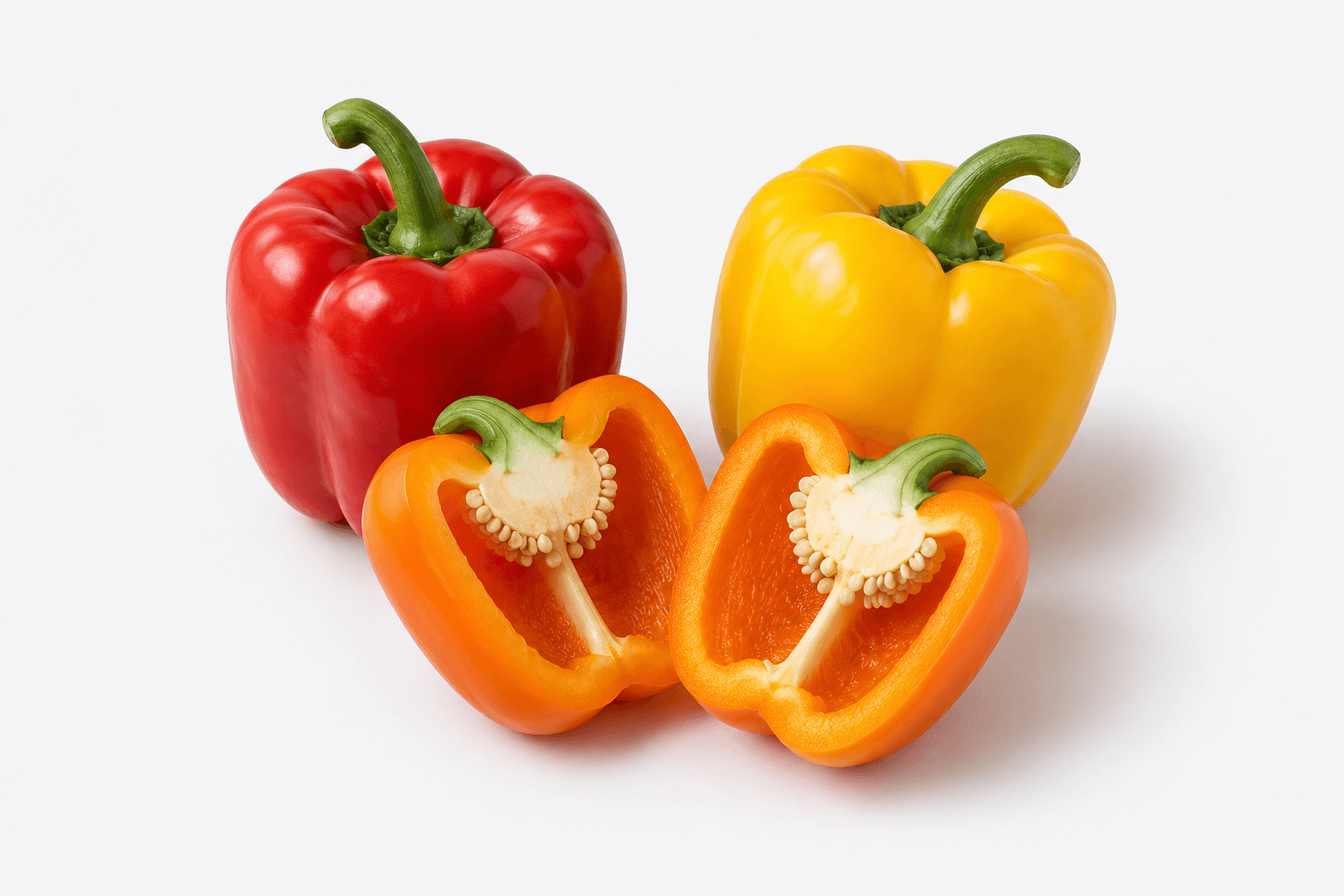
Vegetables
Moderate evidence128 mg of vitamin C per 100 g of red pepper. The Cochrane review, though, found no reduction in colds.
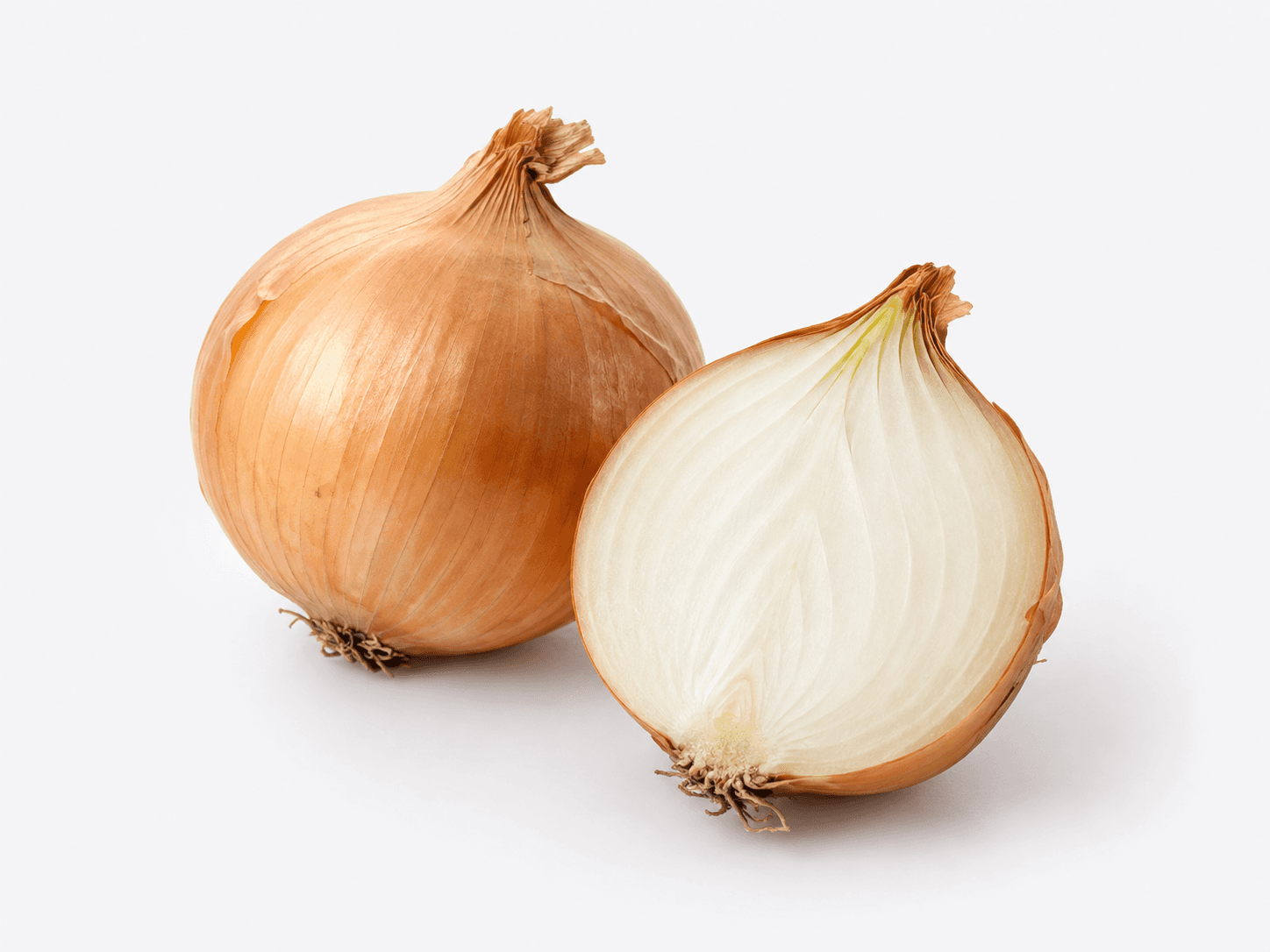
Vegetables
Moderate evidenceOnion's antioxidant quercetin concentrates in the outer layers. Peeling two extra layers out of habit throws much of it away.
Vegetables
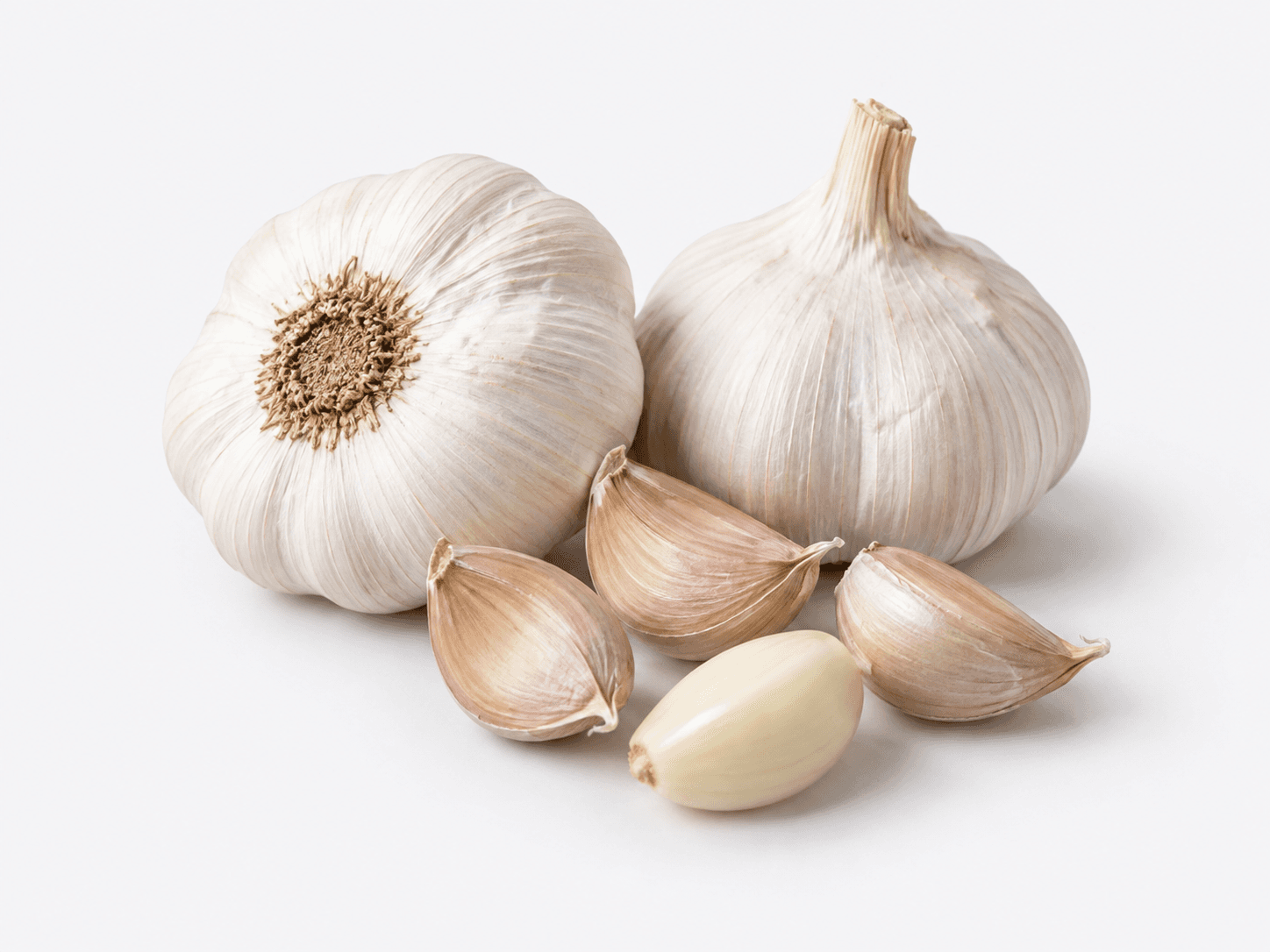
Moderate evidenceThe evidence for garlic points to a modest drop in blood pressure and cholesterol. The trick is to crush it and wait ten minutes before it hits the heat.