Contents
What it is
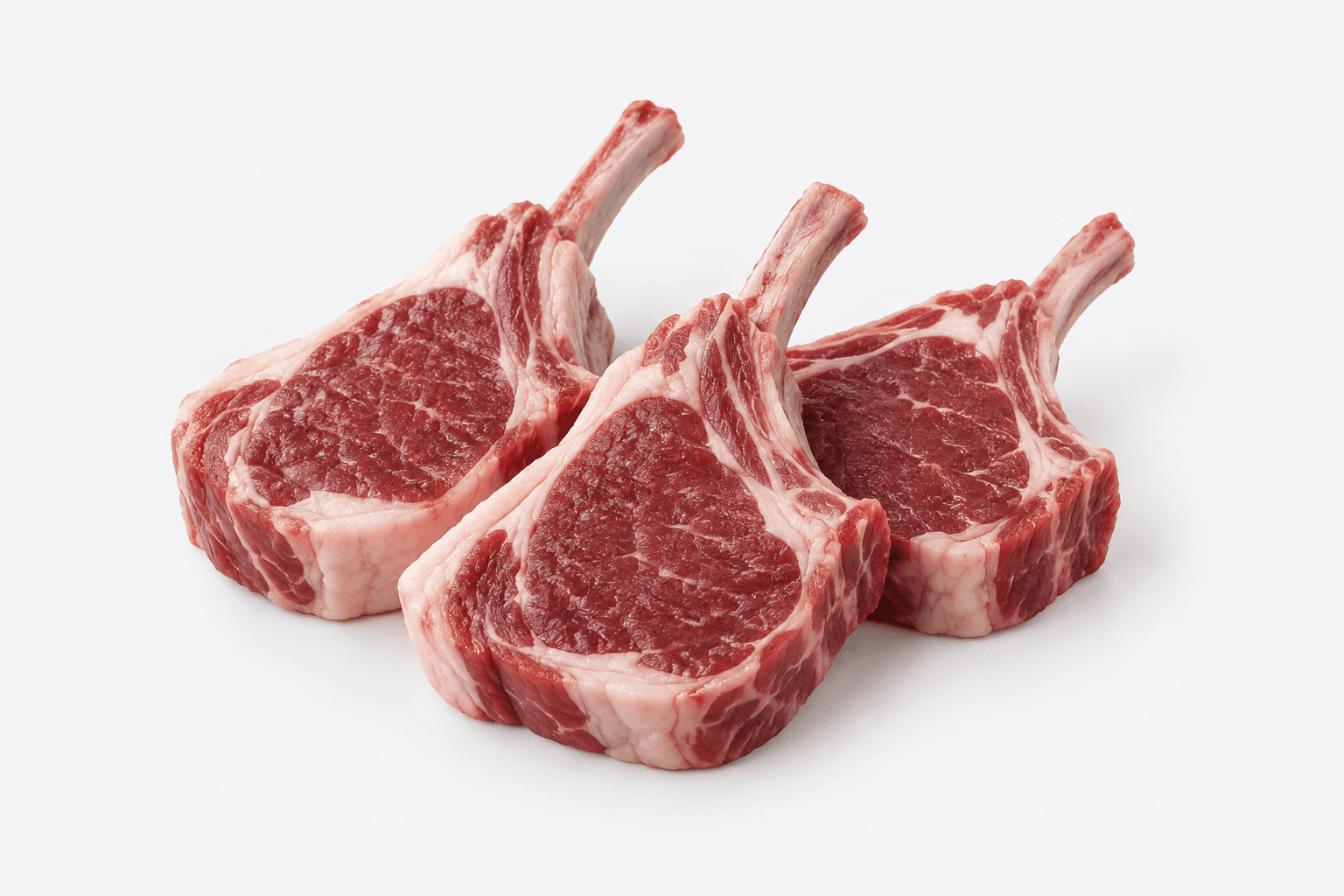
Lamb is the meat of sheep, and the name changes with age: under a year it is lamb, older than that it is mutton, and mutton smells far stronger. The characteristic odour comes from branched-chain fatty acids in the animal's fat, and because it is concentrated in the fat, trimming cuts the smell dramatically. Grass-fed sheep carry more of it than grain-fed. The fat has a high melting point, so as the meat cools it can feel waxy in the mouth, which is why lamb is better eaten hot.
Lamb consumption in Korea grew once skewered lamb found its place, and with it came claims: better than beef, warms the body.
The composition table does not say lamb is much different from beef. Per 100 g of ground lamb: protein 16.6 g, fat 23.4 g (of which 10.2 g saturated), vitamin B12 2.31 µg, zinc 3.41 mg.
And lamb is red meat. The International Agency for Research on Cancer classifies red meat as Group 2A, probably carcinogenic to humans, and processed meat as Group 1, carcinogenic to humans.
In a meta-analysis of prospective cohorts, every extra 100 g a day carried a 14% higher risk of colorectal cancer (relative risk 1.14).
This page does not tell you not to eat lamb. It records that there is no evidence lamb differs from other red meat.
Key benefits
- Nutrition data
Vitamin B12, zinc and selenium, evenly
Per 100 g of ground lamb, against adult daily requirements:
- Vitamin B12 2.31 µg — 96%
- Zinc 3.41 mg — 31%
- Selenium 18.8 µg — 34%
- Niacin 5.96 mg — 37%
- Protein 16.6 g, phosphorus 157 mg, choline 69.3 mg
- Iron 1.55 mg, as well-absorbed haem iron
Zinc and B12 are the two hardest things to cover from plants. B12 is effectively only in animal foods, and zinc absorbs poorly from grains and pulses because of phytate. That gap is what red meat fills in a diet.
Fat varies enormously by cut. This table is ground lamb: 23.4 g of fat, 10.2 g of it saturated. Trimmed loin or leg is far lower. The cuts usually skewered are the fattier ones, which is worth knowing.
Cholesterol is 73 mg, in the same range as beef and pork.
That distinctive lamb smell lives in the fat — branched-chain fatty acids, and milder in young lamb. Trimming the fat to reduce it also reduces the calories and saturated fat.
- Moderate evidence
The red meat risk: 14% more colorectal cancer per 100 g a day
[1]This entry records a risk, not a benefit.
A 2011 meta-analysis of prospective studies in PLoS One, updating the 2007 World Cancer Research Fund report with ten newer studies.
- Highest versus lowest intake — colorectal cancer relative risk 1.22 (95% CI 1.11–1.34)
- Per 100 g/day increase — 1.14 (95% CI 1.04–1.24)
- Fresh red meat alone, per 100 g/day — 1.17 (95% CI 1.05–1.31)
- Processed meat, per 50 g/day — 1.18 (95% CI 1.10–1.28)
They also mapped the shape of the dose-response. Risk rose approximately linearly up to about 140 g/day, where the curve approaches a plateau.
And one place came out different. Colon cancer gave similar results, but for rectal cancer, analysed separately, no significant association was observed. Within the same bowel, site mattered.
Three things need saying.
First, this is relative risk, not absolute. A 14% increase means 14% is added to whatever your risk already was. If that base is small, so is the addition.
Second, these are observational studies. People who eat more red meat tend to eat fewer vegetables, smoke and drink more, and move less. Statistics adjust for that; they do not remove it.
Third, this is an analysis of "red meat" as a whole. It did not separate beef, pork and lamb. There is no large study of lamb on its own.
The authors conclude that the overall evidence from prospective studies supports limiting red and processed meat as one of the dietary recommendations for preventing colorectal cancer.
- Not established
"Lamb is different" is not established
Several claims attach to lamb specifically. Taking them one at a time:
"It warms the body." A traditional-medicine classification, unconfirmed by human trials of body temperature or metabolism.
"Healthier than beef." The composition table gives thin support. Fat and saturated fat split by cut, and ground lamb at 10.2 g saturated is not below ground beef.
"High in L-carnitine." Red meat is high in carnitine, yes. But gut bacteria convert carnitine to TMAO, and the association between TMAO and cardiovascular disease is an active research question. It is not a compound to read only one way.
"Pasture-raised, so high in omega-3." Grass-fed ruminant fat does differ in composition from grain-fed, and that has been reported. Whether the difference changes disease outcomes in people has not been shown, and the absolute amounts do not compare to oily fish. Polyunsaturated fat in this table is 1.85 g per 100 g.
So: the reasons to eat lamb are taste and nutrition, and that nutrition is red meat's nutrition. No lamb-specific advantage has been established, and red meat's risks apply to lamb.
How you cook it is part of the risk. That heterocyclic amines and polycyclic aromatic hydrocarbons form when meat chars over high direct heat is settled chemistry. Skewers over charcoal are exactly that situation.
How to eat it well
- Cut off the charred parts. Carcinogens concentrate in the blackened surface of direct-flame cooking. On skewers, turn them more often.
- Keep them a little further from the coals and turn frequently. Less fat dripping into the fire means less smoke and fewer polycyclic aromatic hydrocarbons.
- Partially cooking first shortens the time over the flame.
- Eat it with vegetables. In the colorectal evidence, fibre pulls the other way. Put garlic chives, onion and peppers on the grill alongside.
- 100 g per meal, two or three times a week sits inside the range the analysis covered. The WCRF recommends no more than 350–500 g of cooked red meat a week.
- Trimming the fat cuts calories and saturated fat sharply, and reduces the smell.
- Processed meat is a separate category: 18% per 50 g a day, and IARC Group 1.
How to read the grades
Each benefit carries a label showing how far research on people supports it. Grades differ between items even within the same ingredient.
- Nutrition data
- A fact verifiable from food composition databases or health authorities. This is a different kind of statement from a clinical effect.
- Strong evidence
- Consistently confirmed across randomised controlled trials or meta-analyses.
- Moderate evidence
- Human studies exist, but effect sizes are small or results are mixed.
- Early research
- Cell or animal work, or small preliminary studies.
- Not established
- Commonly claimed, but not confirmed in studies on people.
What to watch out for
- It is red meat. IARC Group 2A, probably carcinogenic, with a colorectal relative risk of 1.14 per extra 100 g a day.
- Saturated fat 10.2 g per 100 g in ground lamb. Choosing a trimmed cut lowers that a great deal.
- With gout, red meat is moderate to high in purines.
- If you restrict protein or phosphorus for kidney disease, 100 g holds 16.6 g and 157 mg.
- Cook mince right through. Grinding mixes surface bacteria into the middle.
- The evidence above is about red meat as a class. There is no large study of lamb alone — in either direction.
Nutrition
Per 100 g of raw ground lamb. Fat varies a great deal by cut — trimmed lean cuts carry far less than this table shows.
- Calories
- 282 kcal14%
- Protein
- 16.6 g33%
- Fat
- 23.4 g30%
- Vitamin B12
- 2.31 µg96%
- Zinc
- 3.41 mg31%
- Selenium
- 18.8 µg34%
- Vitamin B3
- 5.96 mg37%
- Iron
- 1.55 mg9%
- Phosphorus
- 157 mg13%
- Potassium
- 222 mg5%
- Choline
- 69.3 mg13%
Percentages are of the US FDA Daily Value for adults and children 4 and over. National reference intakes differ by sex and age.
Calculate this alongside other ingredients →
Key nutrients
By health concern
Dishes with this ingredient
Sources
The databases and health authorities this article's nutrition figures and health statements draw on.
- 1Red and processed meat and colorectal cancer incidence: meta-analysis of prospective studiesMeta-analysisChan DS, et al. PLoS One 2011PMID 21674008
- 2USDA FoodData CentralFood composition database
- 3International Agency for Research on Cancer (IARC)Health authority
- 4World Health Organization · Healthy dietHealth authority
- 5MFDS Food Composition Database · 식품안전나라Food composition database
- 6PubMedResearch literature