Contents
What it is
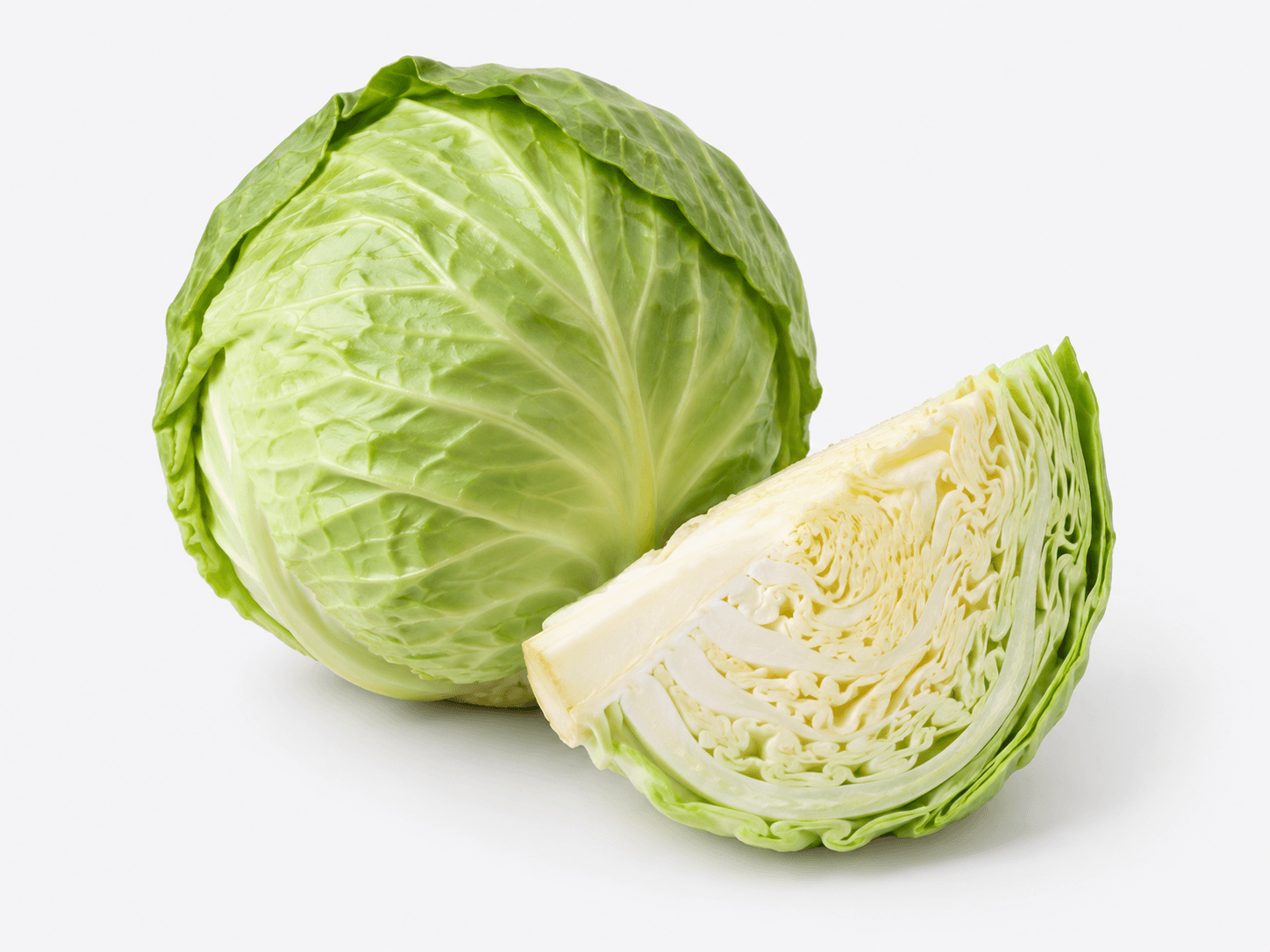
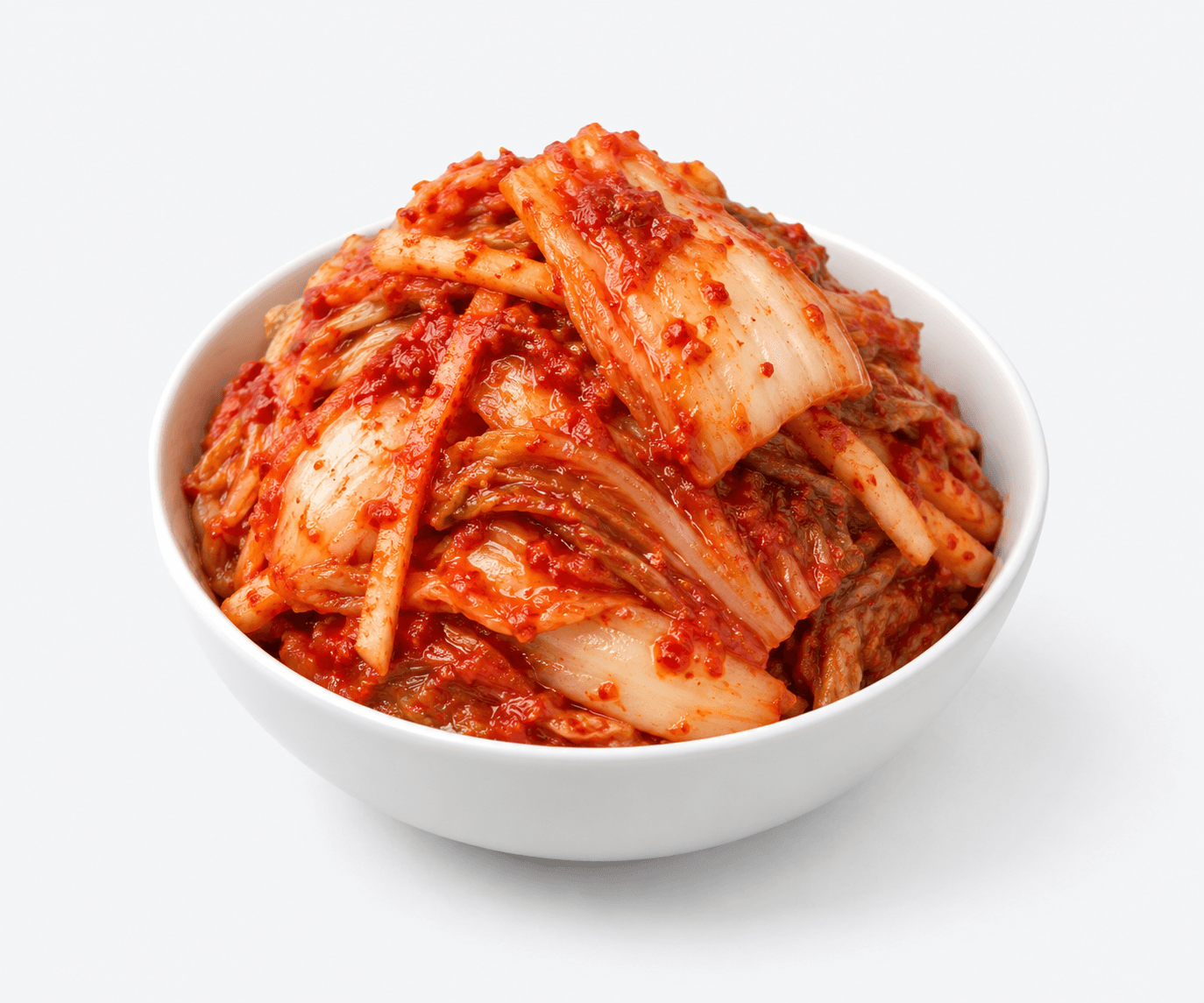
Kimchi is a Korean preserve of vegetables salted, seasoned and then left to ferment with lactic acid bacteria. Napa cabbage is the most common base, but radish, cucumber and mustard leaf each make their own kind. Salting and draining is the critical step: it suppresses unwanted microbes and creates the conditions in which lactic bacteria take over. As fermentation runs on, lactic acid builds and the sourness rises; sour kimchi is used less as a side dish than as the base of stews and stir-fries. Because it relies on salt and salted seafood, the sodium is on the high side.
Writing about kimchi tends to go one of two ways: a list of probiotics and anticancer claims, or a warning about sodium.
Look at the actual research and both are half right. A randomised controlled trial found more diverse gut microbiota in people who ate more fermented food, and a meta-analysis of Korean studies genuinely did link kimchi intake to higher gastric cancer risk.
The important part is that these are not contradictory. One is looking at fermentation; the other is looking at salt.
Key benefits
- Moderate evidence
Eating more fermented food diversified the gut microbiota
[1]Thirty-six adults were randomised for 10 weeks to increase either fermented foods (yoghurt, kefir, kimchi and others) or fibre. Only the fermented-food group gained microbial diversity, and 19 inflammatory proteins fell alongside it. Diversity did not change in the high-fibre group.
But the trial did not isolate kimchi. Participants ate several fermented foods together, and the sample was 36 people. What it supports is 'fermented foods in general may do this', not 'kimchi is good for your gut'.
- Early research
A bacterium isolated from kimchi reduced body fat — the bacterium, not the kimchi
[2]In a double-blind trial, 114 Koreans with obesity took Lactobacillus sakei CJLS03, isolated from kimchi, for 12 weeks. Fat mass fell 0.2 kg in the treatment group and rose 0.6 kg on placebo — a 0.8 kg difference (P = 0.018) — and waist circumference was 0.8 cm smaller.
But body weight and BMI did not change. And what the trial tested was a single strain in a capsule, not kimchi. It was also run by a food company. There is no evidence yet that eating kimchi produces the same result.
- Nutrition data
Very low in energy, with vitamin K and folate
15 kcal per 100 g. An extra dish of it barely registers on energy intake. It carries 1.6 g of fibre, 43.6 µg of vitamin K and 52 µg of folate.
All of that is composition data. So is the fact that the same 100 g carries 498 mg of sodium.
How to eat it well
- If you are after the bacteria, cooked kimchi is pointless. Stew it or fry it and the live cultures die. The fibre and flavour survive; the bacteria do not.
- Leave the brine. A large share of the sodium sits in the liquid. Lifting out only the solids cuts your intake.
- Rinse it if it tastes salty. You lose a little flavour and a meaningful amount of sodium.
- Serve it with potassium-rich vegetables, which partly offset sodium's effect on blood pressure. That beats simply eating more kimchi.
- A little every day beats a lot at once. Salt accumulates; the benefit of fermented food comes from consistency.
How to read the grades
Each benefit carries a label showing how far research on people supports it. Grades differ between items even within the same ingredient.
- Nutrition data
- A fact verifiable from food composition databases or health authorities. This is a different kind of statement from a clinical effect.
- Strong evidence
- Consistently confirmed across randomised controlled trials or meta-analyses.
- Moderate evidence
- Human studies exist, but effect sizes are small or results are mixed.
- Early research
- Cell or animal work, or small preliminary studies.
- Not established
- Commonly claimed, but not confirmed in studies on people.
What to watch out for
- 498 mg of sodium per 100 g — a quarter of the WHO's 2,000 mg daily limit. At 200 g a day, kimchi alone is half of it.
- A link with gastric cancer has been reported. A meta-analysis of Korean studies associated kimchi with higher gastric cancer risk (OR 2.21, 95% CI 1.29–3.77). So was salt itself (1.92, 1.52–2.43). In the same analysis garlic, onion and soy lowered the risk — which points at the salt rather than kimchi's ingredients. These are observational studies reflecting a period when kimchi was salted more heavily than it usually is now.
- With hypertension or kidney disease, count it inside your sodium budget.
- On warfarin, do not suddenly increase your vitamin K intake.
- With reflux or gastritis, the chilli can aggravate symptoms.
Nutrition
Approximate values per 100 g edible portion.
- Calories
- 15 kcal<1%
- Carbohydrates
- 2.4 g<1%
- Fiber
- 1.6 g6%
- Protein
- 1.1 g2%
- Sodium
- 498 mg22%
- Potassium
- 151 mg3%
- Vitamin K
- 43.6 µg36%
- Folate
- 52 µg13%
- Iron
- 2.5 mg14%
Percentages are of the US FDA Daily Value for adults and children 4 and over. National reference intakes differ by sex and age.
Calculate this alongside other ingredients →
Key nutrients
By health concern
Dishes with this ingredient
Sources
The databases and health authorities this article's nutrition figures and health statements draw on.
- 1Gut-microbiota-targeted diets modulate human immune statusClinical trialWastyk HC, et al. Cell 2021PMID 34256014
- 2Effect of Lactobacillus sakei, a Probiotic Derived from Kimchi, on Body Fat in Koreans with Obesity: A Randomized Controlled StudyClinical trialLim S, et al. Endocrinol Metab (Seoul) 2020PMID 32615727
- 3USDA FoodData CentralFood composition database
- 4MFDS Food Composition Database · 식품안전나라Food composition database
- 5World Health Organization · Healthy dietHealth authority
- 6Diet and cancer risk in the Korean population: a meta- analysisMeta-analysisWoo HD, et al. Asian Pac J Cancer Prev 2014PMID 25339056
- 7PubMedResearch literature