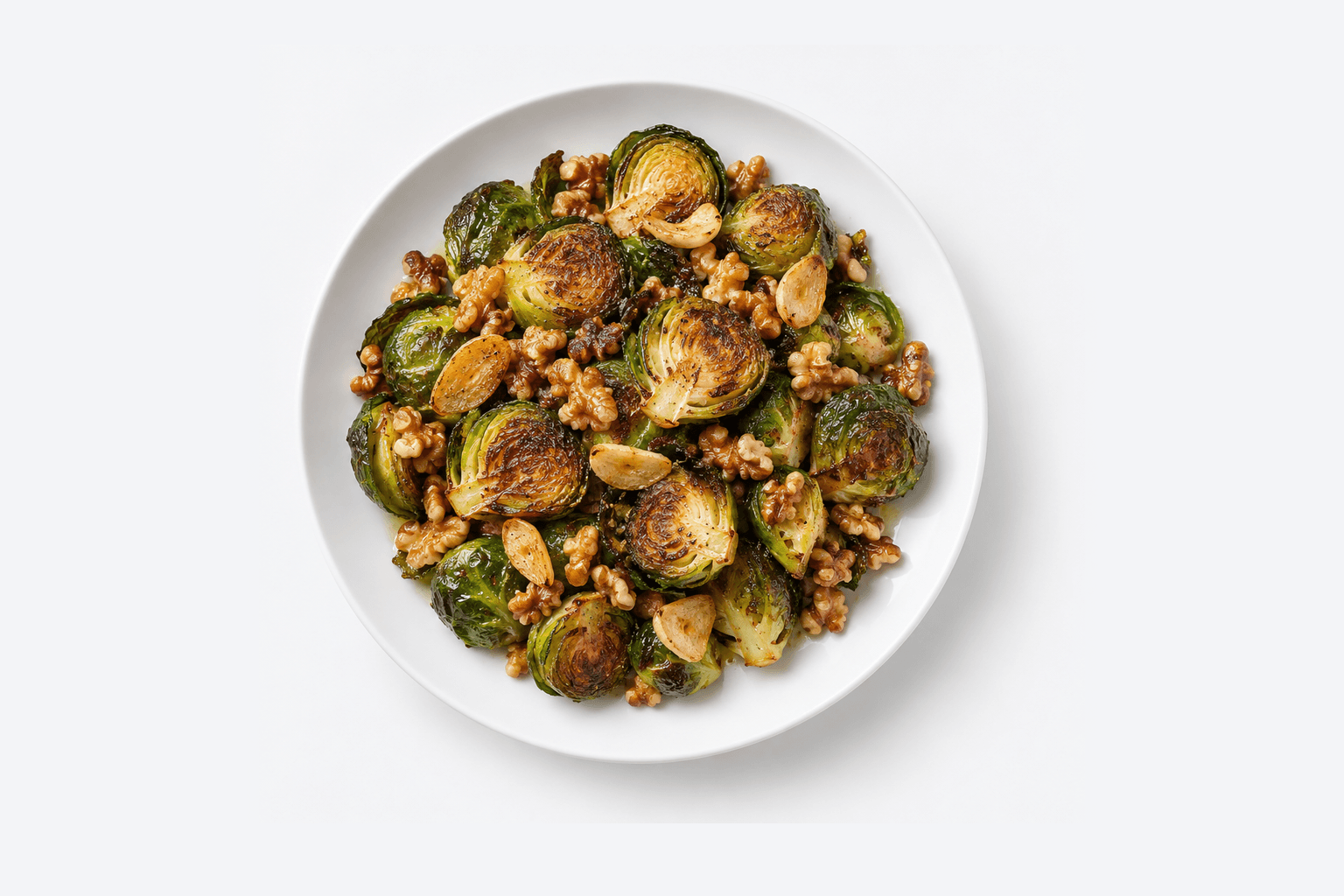
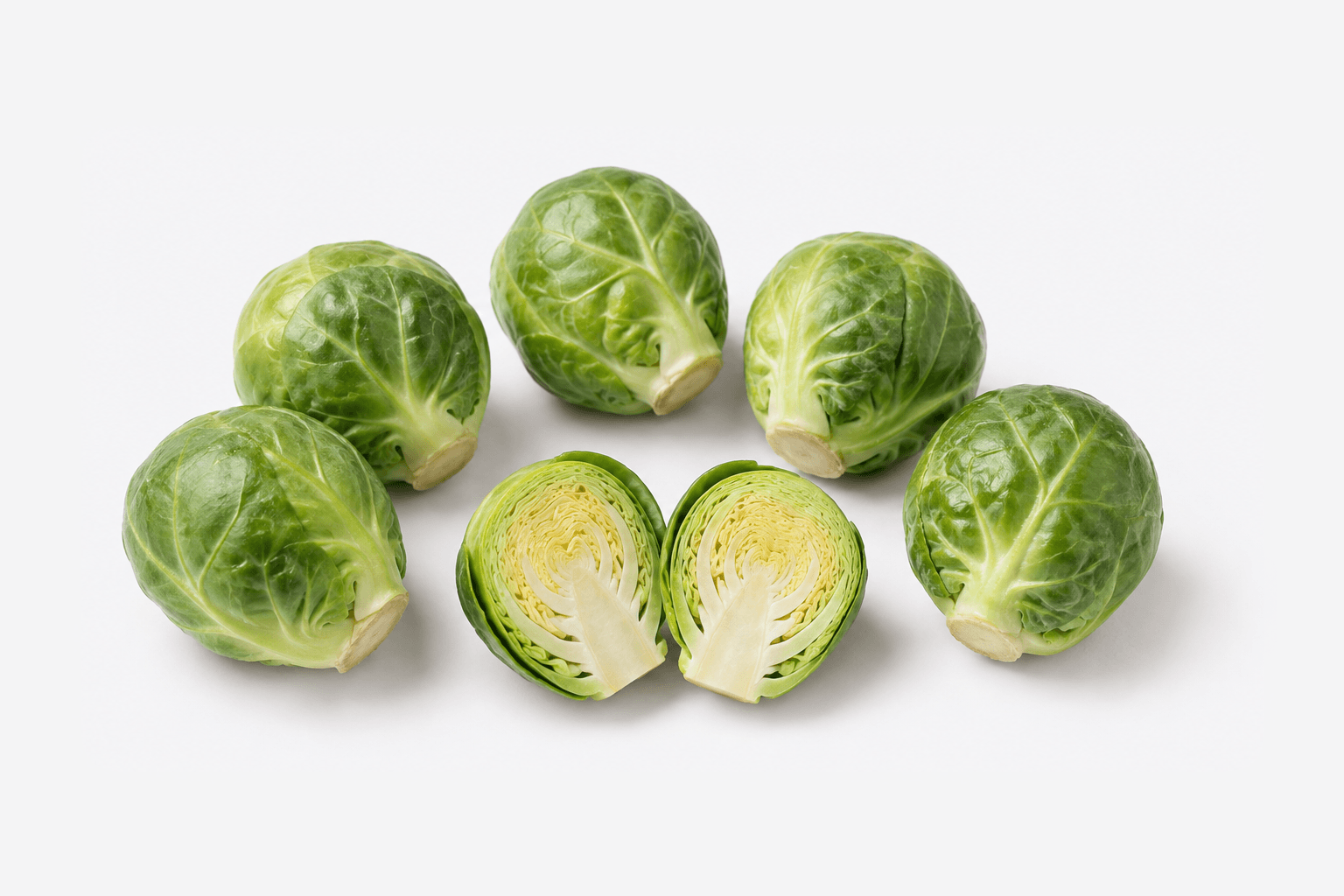
Do not skip the drying step. It is the most common reason this dish fails. Water on the surface turns to steam before browning can start, and the sprouts go soft without colour. If you washed them, press them dry with kitchen paper.
They are not boiled because of the vitamin C. Raw Brussels sprouts hold 85 mg per 100 g — more than an orange's 53 mg. But vitamin C dissolves in water and degrades with heat, so boiling sends a good share of it down the drain. Roasting has no water, so it loses less.
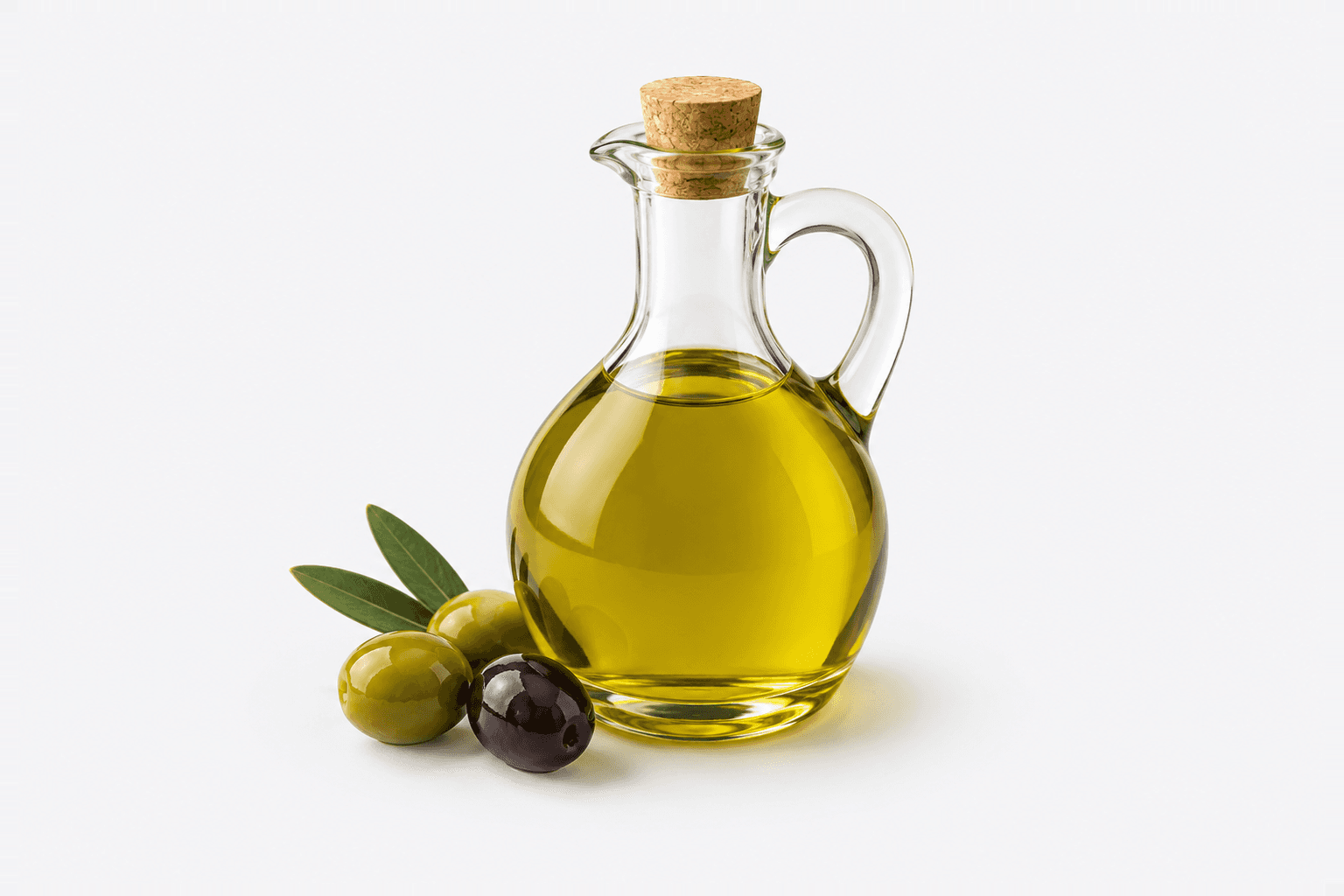
Vitamin K is the opposite. There is 177 µg per 100 g, it is fat-soluble, and cooking barely touches it — the olive oil raises absorption. If you take warfarin, that becomes a caution rather than a benefit; see below.
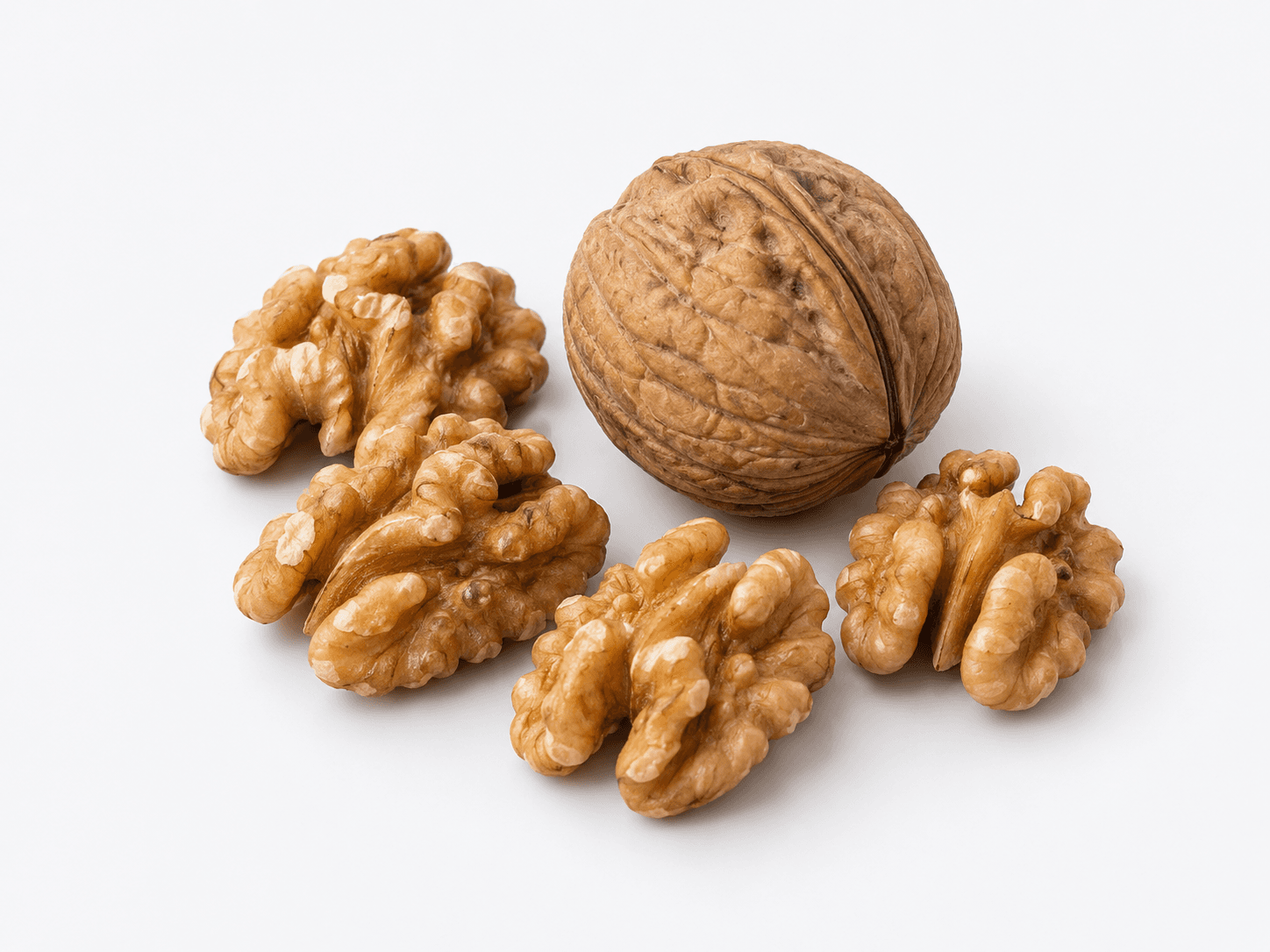
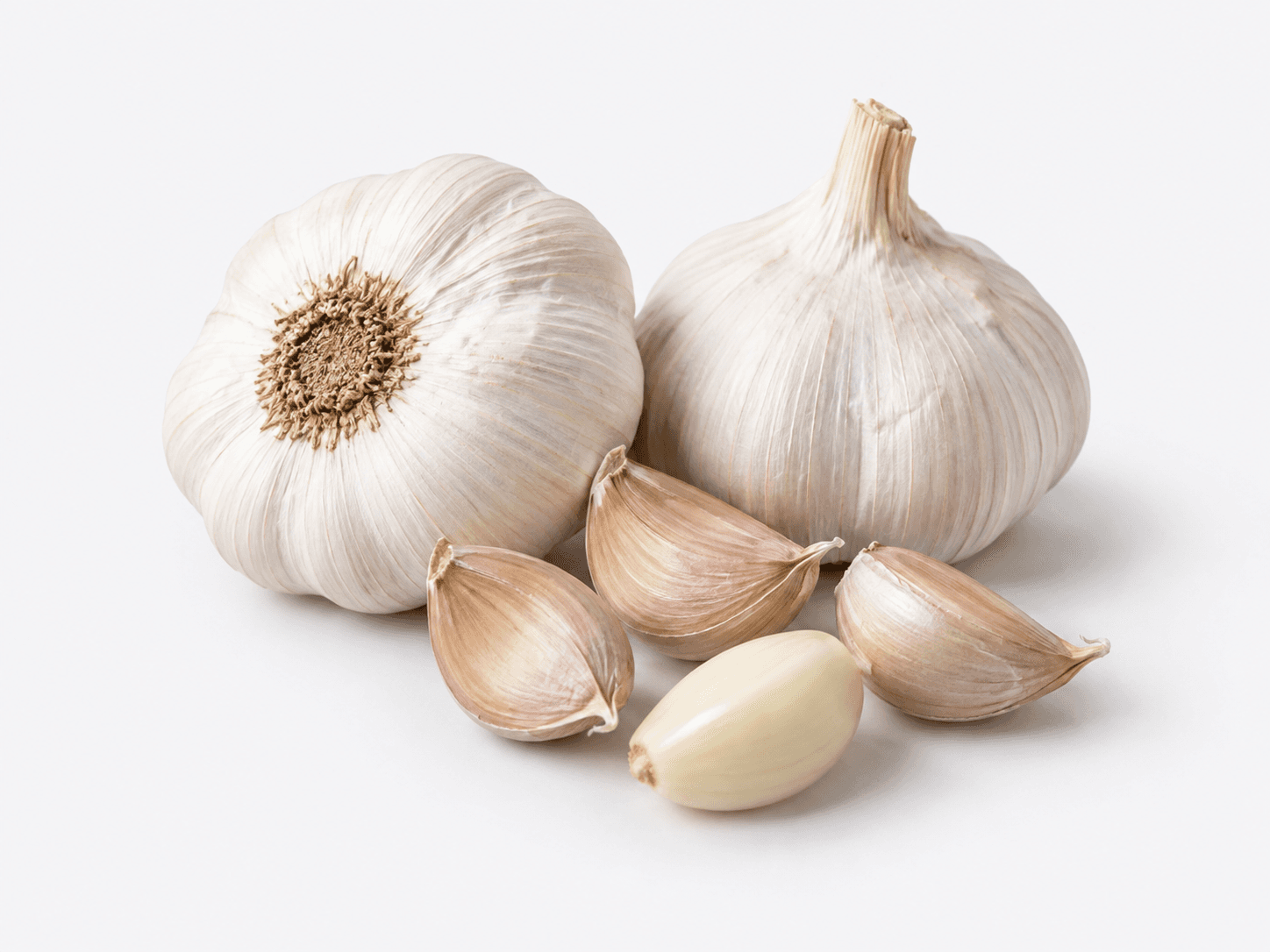
Garlic and walnuts go in for the last five minutes because they scorch. Walnuts are 65% fat and turn bitter in ten minutes at 200°C. So does garlic.
The lemon goes on outside the oven. Both the acid and the vitamin C are heat-sensitive.
Choose small sprouts. Larger ones tend to hold more glucosinolates and taste more bitter. The sweetest come after frost, in late autumn and winter.