Contents
What it is
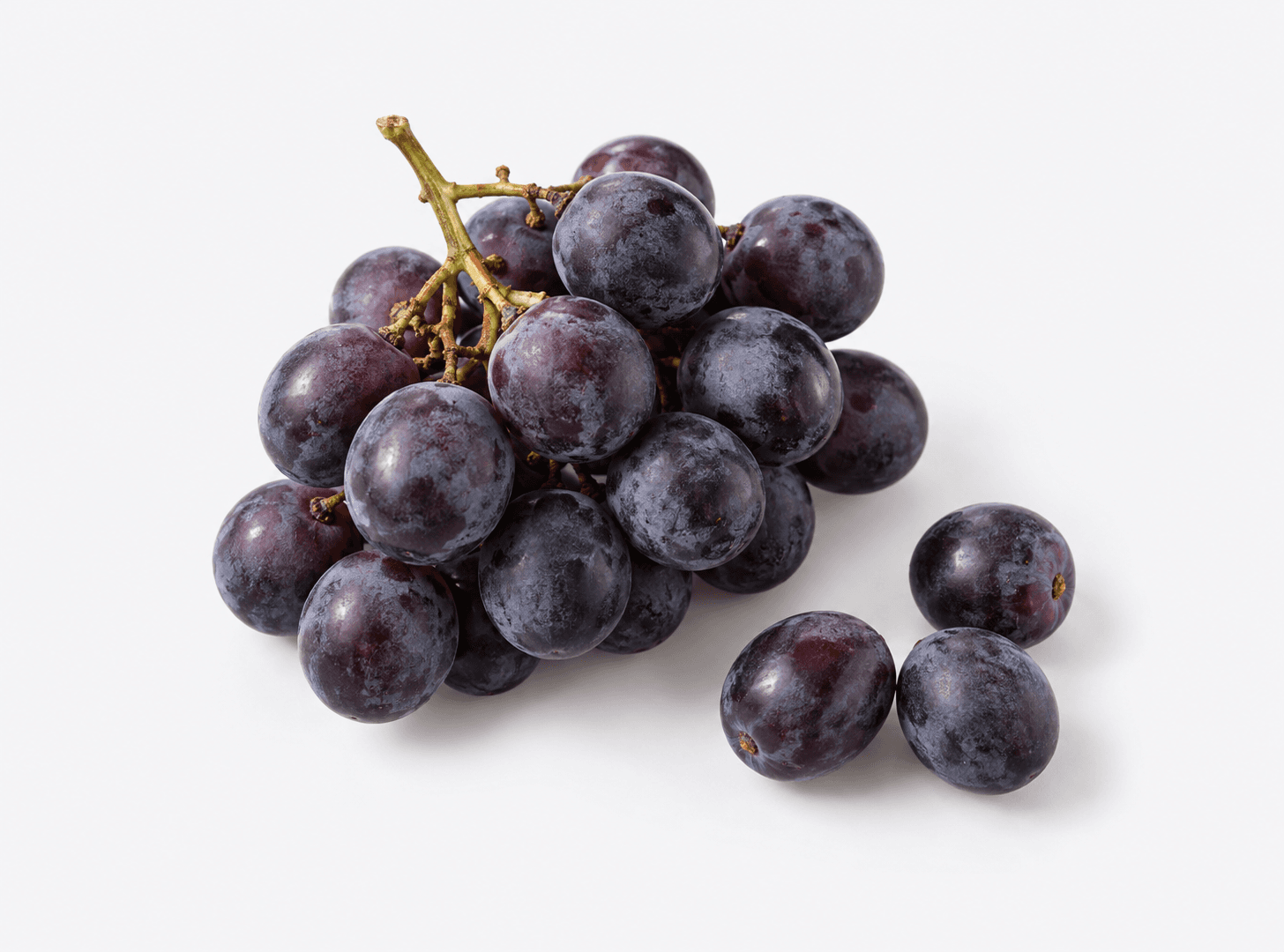
The grape is the fruit of a climbing vine, borne in bunches. It is native to western Asia and the Mediterranean and is among the oldest cultivated fruits. Table and wine varieties have diverged: wine grapes are smaller, thicker-skinned and higher in both sugar and acid. The Campbell Early and Kyoho common in Korea belong to the type whose skin slips off easily. The polyphenols are concentrated in skin and seeds, so whether you eat the skin makes a real difference to what you get.
Scientific name Vitis vinifera
Whenever grapes come up as a health food, resveratrol appears with them. It began with the 'French paradox' — the idea that red wine explained why the French ate so much saturated fat and had so little heart disease.
Since then resveratrol has turned up in research on everything from lifespan to diabetes. But almost all of that research uses supplements. None of it is a study of eating grapes.
Strip the supplement story out and two things remain: a small blood pressure effect from the polyphenols, and 15.5 g of sugar per 100 g.
Key benefits
- Moderate evidence
It lowered systolic blood pressure by 1.48 mmHg
[1]A meta-analysis of 10 randomised trials (12 comparisons). Daily grape polyphenol intake left systolic blood pressure 1.48 mmHg lower (95 % CI −2.79 to −0.16, P = 0.03), with no marked heterogeneity or publication bias.
Diastolic pressure did not fall significantly.
1.48 mmHg is a small number. The authors themselves called it modest next to antihypertensive drugs. Curiously, the effect was larger at low doses (under 733 mg a day) than at high ones, and clearer in people with metabolic syndrome. They concluded that larger trials in hypertensive patients are needed.
- Not established
Resveratrol — every trial used a supplement
[2]A meta-analysis reviewed 30 studies of resveratrol and diabetes. Insulin resistance improved (standardised mean difference −0.34, 95 % CI −0.64 to −0.04) as did HbA1c (−0.64, −1.22 to −0.07); fasting glucose was significant only in people with diabetes (−0.85).
The numbers look reasonable. Two things have to be read alongside them.
First, the heterogeneity is extreme — I² values of 70 %, 90 % and 90 %. The trials disagreed with each other sharply, and a pooled average is hard to interpret in that situation.
Second, and more importantly, these were all trials of resveratrol supplements. The title says 'resveratrol supplementation'. There is no evidence here that eating grapes produces the same result. Treating grapes as a resveratrol source is not supported by this data.
- Nutrition data
15.5 g of sugar per 100 g
Grapes hold 15.5 g of sugar and 69 kcal per 100 g. That is three times a strawberry (4.9 g) and more than an apple. Fibre is 0.9 g, low for a fruit, so there is not much there to slow the sugar down either.
A 400 g bunch is 62 g of sugar. You cannot compare that directly to the WHO's 25 g added-sugar limit — fruit sugar is not added sugar — but grapes are clearly easy to eat without noticing how many.
What you get in exchange is 191 mg of potassium and 14.6 µg of vitamin K.
How to eat it well
- Eat the skin. The polyphenols and anthocyanins are concentrated there. Peel a grape and most of what this article is about goes with the peel.
- Seeded varieties carry more polyphenols. Seedless is easier to eat; the compounds are fewer.
- Do not eat straight from the bunch. Putting a portion on a plate cuts the amount by itself — practical advice for a fruit this high in sugar.
- Keep them on the stem until you wash them. Wet grapes soften fast.
- Frozen grapes get eaten slowly, which helps with portion control.
How to read the grades
Each benefit carries a label showing how far research on people supports it. Grades differ between items even within the same ingredient.
- Nutrition data
- A fact verifiable from food composition databases or health authorities. This is a different kind of statement from a clinical effect.
- Strong evidence
- Consistently confirmed across randomised controlled trials or meta-analyses.
- Moderate evidence
- Human studies exist, but effect sizes are small or results are mixed.
- Early research
- Cell or animal work, or small preliminary studies.
- Not established
- Commonly claimed, but not confirmed in studies on people.
What to watch out for
- With diabetes, count the amount. Sugar density is high for a fruit and fibre is low.
- On warfarin, note 14.6 µg of vitamin K per 100 g. Do not suddenly eat a lot.
- On a potassium-restricted renal diet, count them in.
- Whole grapes are a choking hazard for young children. Cut them lengthways. The combination of airway size and a grape's shape and springiness makes it a specifically high-risk food.
- Grapes and raisins are toxic to dogs, causing acute kidney failure. Do not feed them.
- Raisins lose water and concentrate the sugar — several times as much per unit weight.
Nutrition
Approximate values per 100 g edible portion.
- Calories
- 69 kcal3%
- Carbohydrates
- 18.1 g7%
- Sugars
- 15.5 g
- Fiber
- 0.9 g3%
- Potassium
- 191 mg4%
- Vitamin K
- 14.6 µg12%
- Vitamin C
- 3.2 mg4%
Percentages are of the US FDA Daily Value for adults and children 4 and over. National reference intakes differ by sex and age.
Calculate this alongside other ingredients →
Key nutrients
By health concern
Sources
The databases and health authorities this article's nutrition figures and health statements draw on.
- 1Effect of Grape Polyphenols on Blood Pressure: A Meta-Analysis of Randomized Controlled TrialsMeta-analysisLi SH, et al. PLoS One 2015PMID 26375022
- 2Resveratrol supplementation and type 2 diabetes: a systematic review and meta-analysisMeta-analysisDelpino FM, et al. Crit Rev Food Sci Nutr 2022PMID 33480264
- 3USDA FoodData CentralFood composition database
- 4NIH Office of Dietary SupplementsHealth authority
- 5PubMedResearch literature