First, what this recipe does not promise.
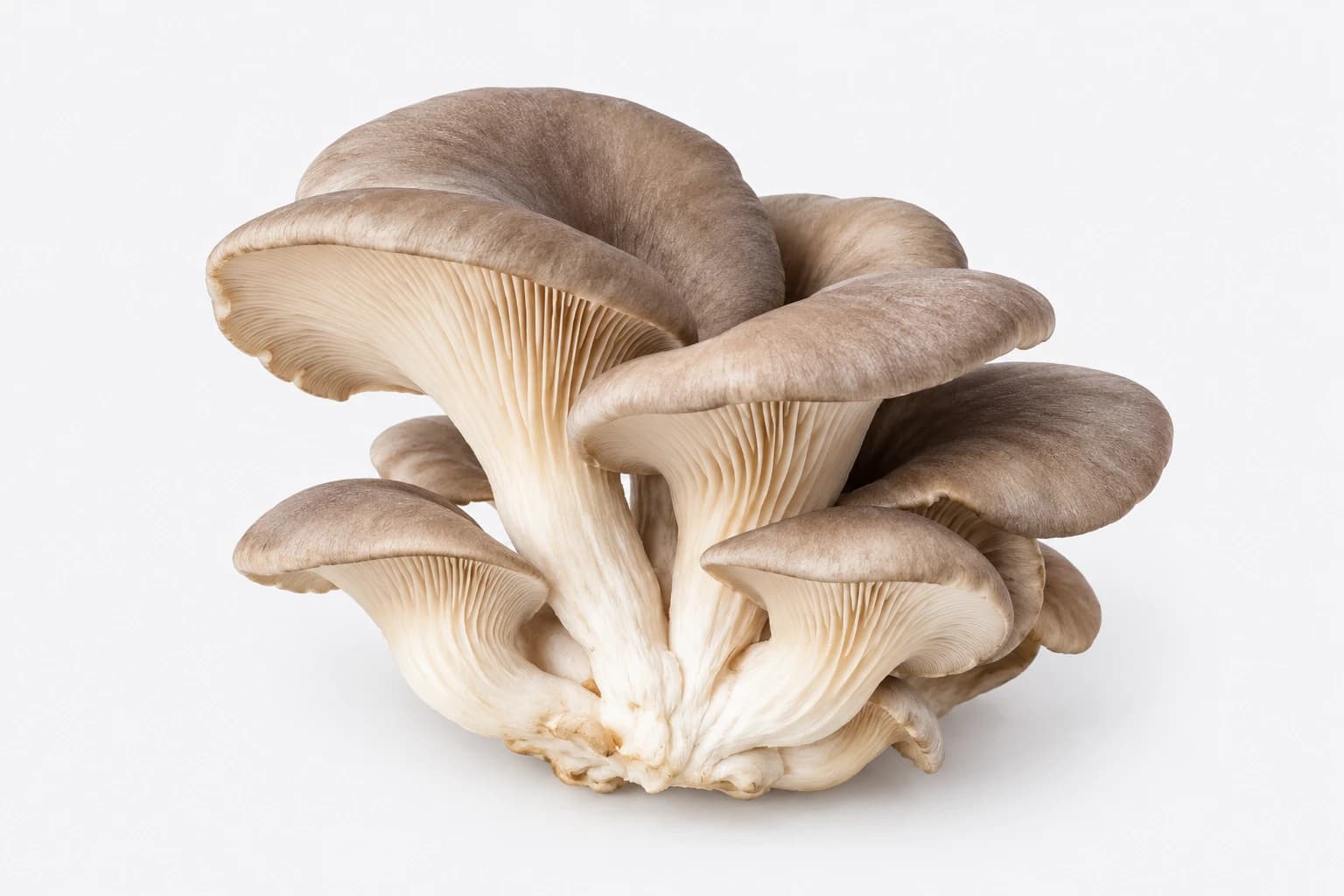
Oyster mushrooms have two double-blind trials, and both missed their primary endpoint.
The 2026 trial in Nutrition & Metabolism set LDL cholesterol as its primary endpoint, and after four weeks total cholesterol, HDL, triglycerides and apolipoproteins had all failed to change.
The 2022 trial in the European Journal of Nutrition set postprandial glucose, and there was no difference there either. What moved were secondary outcomes like GLP-1 and hunger.
So do not expect this dish to change your cholesterol or your blood sugar.
Then why make it? For one number.
| Per serving |
|---|
| Oyster mushrooms 150 g | 50 kcal, protein 5.0 g, niacin 7.4 mg |
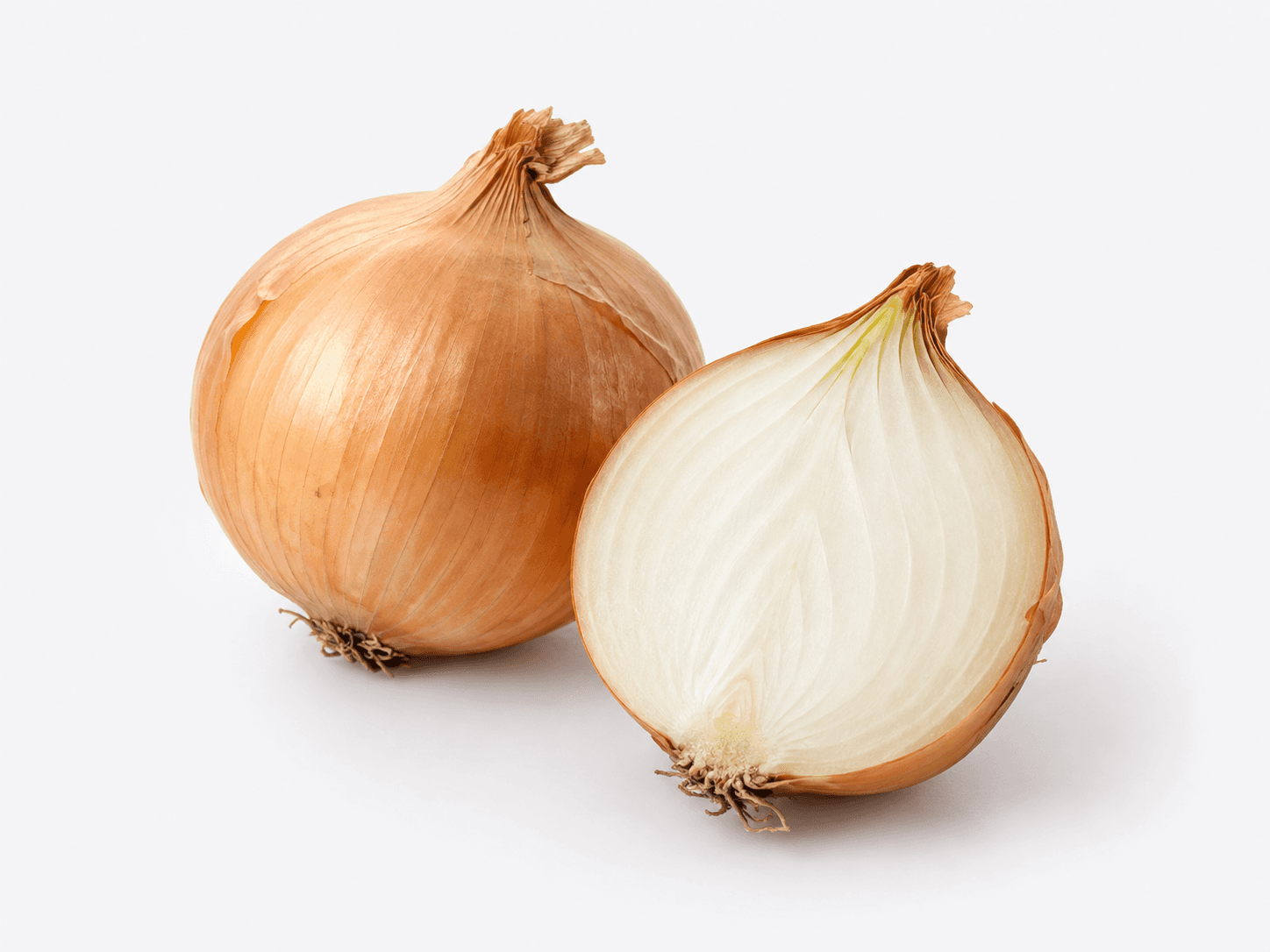
| Onion and spring onion | about 20 kcal |
| Oil and seasoning | about 70 kcal |
| Total | about 140 kcal |
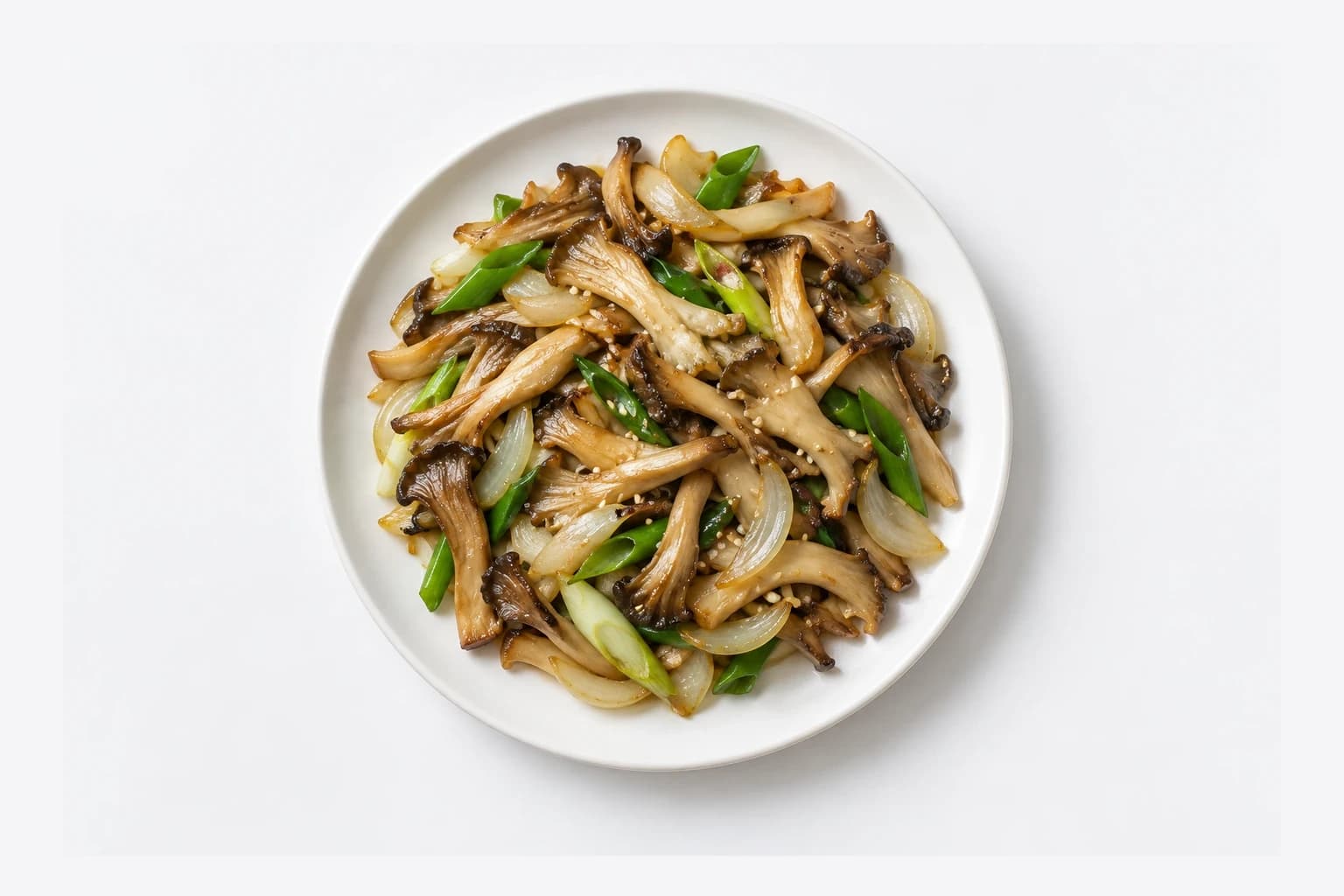
A hundred and fifty grams of mushroom is 50 kcal. The same weight of pork belly is over 500. Swap one meat side dish for this and the day's arithmetic genuinely changes. That is all this plate does, and it is enough.
Niacin comes to 7.4 mg a serving, 46% of the daily value. That comes from the composition table, not from a trial.
Why not to wash them. Mushrooms soak up water like a sponge. Washed ones release it all in the pan, the temperature drops and no browning happens. Almost all the aroma of a stir-fry comes from browning. Wiping takes thirty seconds.
Why tear by hand. A blade presses and crushes the cells; hands split the flesh along its fibres. A torn face is rough, so seasoning clings to it and it browns better. And the grain survives to the bite.
Why not to stir for the first minute. This is the most important line in the recipe. Keep turning them and the surface never gets hot enough — you only draw water out. Leave them alone and the face on the pan dries and colours, and that is where the flavour appears. Stir after that.
Heating the pan first is the same principle. Mushrooms put into a cold pan release water before they ever reach browning temperature.
Why only 1 tsp of soy sauce. That is about 300 mg of sodium. With 54 mg from 300 g of mushrooms, the whole pan lands near 360 mg, about 180 mg a plate — 9% of the WHO guidance.
If you want to add salt, brown the mushrooms harder instead. The savouriness browning creates stands in for it.
Why the sesame oil goes in last. Its aroma compounds are volatile and its smoke point is low. Added over the flame, the smell leaves.
Do not expect vitamin D. Cultivated mushrooms grow without light and hold 0.7 µg per 100 g. Only UV-treated products say so on the label.
Do not forage. Poisonous species resemble oyster mushrooms.