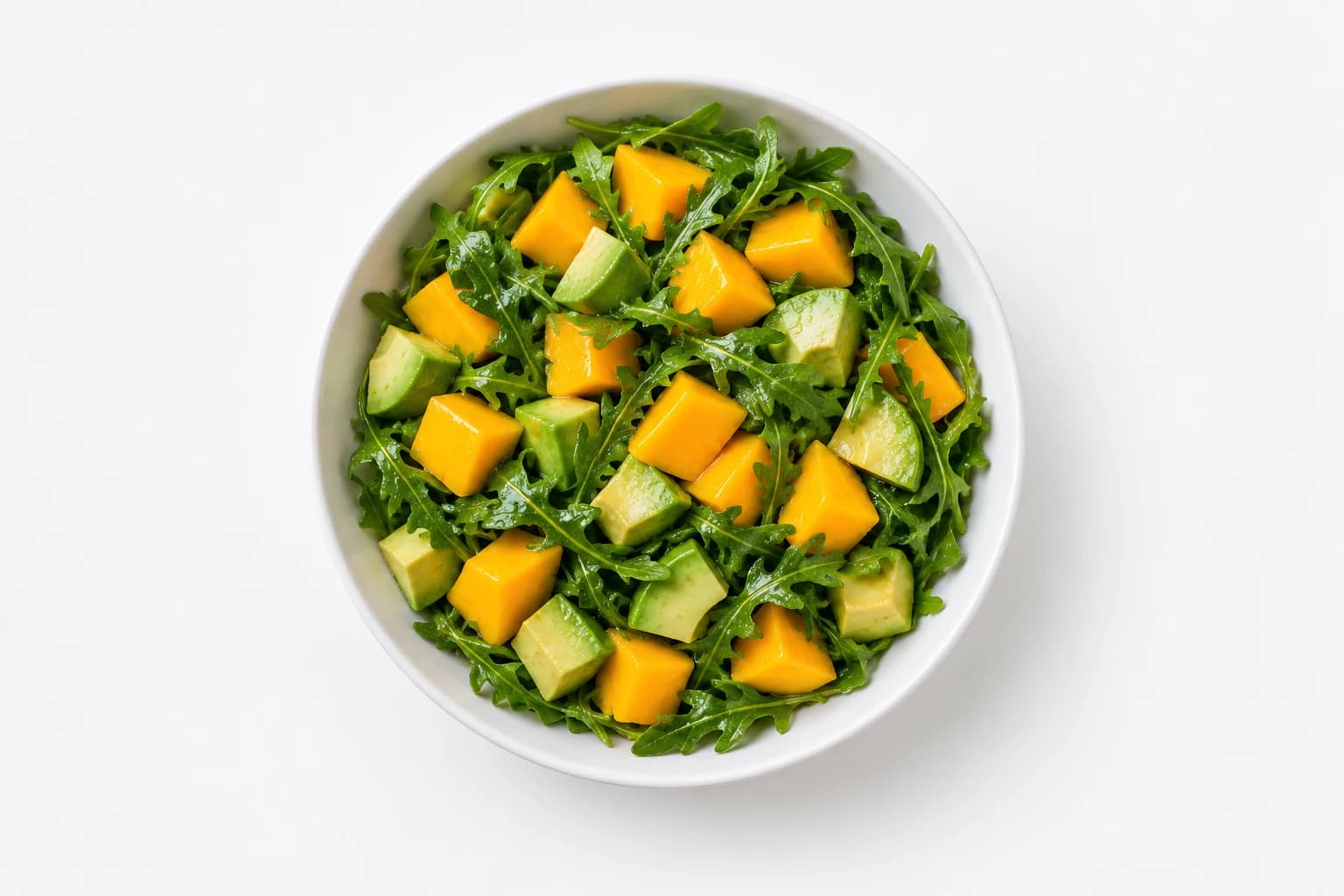
One serving of this salad is what the 2026 trial fed each participant in a day.
2026, Journal of the American Heart Association. Eighty-two adults with prediabetes were given diets for eight weeks that included one avocado and one cup of mango daily. The control arm received energy-matched low-fat, low-fibre foods.
The change in flow-mediated dilation (FMD) differed significantly between arms (effect −2.11±0.77%, p=0.008), rising about 1% on avocado-mango and falling on control.
And right here is the problem this recipe shows honestly.
Two foods went in together. So there is no way to separate what the mango did from what the avocado did. And among the nutrients that rose in that trial, the monounsaturated fat is almost entirely the avocado's.
That is why this salad is built to the trial's specification. The trial can be reproduced, and at the same time what it cannot tell you is laid bare.
Two more things belong here. The control diet was food deliberately made low in fat and fibre, and part of the FMD gap is the control declining. The blood pressure difference appeared in men only, and central diastolic pressure was not significant at p=0.07.
Per serving:
| Per serving |
|---|
| Mango 165 g | 99 kcal, sugar 22.6 g, vitamin C 60 mg |
| Avocado 150 g | 240 kcal, fat 22 g, fibre 10 g, potassium 728 mg |
| Rocket, oil, seasoning | about 60 kcal |
| Total | about 400 kcal, fibre 12 g, sugar 23 g |
You have to look at these numbers. A plate is 400 kcal. Do not be misled by the word salad. This is a meal, not a side.
And the sugar is 23 g. The WHO's free-sugar guidance is under 25 g a day. Sugars inside whole fruit are not free sugars by that definition, but if you manage blood glucose, know the number before you eat. Remember that the trial's participants had prediabetes — this amount was supplied as a diet under clinical supervision.
To make it smaller, drop to one avocado. Most of the energy is there. But then it is no longer the trial's condition.
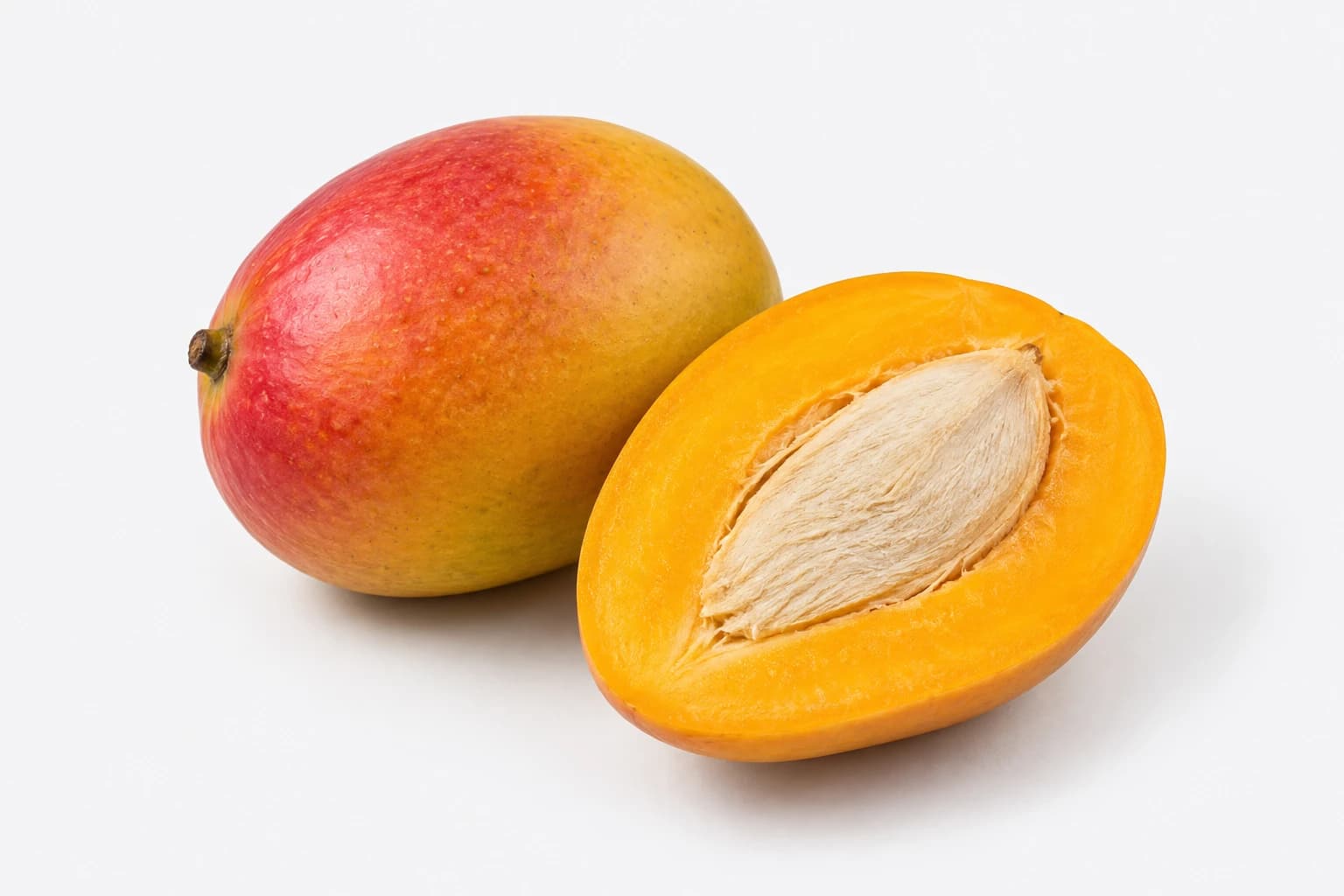
Why peel the mango — the least-known part of this recipe.
Mango is in the Anacardiaceae family, alongside the lacquer tree, cashew and pistachio. Mango skin and sap contain urushiol-family compounds and can cause contact dermatitis.
It usually starts one to two days after contact, so people often fail to connect it to the mango. If you have ever reacted to lacquer, or to cashews or pistachios, be especially careful.
None of this is difficult. Peel it, wash your hands afterwards, and wear gloves on a day of preparing several.
Why the lemon juice goes straight onto the avocado. Browning is oxidation of the cut surface in air. Acid slows that reaction. Add it later and you are already too late.
Why not to keep tossing. Ripe avocado crushes easily. Crushed, it blends with the oil into a sauce and both textures disappear. Two or three folds and stop.
Why rocket. Mango and avocado are both soft and sweet, so without bitterness and crunch the plate cloys. Rocket's bitterness fills that place. Use baby spinach or watercress instead if you have to.
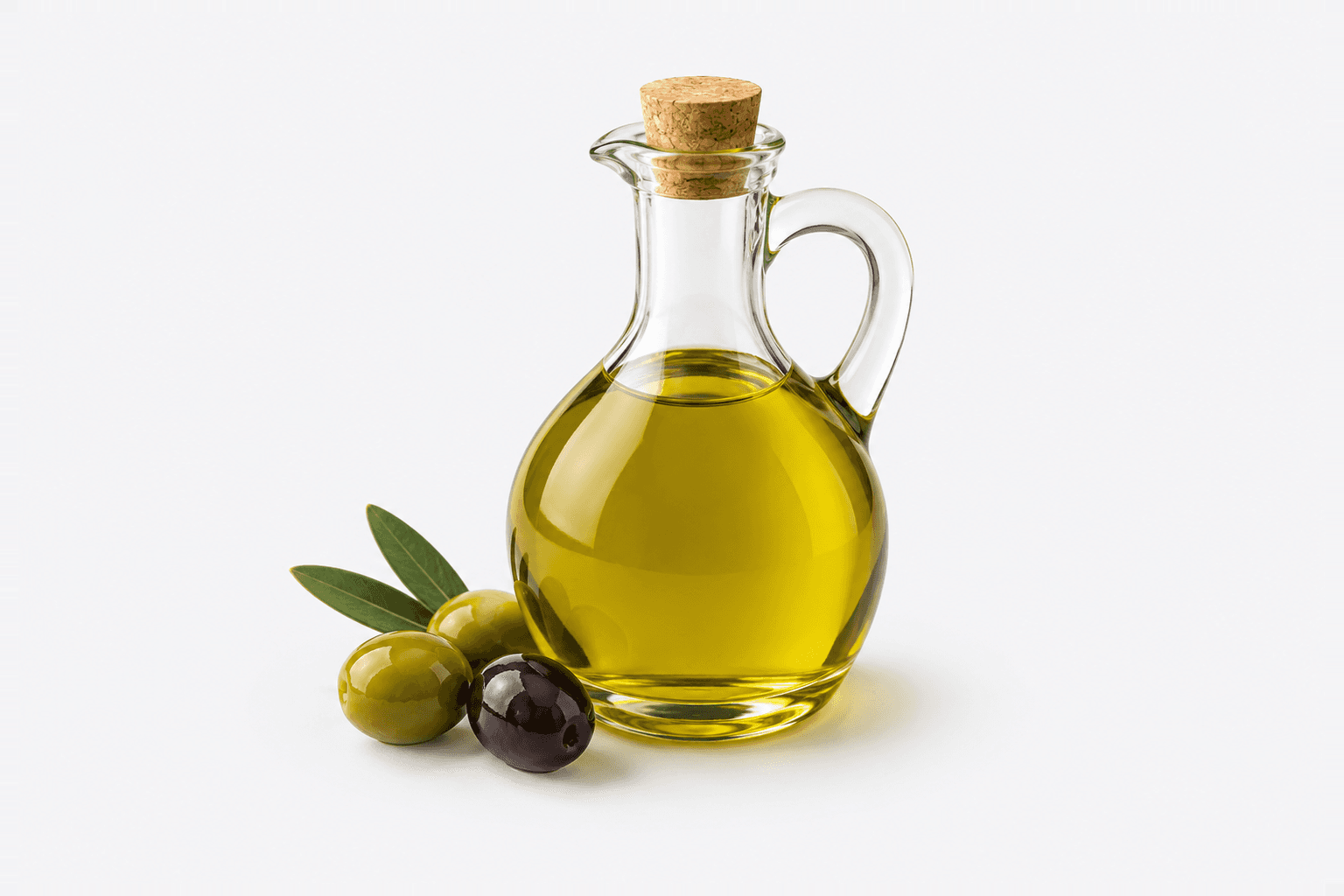
The olive oil is not only for flavour. Mango's beta-carotene (640 µg per 100 g) is fat-soluble, and eating it with fat favours absorption. The avocado's fat alone would do it; the oil doubles down.
Choosing a mango. Go by smell and give, not colour — some varieties stay green when ripe. If it is underripe, leave it at room temperature; refrigerating stops it where it is.
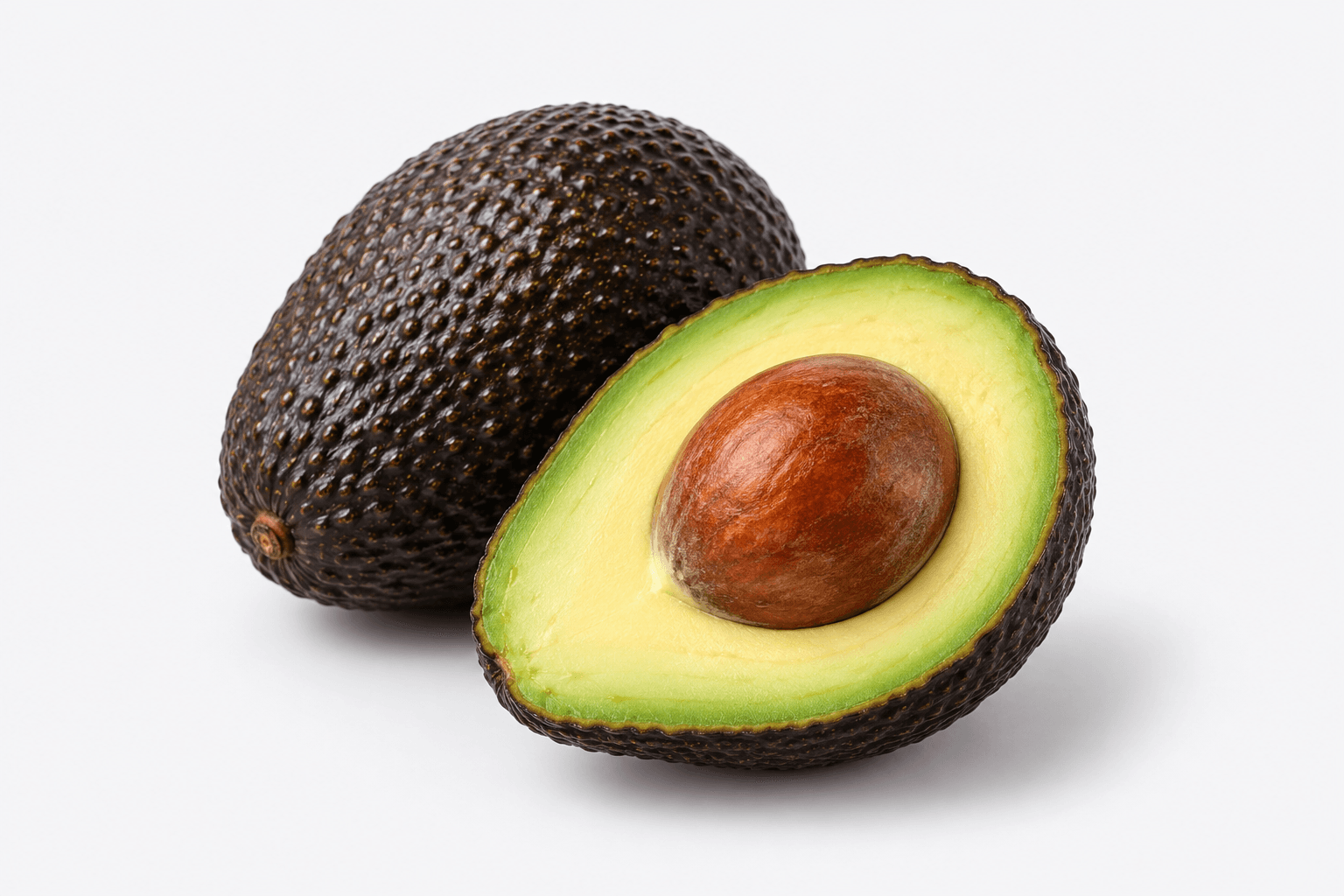
Choosing an avocado. Press near the stem: a slight yield means ripe. Soft all over and it is past.
Do not make it ahead. The avocado browns and the mango weeps. Toss it just before serving.