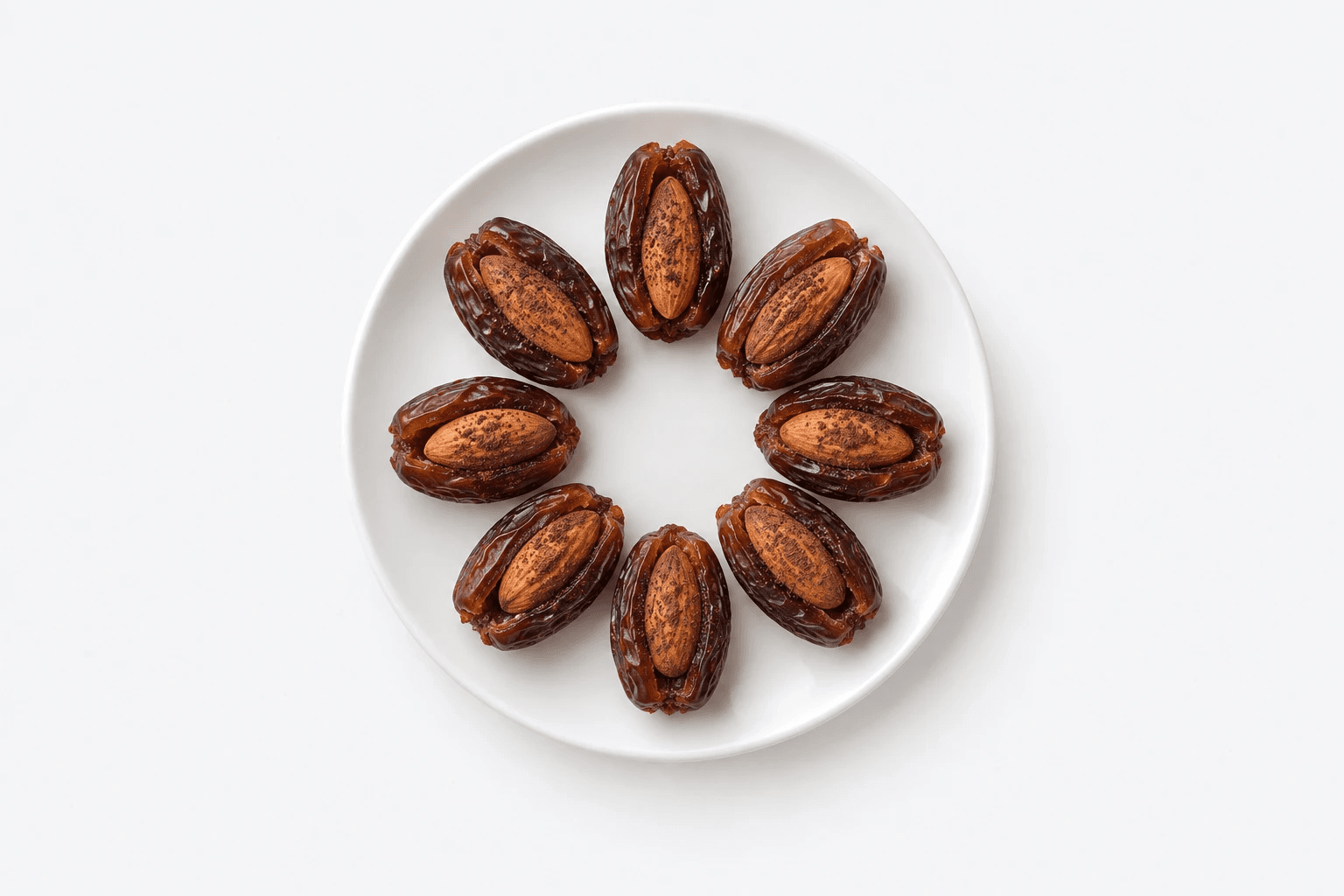
This recipe is not about making dates taste better. It is about eating fewer of them.
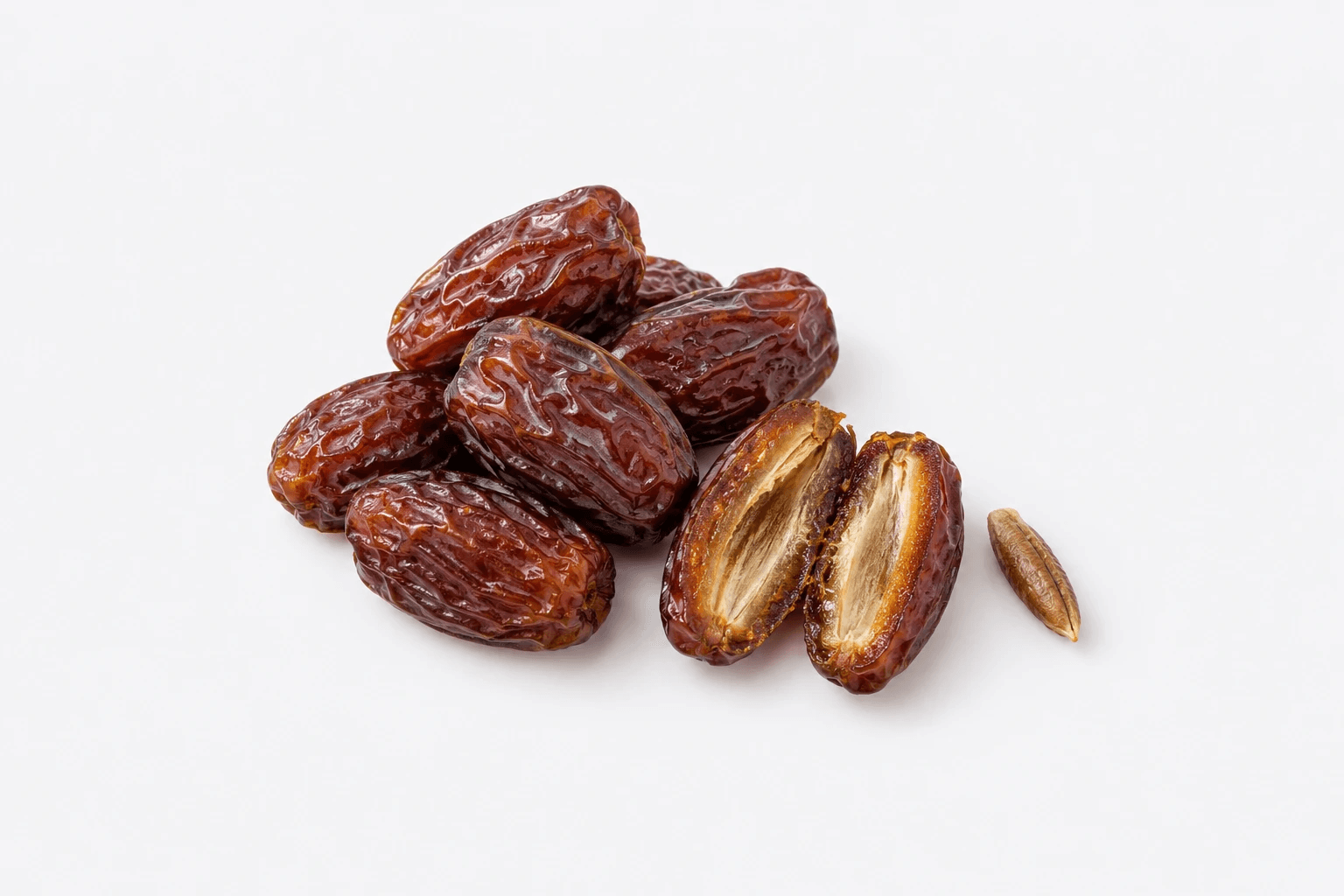
Dates are already sweet and good on their own. The problem is that dried fruit is small, and eaten absent-mindedly nobody counts.
Look at the numbers first.
| One date (24 g) | One bite | A serving (two) |
|---|
| Energy | 66 kcal | about 74 kcal | about 148 kcal |
| Sugar | 16.0 g | 16.0 g | 32.0 g |
| Fibre | 1.6 g | about 1.8 g | about 3.6 g |
Two bites carry 32 g of sugar. The WHO's free-sugar recommendation is under 25 g a day on 2,000 kcal. Sugars held within whole and dried fruit are not free sugars by that definition. Even so, eating this number knowingly is different from eating it unaware.
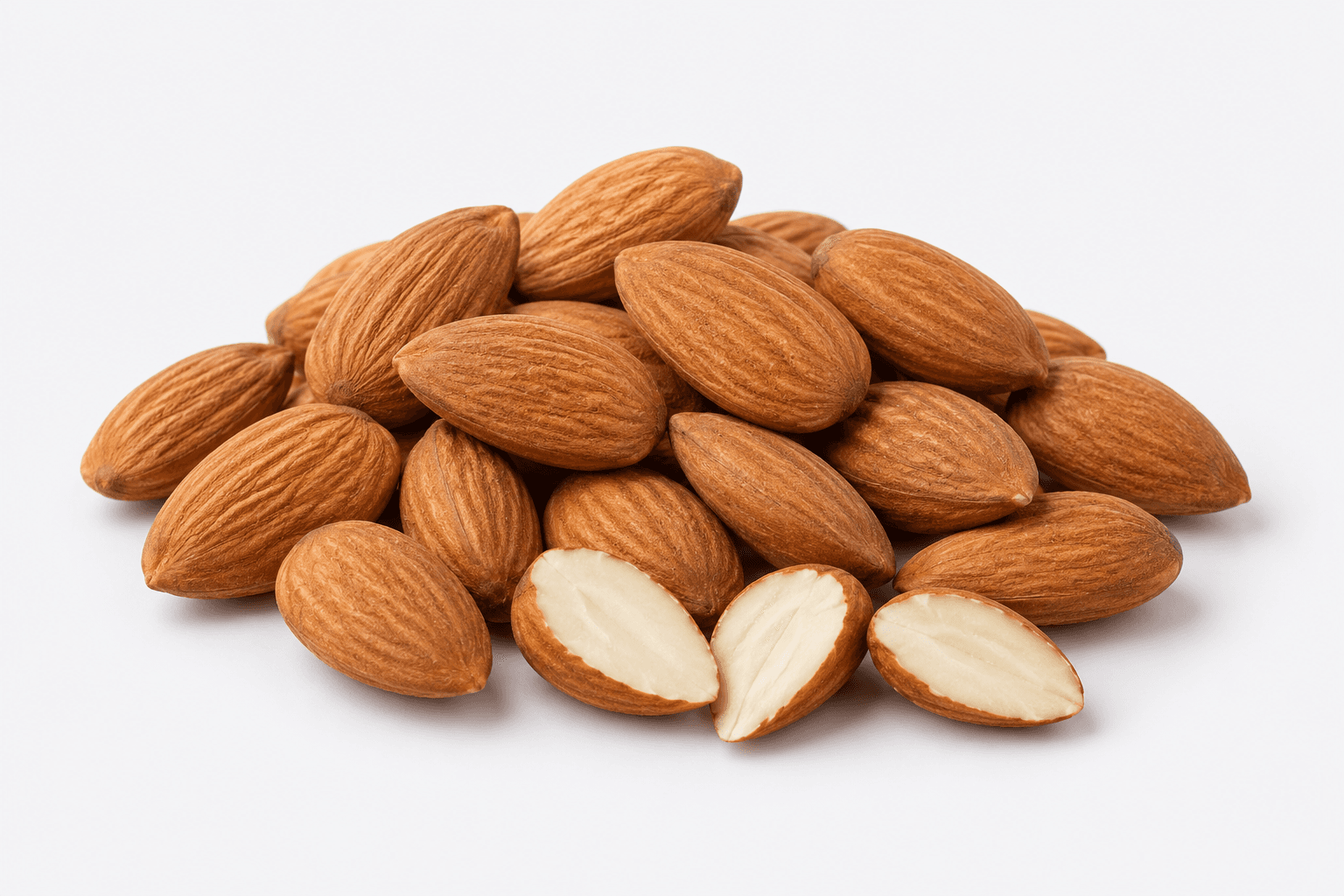
That is why the almond goes in.
- Fat and protein arrive with it. One almond is about 1.25 g, mostly fat
- Chewing takes longer. Soft dates alone go down fast
- Fullness arrives sooner, and the hand reaches back less often
Why toast them. Raw almonds are fine, but 3–4 minutes in a dry pan changes the aroma considerably. Stop before they darken — almonds cook from the inside and colour late.
Why the pinch of salt. Salt makes sweetness read more clearly. It is how you lift the sweetness without adding sugar. A pinch scattered between your fingers is plenty.
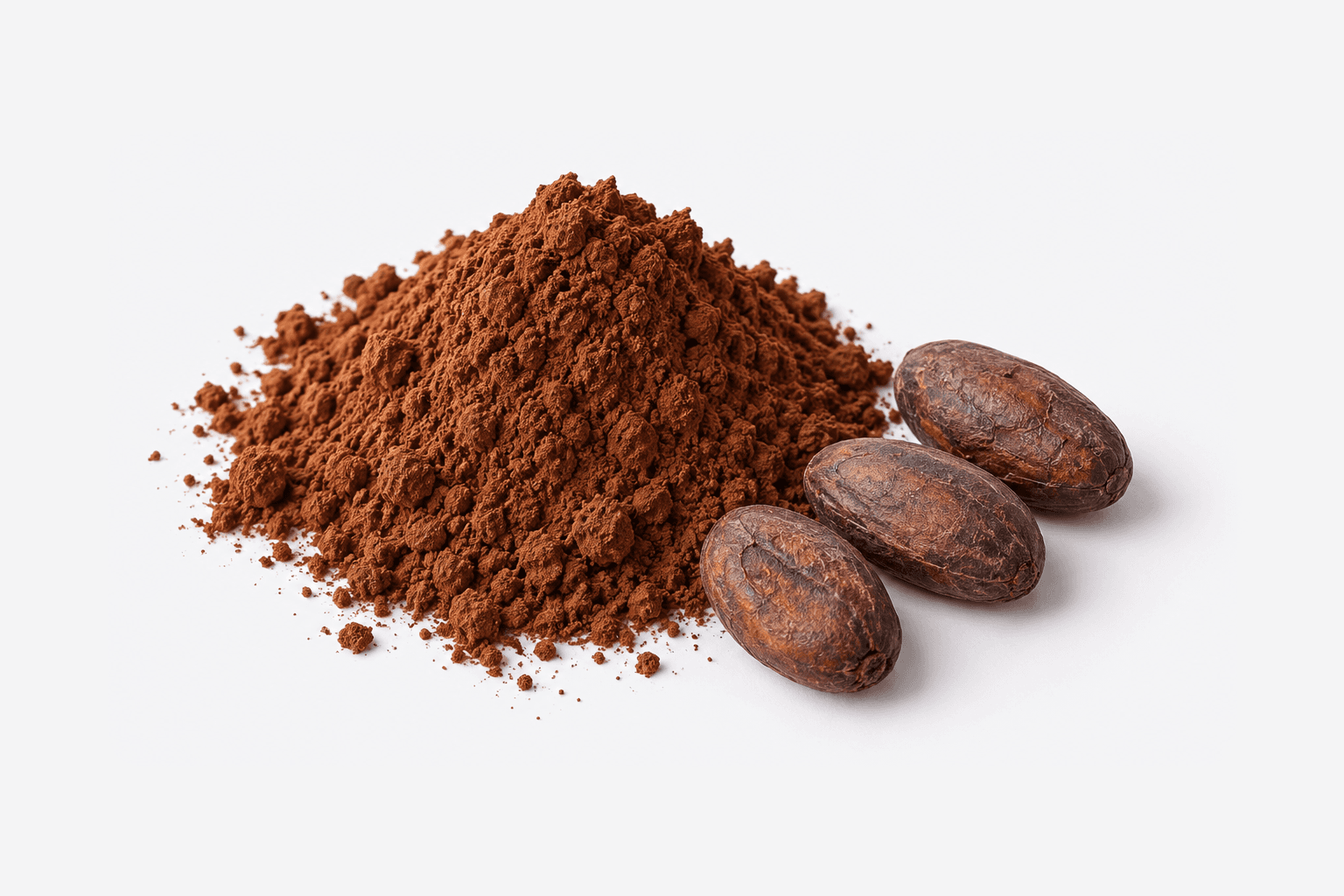
The cocoa is for the surface more than the flavour. Dates are sticky and cling to each other and to your fingers. A thin dusting of unsweetened cocoa cuts that. Use unsweetened — sweetened cocoa defeats the purpose of the recipe.
Counting them onto a plate is the most important line here. Left in the container, it does not stop at two.
With diabetes, put those 32 g in your count. "Natural sugar" does not exempt the arithmetic.
In pregnancy, you may have seen the research on dates and childbirth. Those trials used around six dates a day, roughly 96 g of sugar. Do not copy that on your own — speak to your care team.
Rinse your mouth with water afterwards. Dried fruit sticks to teeth.