Fruits
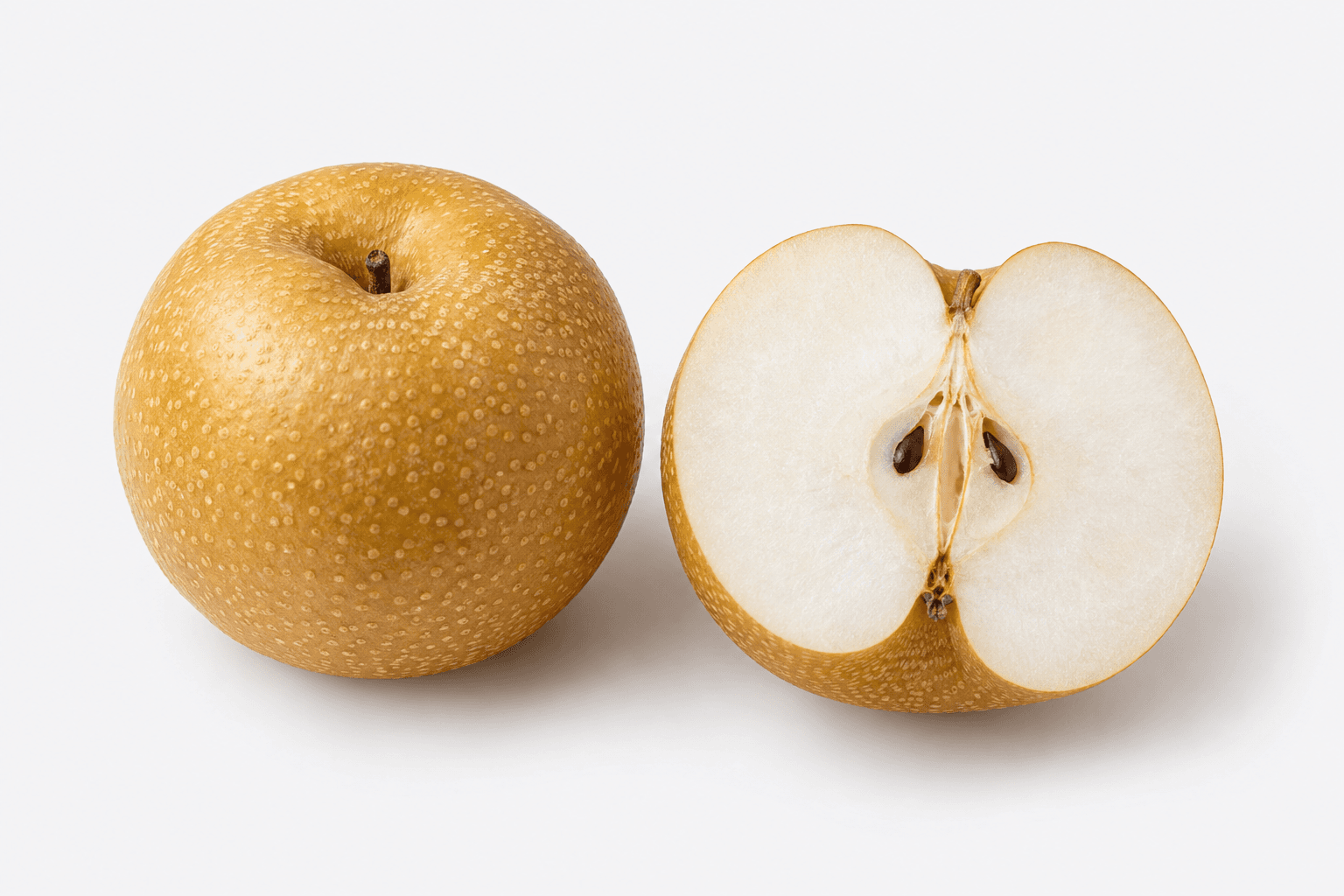
Moderate evidencePear
3.6 g of fibre in 42 kcal per 100 g. A trial of Korean pear juice did find hangover scores 16–21 % lower.
A salad that gets its sweetness without sugar. Slice the pear with the skin on and the fibre stays.
2 servings15 min
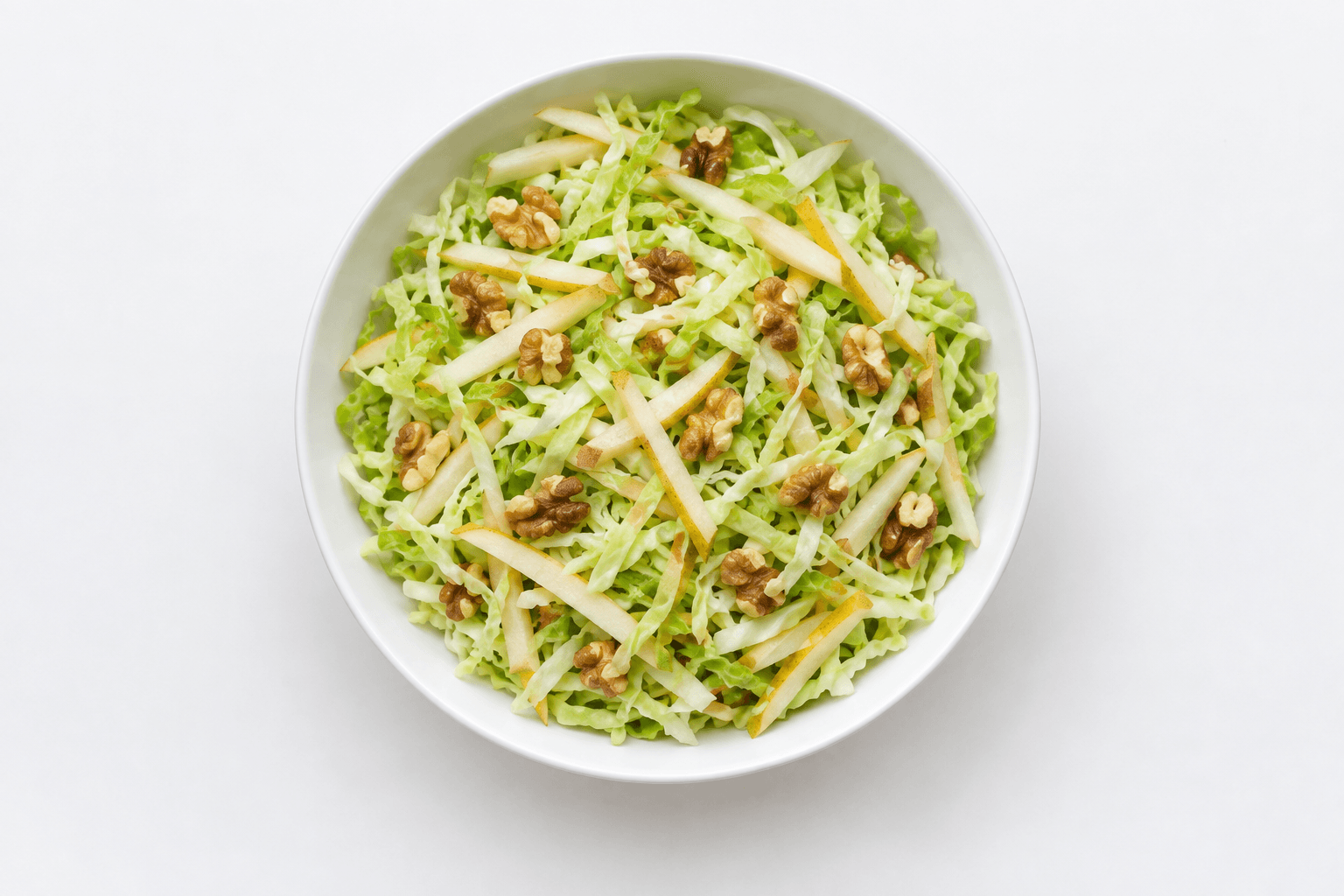
Shred the cabbage as thinly as you can. Thick shreds and the dressing just sits on top.
Soak the shredded cabbage in cold water for 5 minutes, then drain and shake it completely dry. It crisps up.
Toast the walnuts in a dry pan over low heat for 3 minutes, until they darken slightly.
Wash the pear and slice it thinly with the skin on. Toss with half the lemon juice straight away to stop it browning.
Whisk the olive oil, remaining lemon juice, mustard, salt and pepper into a dressing.
Dress everything just before serving and break the walnuts over the top by hand.
There is no sugar in this salad because the pear takes that job. 100 g of pear carries 10.6 g of carbohydrate, most of it sweetness — and 3.6 g of fibre rides along with it, which is what sugar does not do.
Use the skin. Much of a pear's fibre sits in the skin and in the stone cells of the flesh — that faintly grainy bite. Peeling throws part of it away.
Soaking the cabbage is osmosis: the cells take up water and go crisp. Just make sure to shake it dry, or the dressing goes watery.
Note: pears are a high-FODMAP fruit, rich in both fructose and sorbitol. With IBS, use less.
Fruits
Moderate evidence3.6 g of fibre in 42 kcal per 100 g. A trial of Korean pear juice did find hangover scores 16–21 % lower.
Vegetables
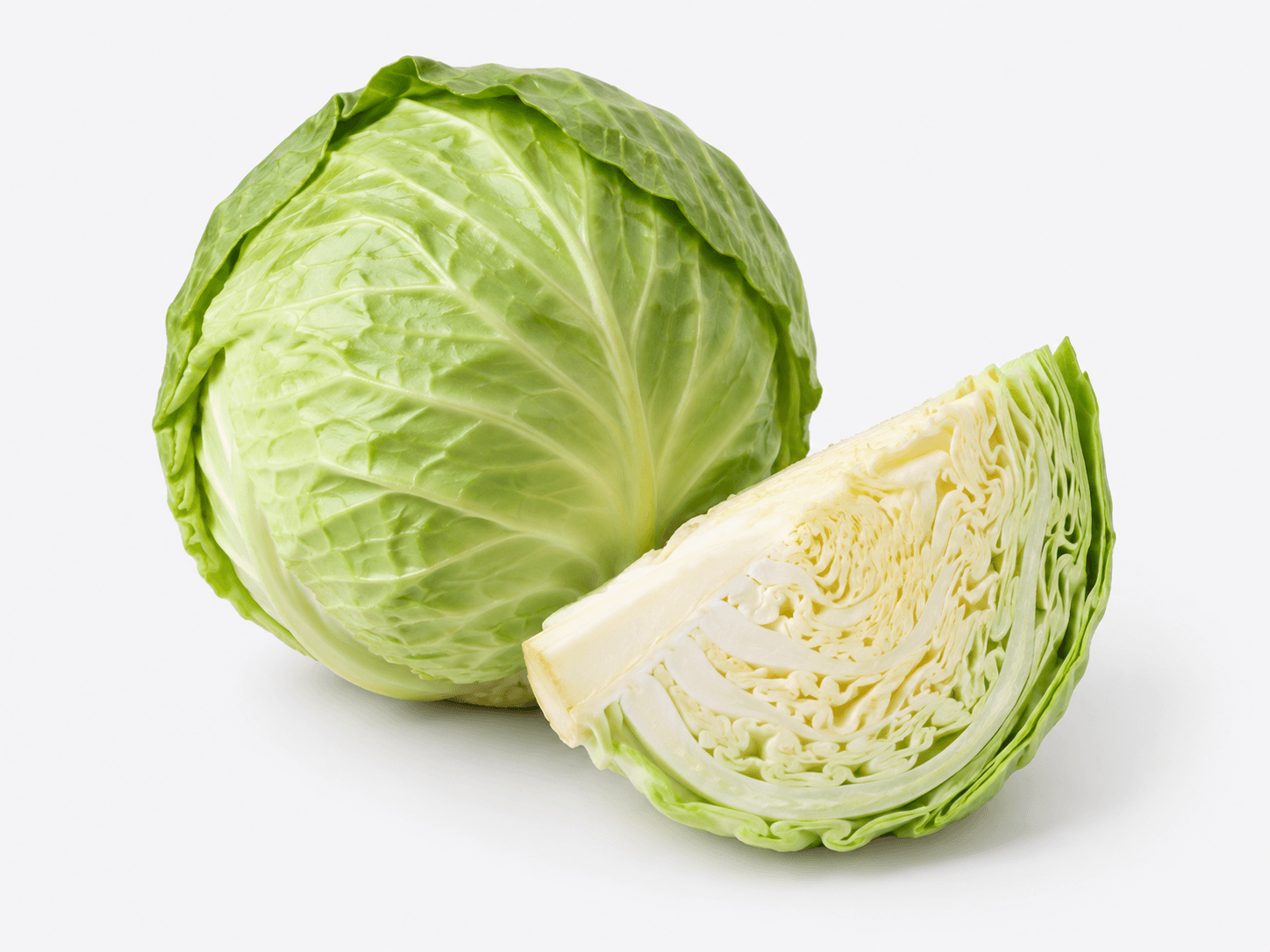
Early researchThere is a reason cabbage juice became a folk remedy for stomach trouble. The evidence, though, is weaker than its reputation suggests.
Nuts & seeds
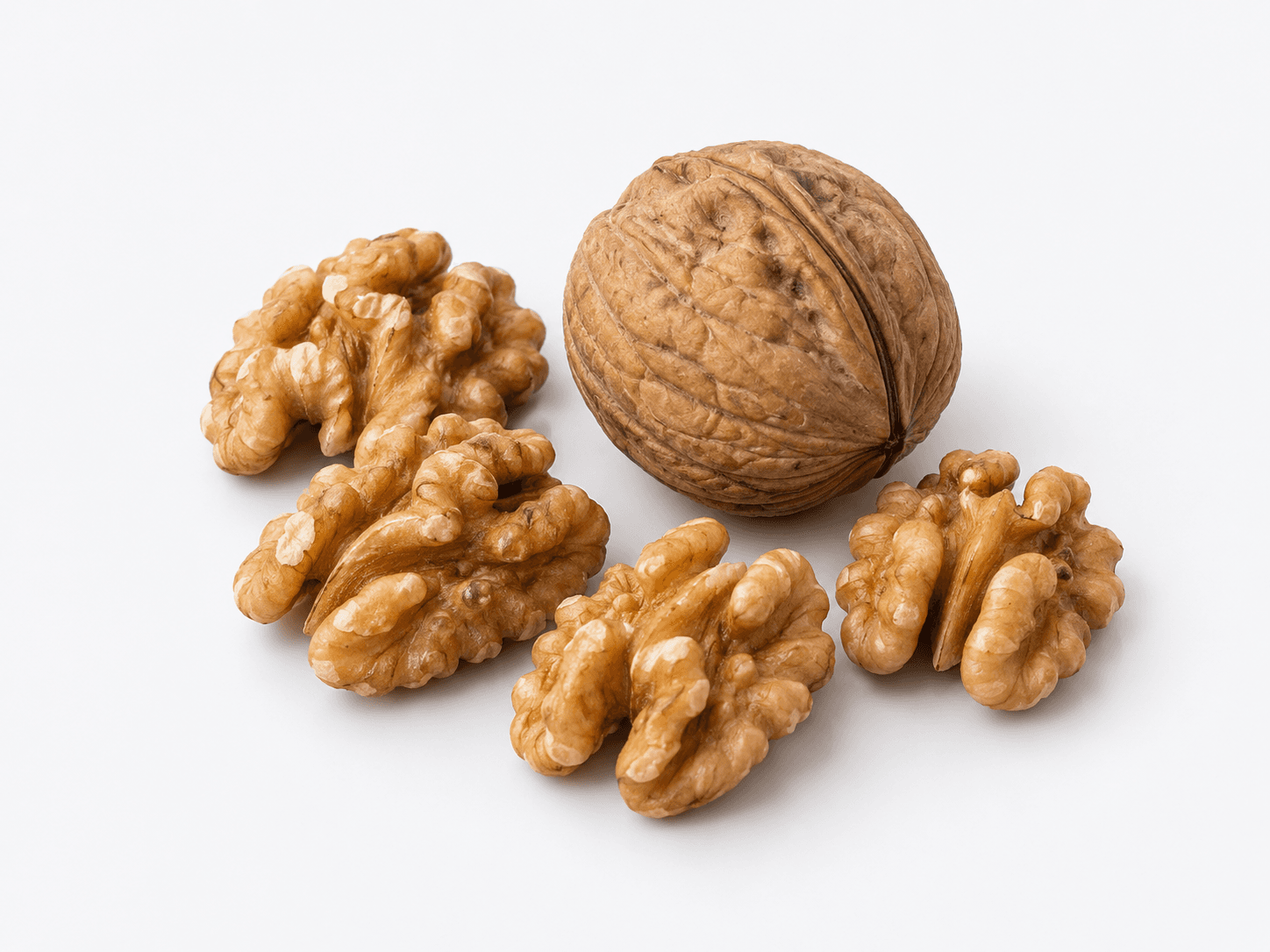
Moderate evidenceWalnuts carry 9.1 g of ALA per 100 g, an order of magnitude beyond other nuts. But the rate at which ALA converts to EPA and DHA is very low.