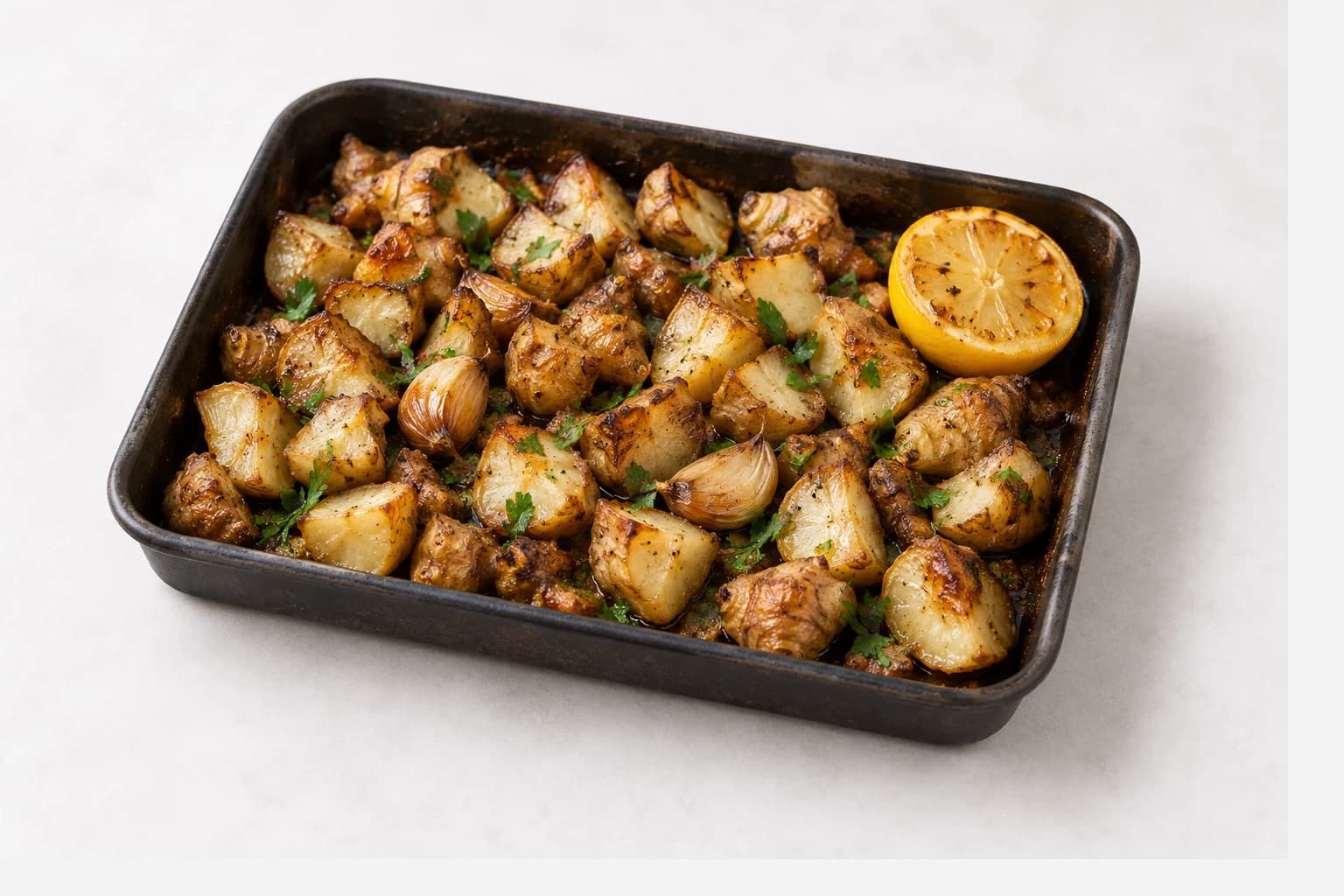
The 100 g serving is there for a reason.
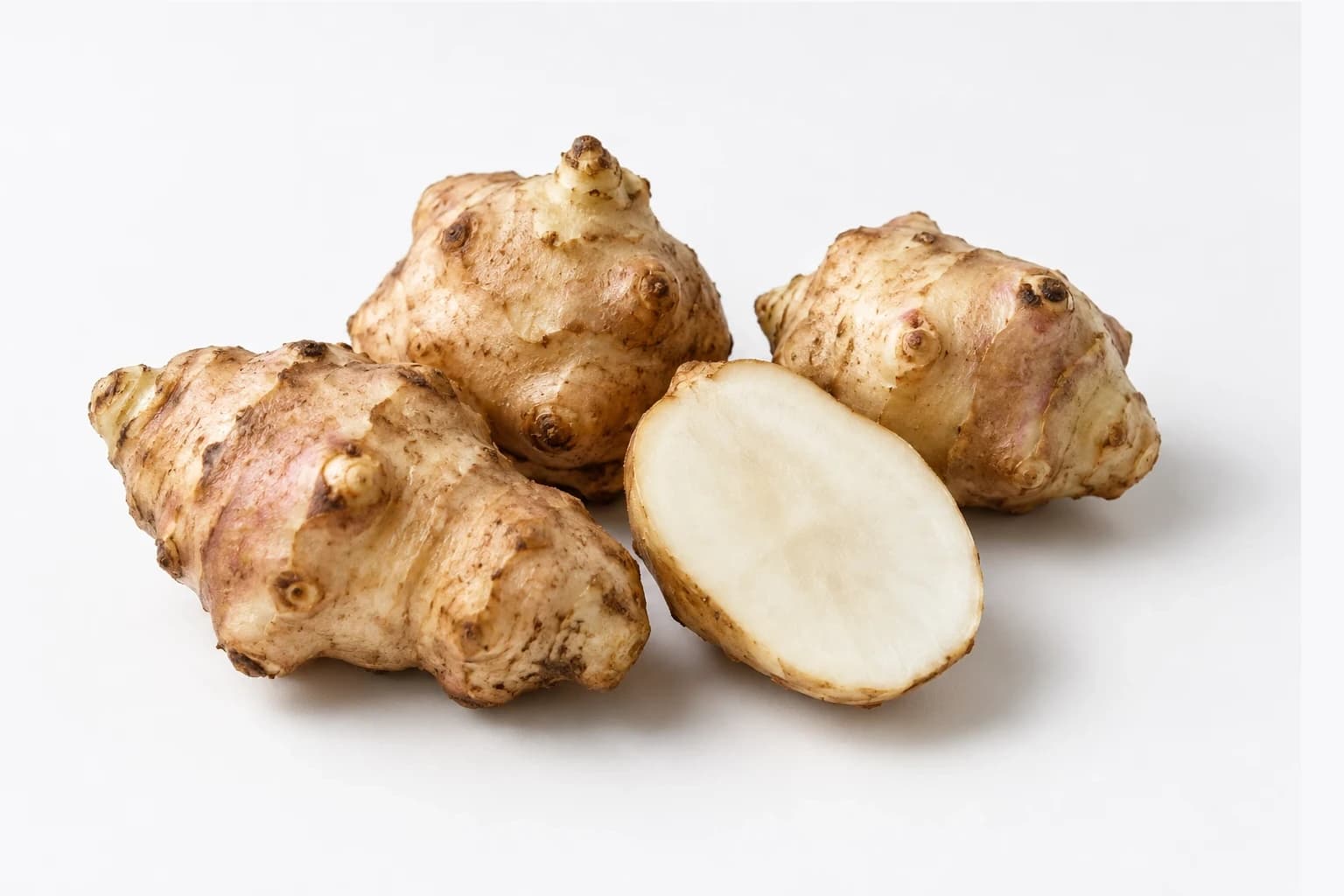
Jerusalem artichokes store inulin, not starch. Inulin is not digested in the small intestine; it reaches the colon, where bacteria ferment it. Fermentation makes gas.
This is not a side effect but the mechanism. In the 2007 double-blind trial in the British Journal of Nutrition, Jerusalem artichoke inulin raised bifidobacteria 1.2 log10 — about sixteen-fold — in 21 days, and in the same trial flatulence was significantly more common than on placebo (p<0.05).
How that trial raised the dose matters. It used 7.7 g of fructan a day for a seven-day adaptation period first, and only then went to 15.4 g a day for 14 days. It did not start high.
Hence 100 g per serving here.
- If this is your first time, split a serving in two. Start at 50 g
- If that is fine, increase at weekly intervals
- Eating all 200 g yourself at one sitting can bring bloating and cramping
Take particular care with irritable bowel syndrome. Inulin is a FODMAP (an oligosaccharide), and Jerusalem artichoke is among the higher-content foods within that group. On a low-FODMAP diet, talk to your clinician.
Why lemon appears twice.
The first time is about browning. Polyphenols at the cut surface meet oxidase and air and turn brown. Acid lowers the enzyme's activity.
The second time is about iron. Jerusalem artichoke carries 3.4 mg of iron per 100 g, very high for a tuber — potato runs 0.8 mg. But it is poorly absorbed non-haem iron, and vitamin C alongside raises the uptake. The tuber's own vitamin C, at 4 mg, is negligible, so the lemon fills that gap.
Keep tea and coffee away from this meal. Tannins lower non-haem iron absorption.
Why not peel. The skin is thin and only needs the soil scrubbed off. It crisps in the oven and improves the texture.
Why roasting. Heat breaks down some of the inulin, which raises the sweetness and leaves slightly less gas. Sliced raw into a salad it is crisp but ferments more.
Per serving:
| Per serving |
|---|
| Jerusalem artichoke 100 g | 73 kcal, potassium 429 mg, iron 3.4 mg, choline 30 mg |
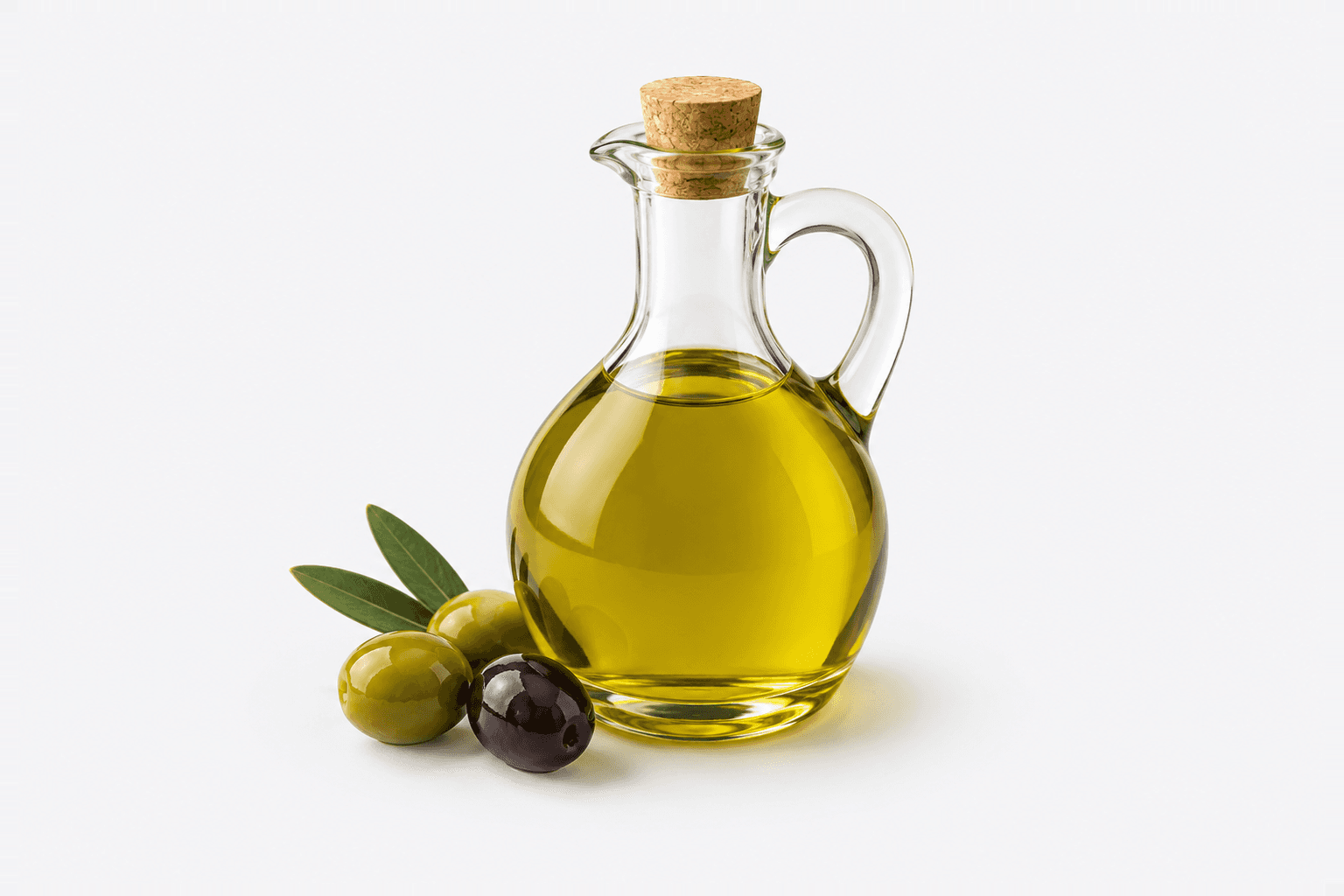
| Olive oil ¾ tbsp | 90 kcal |
| Total | about 165 kcal |
That 73 kcal is an overstatement of what you absorb. Much of the 17.4 g of carbohydrate is inulin, which is not absorbed in the small intestine and is only partly recovered as fermentation products.
With 429 mg of potassium, talk to your clinician if your kidney function is reduced.
Watch for daisy-family allergy. The Jerusalem artichoke is in that family, and cross-reaction is reported with ragweed, mugwort and chrysanthemum allergy.