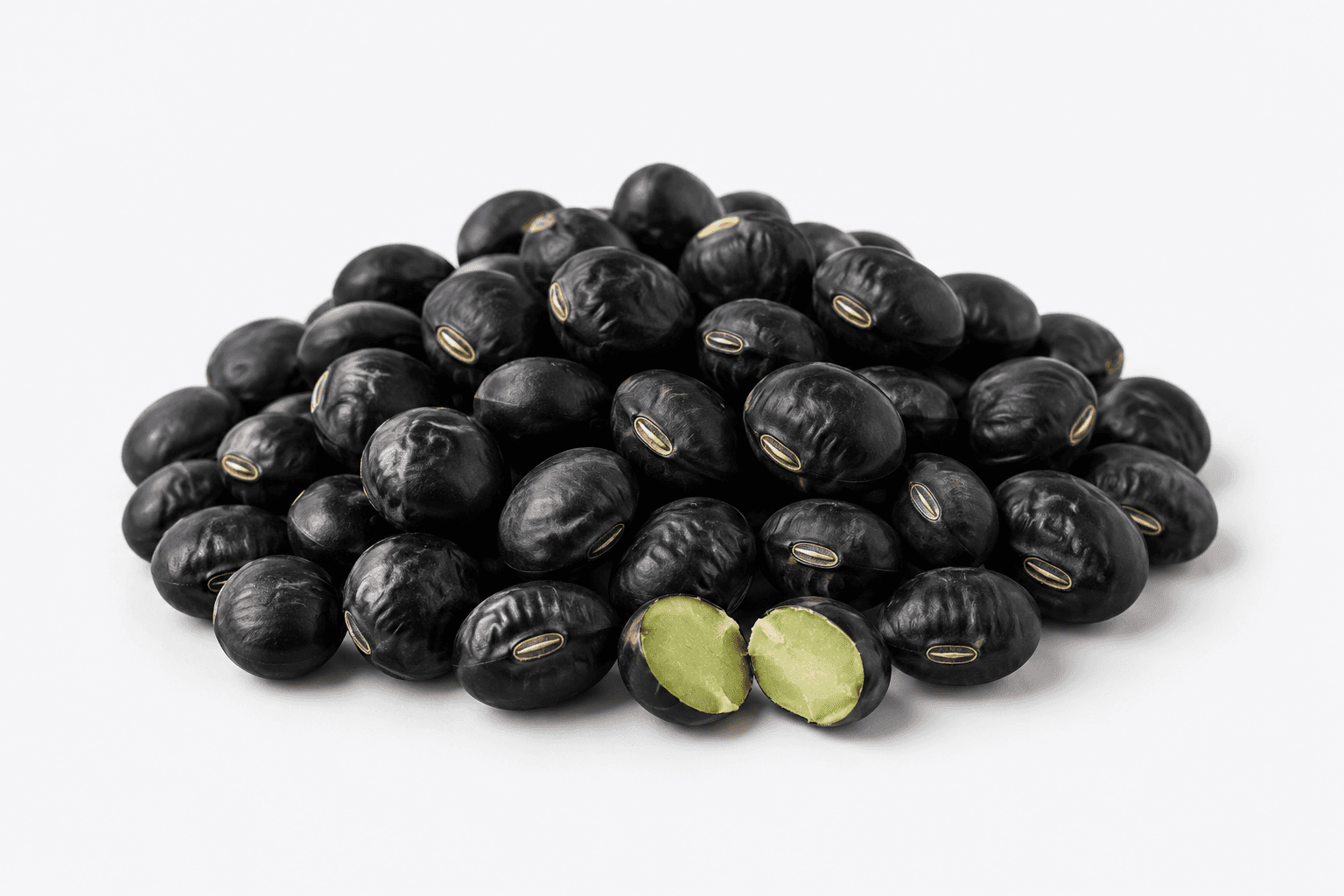
Grains & legumes
Nutrition dataBlack soybean
It is genuinely excellent for protein and anthocyanins. The popular claim about hair, however, has almost no clinical support.
In the same trial, black beans lowered LDL and peas did not. So this salad uses both — with more bean than pea.
2 servings15 min
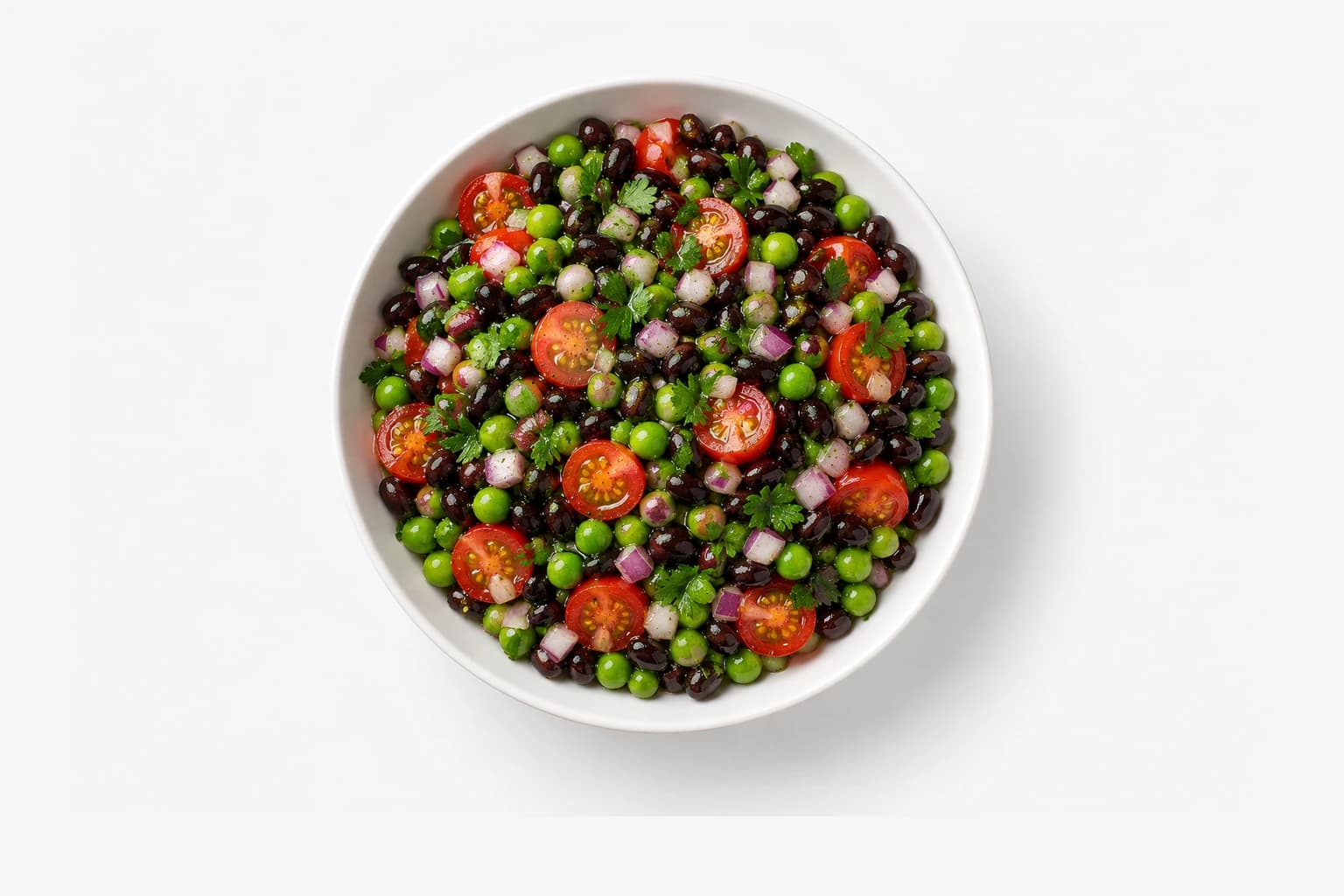
Blanch 100 g of frozen peas for 90 seconds, drain and cool under cold water.
Tip 160 g of cooked black beans into a sieve and rinse under running water. If they are canned, do not skip this.
Finely chop 40 g of red onion and soak it in cold water for 5 minutes, then squeeze dry. It takes the harshness out.
Halve the cherry tomatoes.
In a small bowl, whisk 1½ tbsp olive oil, 1 tbsp lemon juice, salt, pepper and the cumin into a dressing.
Put the beans, peas, onion and tomatoes in a large bowl and pour over the dressing, tossing lightly.
Add the parsley last. Ten minutes of standing lets the flavours settle in.
There is a reason for the ratio in this salad.
A 2024 trial in the Journal of Nutrition split pulses by type.
Adults with mild hypercholesterolaemia were divided into three groups of 60 and given 120 g a day of beans, 120 g a day of peas, or the same foods made with white rice, for six weeks. Randomised, single-blind.
| LDL change (mmol/L) | 95% CI | |
|---|---|---|
| Beans | −0.21 | −0.39 to −0.03 |
| Peas | −0.11 | −0.29 to +0.07 |
The beans were significant; the peas' interval crossed zero. The authors concluded that beans, but not peas, lowered LDL-cholesterol.
Which is why this salad is 160 g of black beans to 100 g of peas. More of the one with the evidence.
But there is no reason to drop the peas either. They bring 40 mg of vitamin C and 2,480 µg of lutein per 100 g, and black beans have essentially neither. Each fills in what the other lacks.
Per serving:
| Per serving | |
|---|---|
| Black beans 80 g | about 106 kcal, protein 7.1 g, fibre 6.6 g |
| Peas 50 g | 41 kcal, protein 2.7 g, fibre 2.9 g, vitamin C 20 mg |
| Olive oil ¾ tbsp | 90 kcal |
| Tomato and onion | about 18 kcal |
| Total | about 255 kcal, fibre around 9.5 g, protein around 10 g |
Nine and a half grams of fibre is 34% of the daily value. High for a single bowl.
But it is not the trial's dose. That trial used 120 g a day. A serving here has 80 g of black beans — two-thirds of it — and the trial fed people every day for six weeks. One meal does not move cholesterol.
Why rinse the beans.
The packing liquid in canned beans carries salt. Tipping them into a sieve and rinsing washes a good share of the sodium away. The same goes for canned peas — fresh peas carry 5 mg of sodium per 100 g, canned far more.
Rinsing also takes some of the oligosaccharides with it. That helps if gas is a concern.
Why the lemon juice.
Not only for flavour. Vitamin C helps the absorption of plant iron (non-haem iron). Both black beans and peas carry iron, but it is non-haem and poorly absorbed. Vitamin C from the lemon and the raw tomatoes on the same plate works in its favour.
But the peas lose vitamin C in the blanching. That is why raw tomato and raw lemon juice sit alongside — uncooked vitamin C stays on the plate.
Why soak the onion. The harsh compounds in red onion dissolve into the water. Five minutes is enough; much longer and the aroma goes too.
Why cumin. It is a standard spice with beans, and its aroma is oil-soluble, so whisking it into the dressing spreads it far better than sprinkling it over the beans.
Why ten minutes improves it. Beans have smooth skins that dressing struggles to cling to. Given time, it soaks in. But leave it more than a day and the peas go soft.
Take care with irritable bowel syndrome. Black beans and peas both contain oligosaccharides, and together the amount adds up. On a low-FODMAP diet, start with a small portion of this one.
If cholesterol is the goal, look at the habit rather than the bowl. The trial ran every day for six weeks.
Grains & legumes
Nutrition dataIt is genuinely excellent for protein and anthocyanins. The popular claim about hair, however, has almost no clinical support.
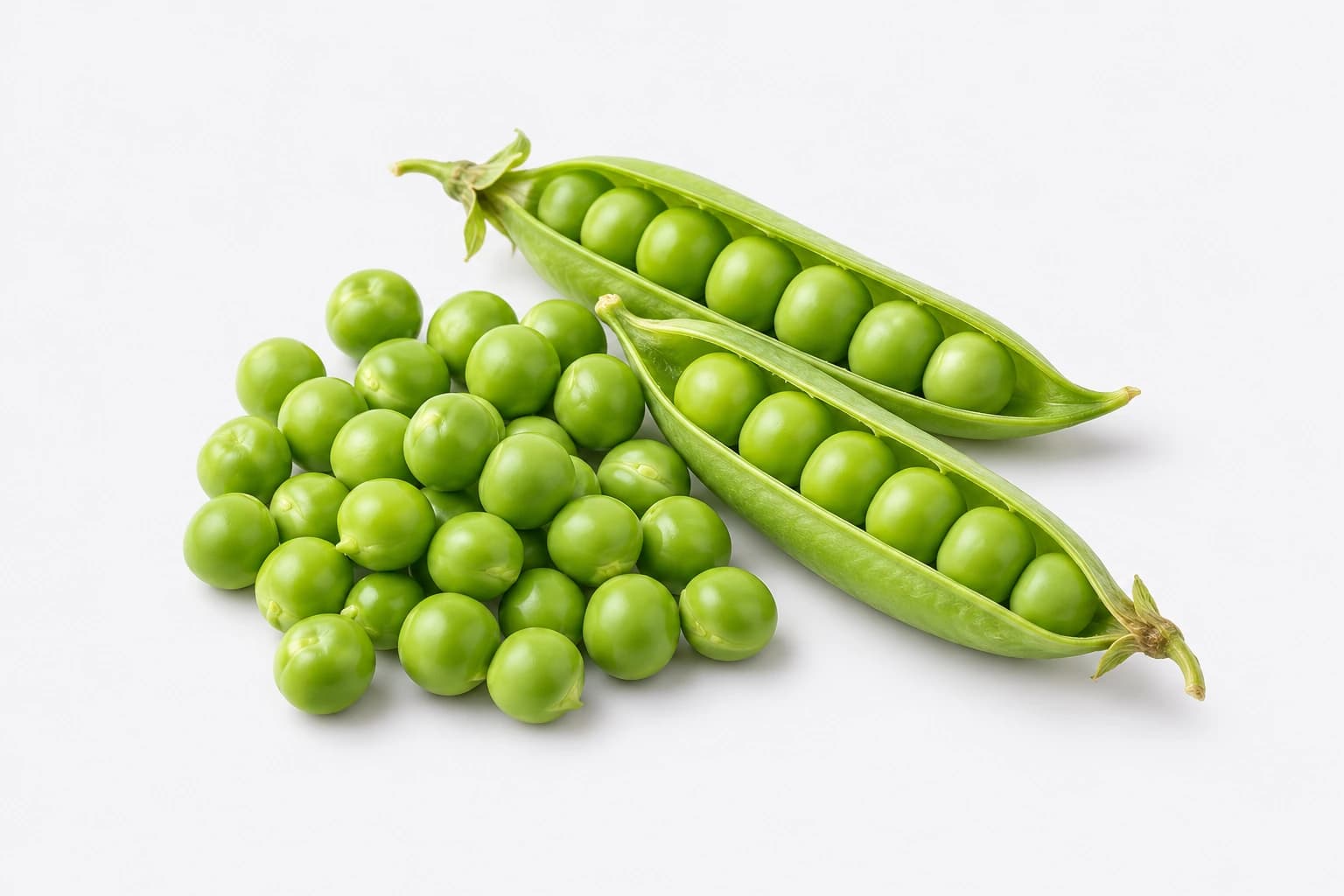
Vegetables
Nutrition dataIn a three-arm trial of 180 people, beans lowered LDL by 0.21 mmol/L while peas managed 0.11 with a confidence interval crossing zero. The composition is good — 5.42 g of protein, 40 mg of vitamin C and 5.7 g of fibre per 100 g.
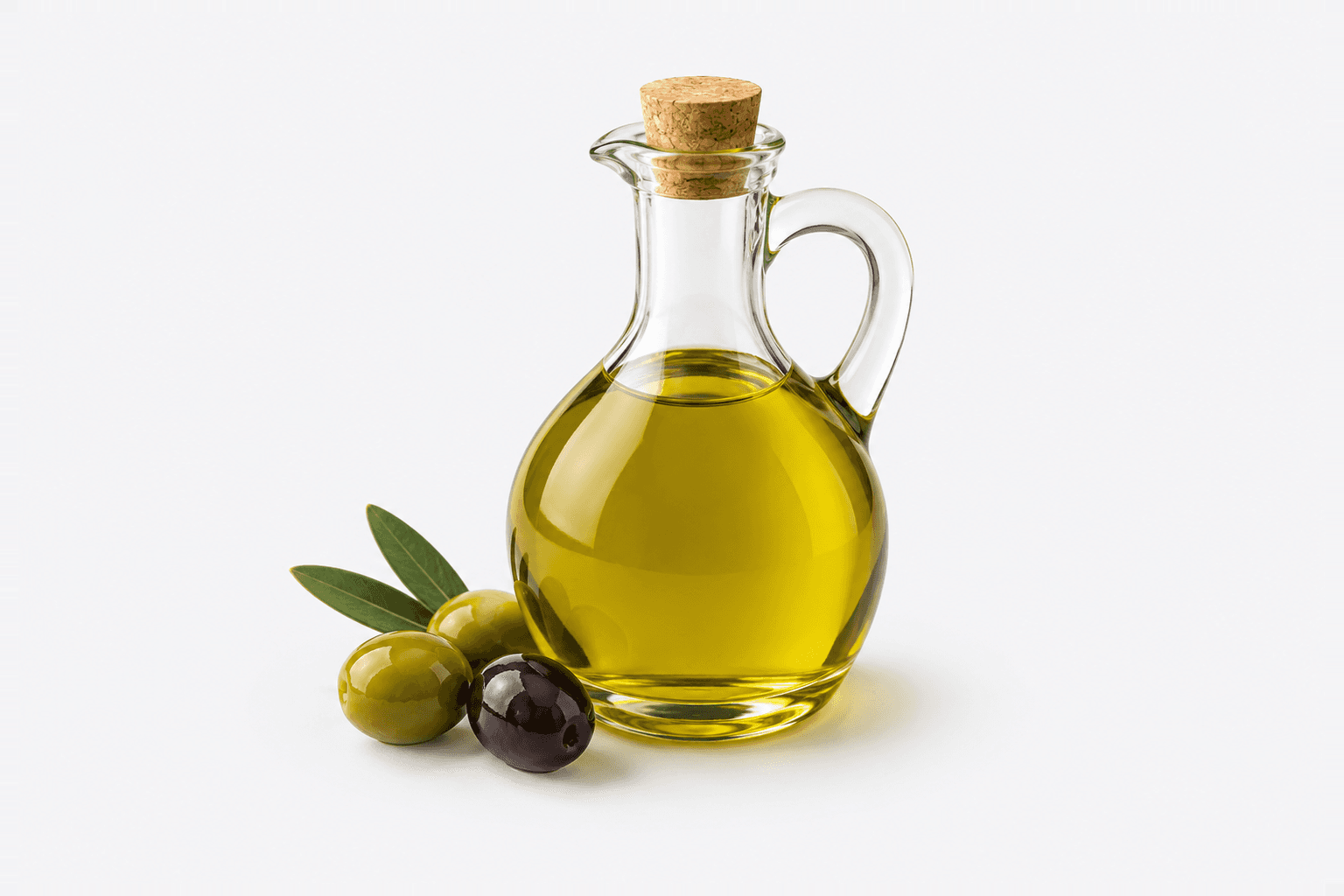
Oils & fats
Strong evidenceCardiovascular events were 31 % lower in a randomised trial of 7,447 people. Against other vegetable oils, though, there was no difference.
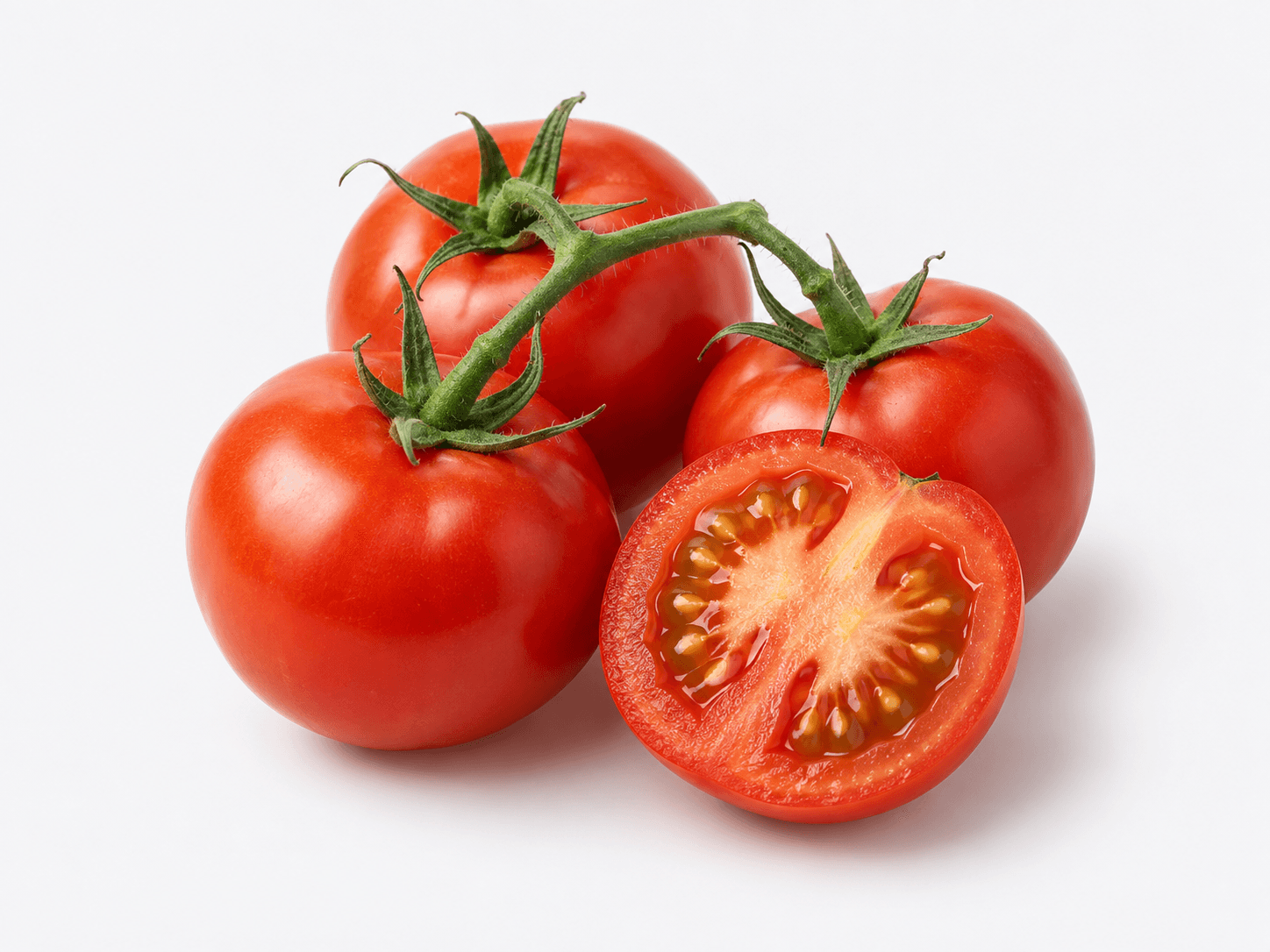
Vegetables
Early researchCooked beats raw here. Heat multiplies how much lycopene your body can actually absorb.