Contents
What it is
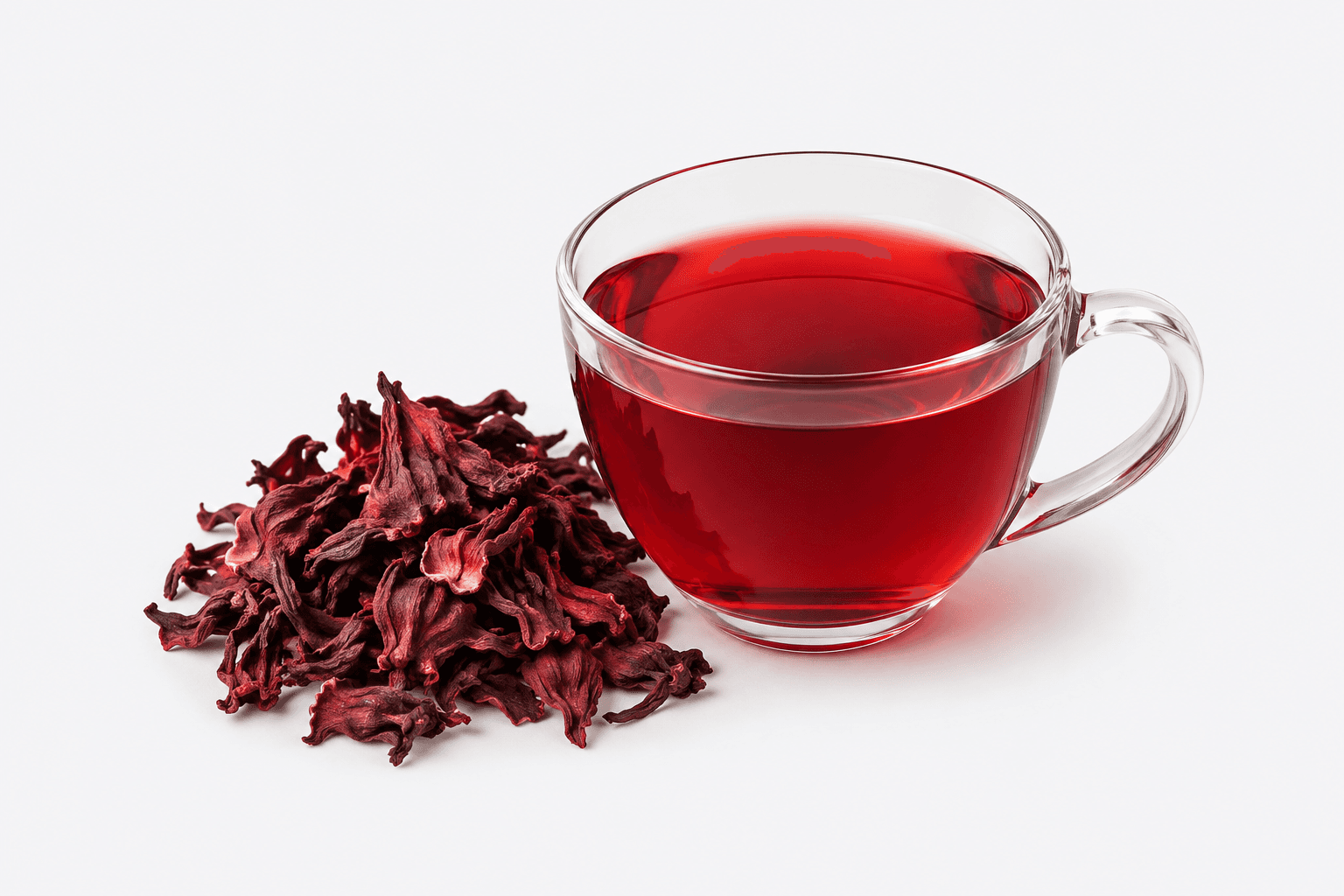
Hibiscus tea is an infusion of dried calyces — not the petals, but the fleshy red cups that remain and swell after the flower drops. The plant belongs to the mallow family, the same family as okra. It is native to West Africa and is drunk widely in Egypt, Sudan and Mexico. It is not made from the tea plant, so it contains no caffeine, and it is marked by a vivid red colour and a very sharp sourness. That sourness comes from organic acids such as citric and malic, and the drink is often sweetened and served cold.
Scientific name Hibiscus sabdariffa
Hibiscus is that rare tea with randomised blood pressure trials behind it and no caffeine. Unlike black or green tea it is not Camellia sinensis but dried hibiscus calyces, so caffeine is zero.
A 2025 analysis pooled 26 randomised controlled trials with 1,797 participants. Against placebo and other teas, systolic and diastolic pressure fell dose-dependently. Total cholesterol, LDL and fasting glucose also fell, and HDL rose.
Here a step back is needed. The paper's conclusion says hibiscus showed blood-pressure lowering "comparable to antihypertensive drugs". But the body of the paper says no significant difference was found between hibiscus and those drugs — which is not the same as proving equivalence. With few head-to-head trials, a real difference can go undetected.
No difference found is not the same as the same. That distinction is the point of this page.
Key benefits
- Moderate evidence
Blood pressure fell dose-dependently
[1]A 2025 analysis in Complement Ther Med pooled 26 randomised controlled trials, 1,797 participants.
Against placebo and other teas, both systolic and diastolic pressure fell in proportion to dose. The effect was clearer under three conditions:
- Participants over 50
- Trials running longer than four weeks
- Trials at low risk of bias
The last one matters. Many compounds only show an effect in poor-quality trials; here the effect was more visible in the better-run ones.
Beyond blood pressure, total cholesterol, LDL and fasting glucose fell while HDL rose.
But the size is hard to translate into a feeling. This was an overview of reviews, so it does not reduce to one number. For scale: black tea on this site came to −1.04 mmHg systolic, and cutting sodium from 2.3 g to 1.5 g a day gives −5 to −6 mmHg. No food substitutes for a blood pressure drug, which delivers more than −10 mmHg.
- Nutrition data
Having no caffeine is itself the use
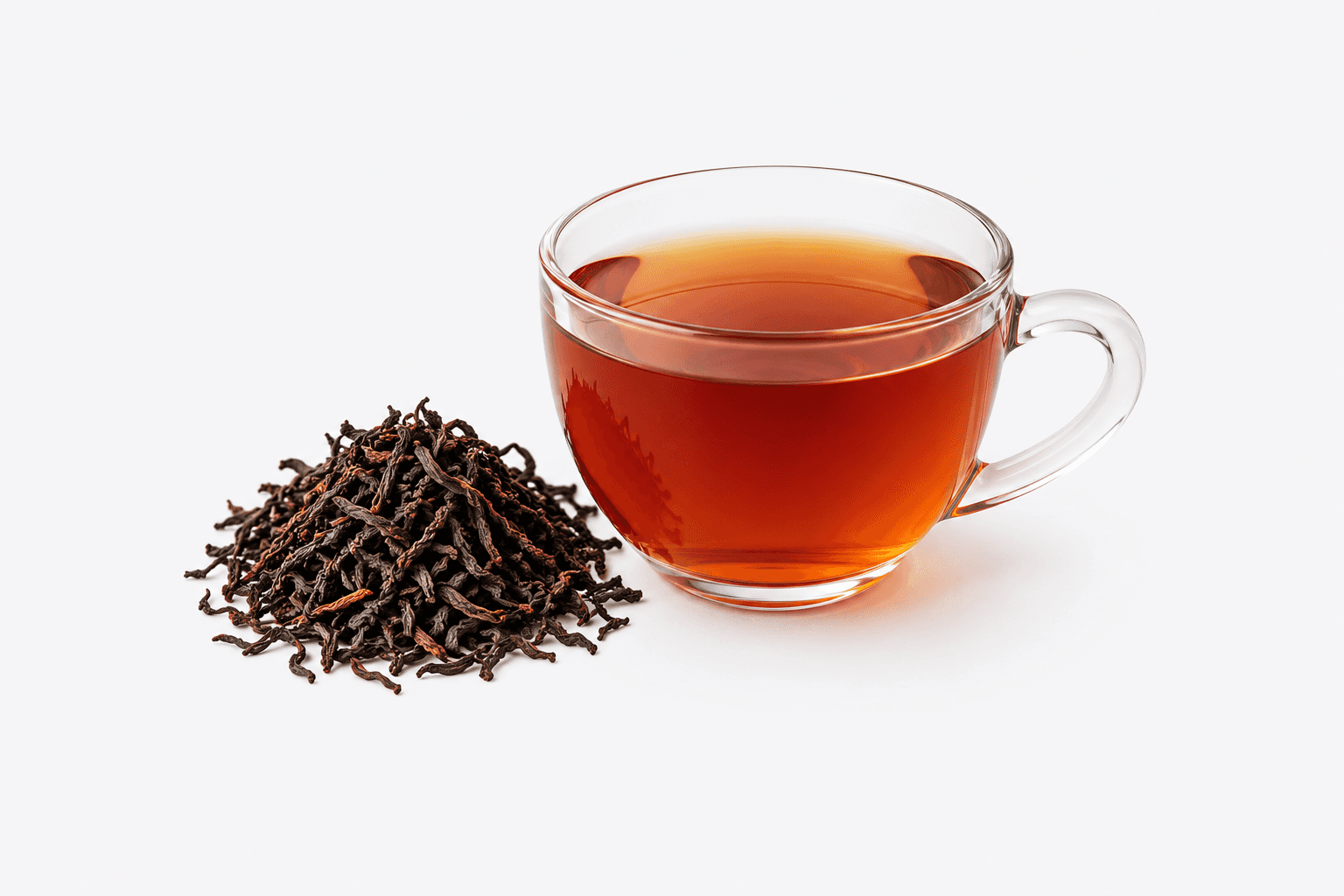
Hibiscus tea contains zero caffeine, against roughly 48 mg in a cup of black tea and 95–200 mg in coffee.
That is practical for two reasons.
- You can drink it in the evening. Caffeine's five-to-six-hour half-life reaches into sleep; hibiscus does not have that problem.
- It stays out of the pregnancy caffeine budget, where the ceiling is 200 mg. (Though hibiscus itself is not recommended in pregnancy — see the cautions.)
Energy is 0 kcal. Drunk unsweetened, replacing a soft drink (about 100 kcal and 26 g of sugar) is the most certain benefit on this page.
Minerals: manganese 0.477 mg — a cup gives around half the adult requirement — and potassium 20 mg. Not enough to count as a mineral source.
Its sharpness invites sugar. Add sugar and most of the advantages above disappear.
- Not established
The other claims are not established
Hibiscus is credited with weight loss, liver protection, diuretic action and antimicrobial effects. Most of that is in vitro, animal work or small preliminary studies.
No trial has measured disease outcomes — heart attack, stroke, death. Blood pressure and lipids, both intermediate markers, are as far as the evidence reaches.
What the analysis said about safety belongs here too. A minor, clinically insignificant rise in aspartate aminotransferase (AST) was observed, without an increase in adverse event risk. But the authors wrote that long-term and therapeutic-dose safety requires careful monitoring.
Drinking it as tea and taking a concentrated extract are different things. Many of the trials above used standardised extracts or tea at a fixed concentration.
How to eat it well
- Steep five to ten minutes in boiling water. Longer deepens both the red and the tartness.
- Unsweetened is the condition. If the acidity is too much, steep it with cinnamon or orange peel.
- It works cold. As an iced tea it replaces sweet summer drinks easily.
- Give it four weeks or more. The clearer effects in the analysis came from trials running past four weeks.
- Keep a little distance from meals. It is acidic enough to trouble a sensitive stomach on an empty one.
- Many commercial 'hibiscus blends' add sugar or fruit flavouring. Read the ingredients.
How to read the grades
Each benefit carries a label showing how far research on people supports it. Grades differ between items even within the same ingredient.
- Nutrition data
- A fact verifiable from food composition databases or health authorities. This is a different kind of statement from a clinical effect.
- Strong evidence
- Consistently confirmed across randomised controlled trials or meta-analyses.
- Moderate evidence
- Human studies exist, but effect sizes are small or results are mixed.
- Early research
- Cell or animal work, or small preliminary studies.
- Not established
- Commonly claimed, but not confirmed in studies on people.
What to watch out for
- On blood pressure medication, talk to your clinician. Together they could drop pressure too far. Do not reduce your medication on your own.
- Not recommended in pregnancy or while breastfeeding. Safety is not established, and it has a traditional history of use as an emmenagogue.
- With reflux or gastritis, the acidity can aggravate symptoms.
- On glucose-lowering medication, fasting glucose may fall further — check with your clinician.
- With impaired liver function, avoid concentrated extracts and seek advice.
- The evidence above is intermediate markers. No trial has looked at cardiovascular events or death.
Nutrition
Per 100 g of brewed hibiscus tea, about half a cup. A cup is 240 g. It contains no caffeine.
Percentages are of the US FDA Daily Value for adults and children 4 and over. National reference intakes differ by sex and age.
Calculate this alongside other ingredients →
Key nutrients
By health concern
Sources
The databases and health authorities this article's nutrition figures and health statements draw on.
- 1Efficacy and safety of Hibiscus sabdariffa in cardiometabolic health: An overview of reviews and updated dose-response meta-analysisMeta-analysisNorouzzadeh M, et al. Complement Ther Med 2025PMID 39870328
- 2USDA FoodData CentralFood composition database
- 3European Food Safety Authority (EFSA)Health authority
- 4NIH Office of Dietary SupplementsHealth authority
- 5PubMedResearch literature