Contents
What it is
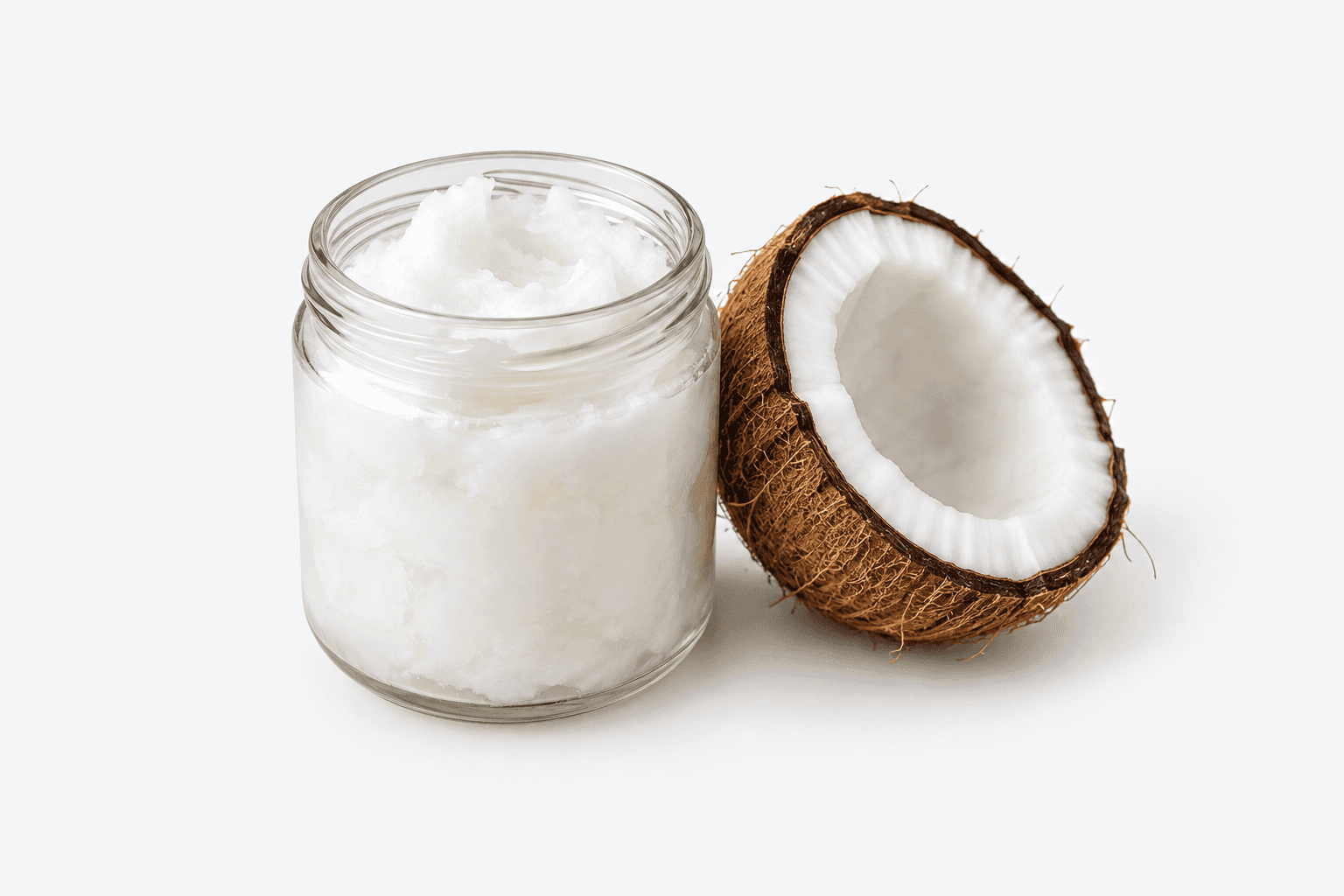
Coconut oil is pressed from the white flesh of the coconut, grown across tropical Asia and the Pacific. Although it is a plant oil, more than 80 percent of its fat is saturated, so it sets white and solid below about 24°C and melts clear above it — the trait that most distinguishes it from other vegetable oils. Refined oil, pressed from dried copra, has no aroma; virgin oil, pressed from fresh flesh, keeps the coconut scent. Its smoke point is not especially high, so it is a poor choice for hot deep-frying.
Scientific name Cocos nucifera
Coconut oil was sold as a superfood through the 2010s. The story was that its medium-chain fats are metabolised differently — saturated, but fine.
As trials accumulated, that story collapsed.
A 2020 meta-analysis in Circulation pooled 16 trials comparing coconut oil head to head with other oils. The result was LDL cholesterol 10.47 mg/dL higher. The direction did not waver.
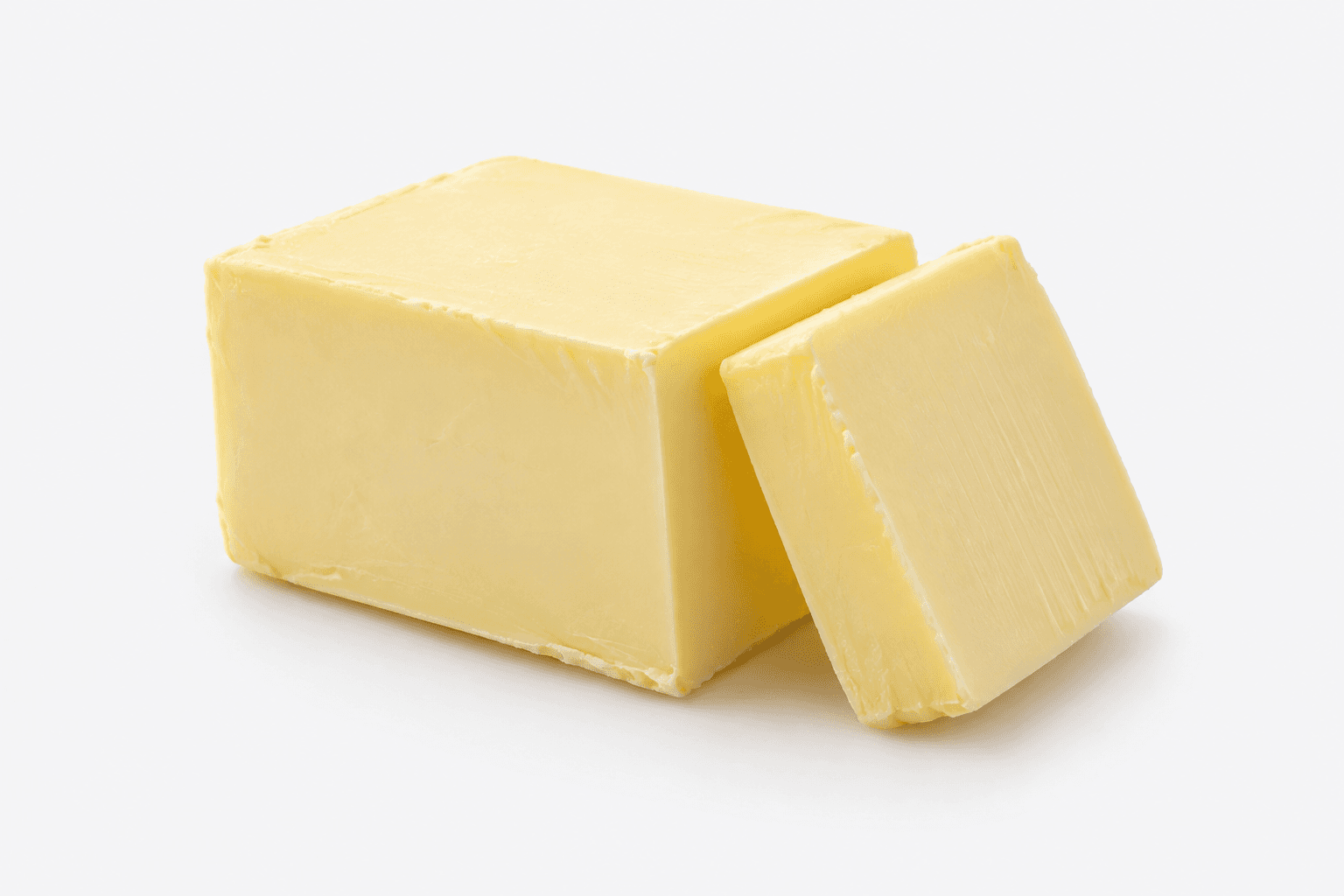
Given the composition it is no surprise. Of 100 g, 82.5 g is saturated fat — more than butter's 50.5 g, six times olive oil's 13.8 g.
This page does not tell you to stop using coconut oil. There are reasons to use it, for aroma and texture. A health reason is not among the ones the evidence supports.
Key benefits
- Strong evidence
It raises LDL cholesterol by 10.5 mg/dL
[1]This is not a benefit but a confirmed adverse effect. It sits at the top because it is the question people actually search for.
The 2020 meta-analysis pooled 16 clinical trials comparing coconut oil with other oils. Against non-tropical vegetable oils — olive, canola and the like — coconut oil produced:
- LDL cholesterol +10.47 mg/dL (95 % CI 3.01–17.94)
- Total cholesterol +14.69 mg/dL
- HDL cholesterol +4.00 mg/dL
- No significant difference in triglycerides
Some argue the HDL rise cancels the LDL rise. But trials that raised HDL with drugs — niacin in AIM-HIGH and HPS2-THRIVE, the CETP inhibitors — did not reduce cardiovascular events. The assumption that a higher HDL number is itself a benefit no longer holds up.
Inflammatory markers and body fat showed no significant difference between coconut oil and the comparison oils.
- Strong evidence
Cutting saturated fat reduces cardiovascular events
[2]This is the background to the coconut oil problem.
A 2020 Cochrane review pooled 15 randomised controlled trials with at least 24 months of follow-up, comparing people who cut saturated fat with people who ate as usual.
Combined cardiovascular events fell 17 % (relative risk 0.83, 95 % CI 0.70–0.98). Fifty-six people cutting saturated fat prevents one event (NNT 56).
Two qualifiers matter.
- Total mortality and cardiovascular mortality did not fall significantly. Events dropped; deaths were not statistically confirmed.
- The benefit depended on what replaced it. Swapping to polyunsaturated fat or whole grains gave the larger benefit; swapping to sugar or refined carbohydrate showed none.
So the question is not 'drop coconut oil' but 'replace coconut oil with what'.
- Not established
The 'it's MCT, so it's different' claim fits coconut oil poorly
Medium-chain triglycerides are fatty acids of 6 to 12 carbons that travel straight to the liver and are metabolised fast. That part is true.
The trouble is coconut oil's composition. About half of its saturated fat is lauric acid (C12). Lauric acid sits at the boundary of the MCT definition, but metabolically it behaves far more like a long-chain fat — most of it is packaged into chylomicrons and goes via the lymph. And lauric and myristic acid are precisely what raises LDL.
Transplanting MCT-oil research — mostly on isolated C8 and C10 products — onto coconut oil is where the confusion begins. The MCT oil in a supplement shop and the coconut oil in a supermarket are different products.
Claims about weight loss, Alzheimer's and thyroid function are not established in human trials. Nor is there outcome-level evidence that virgin (unrefined) coconut oil beats refined.
How to eat it well
- Use it when aroma and texture are the point. In curries, in Southeast Asian cooking, in some baking, coconut oil is hard to replace. There, use it.
- Do not make it your default cooking oil. For everyday sautéing, canola or olive oil is the better number.
- If you replace it, replace it with unsaturated oil. Swapping to sugar or refined carbohydrate erased the benefit in the Cochrane analysis.
- Putting it in coffee is adding fat. A tablespoon is 125 kcal and 11.6 g of saturated fat.
- Smoke point varies widely by product: around 175 °C unrefined, 230 °C refined.
How to read the grades
Each benefit carries a label showing how far research on people supports it. Grades differ between items even within the same ingredient.
- Nutrition data
- A fact verifiable from food composition databases or health authorities. This is a different kind of statement from a clinical effect.
- Strong evidence
- Consistently confirmed across randomised controlled trials or meta-analyses.
- Moderate evidence
- Human studies exist, but effect sizes are small or results are mixed.
- Early research
- Cell or animal work, or small preliminary studies.
- Not established
- Commonly claimed, but not confirmed in studies on people.
What to watch out for
- 11.6 g of saturated fat per tablespoon. That is half the adult daily ceiling (10 % of energy, about 22 g on a 2,000 kcal diet) in one spoon.
- The LDL rise is a confirmed finding. If you have dyslipidaemia or elevated cardiovascular risk, do not use it as your base oil.
- Weight-loss effects are not established. 'Fat that burns fat' is advertising, not evidence.
- Effects on Alzheimer's and dementia are not established. Only small studies exist.
- Putting it on skin and eating it are different subjects. This page covers eating.
- Coconut is labelled as a tree nut allergen in the US, though genuine cross-reactivity is rare. Talk to your clinician if you have a nut allergy.
Nutrition
Per 100 g, about seven tablespoons. One tablespoon is 14 g — 125 kcal and 11.6 g of saturated fat.
Percentages are of the US FDA Daily Value for adults and children 4 and over. National reference intakes differ by sex and age.
Calculate this alongside other ingredients →
Key nutrients
By health concern
Dishes with this ingredient
Sources
The databases and health authorities this article's nutrition figures and health statements draw on.
- 1The Effect of Coconut Oil Consumption on Cardiovascular Risk Factors: A Systematic Review and Meta-Analysis of Clinical TrialsMeta-analysisNeelakantan N, et al. Circulation 2020PMID 31928080
- 2Reduction in saturated fat intake for cardiovascular diseaseMeta-analysisHooper L, et al. Cochrane Database Syst Rev 2020PMID 32827219
- 3USDA FoodData CentralFood composition database
- 4World Health Organization · Healthy dietHealth authority
- 5European Food Safety Authority (EFSA)Health authority
- 6PubMedResearch literature