Contents
What it is
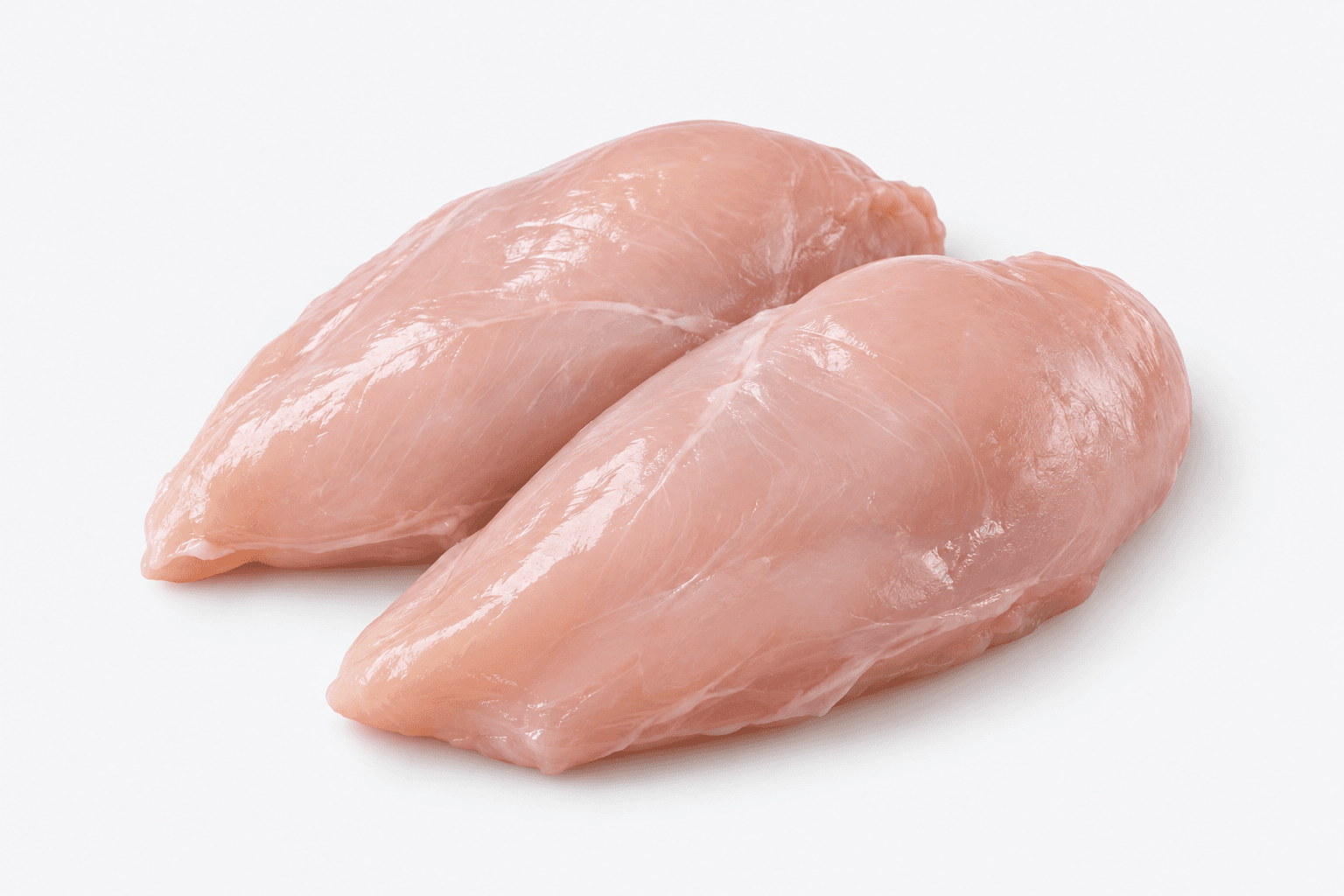
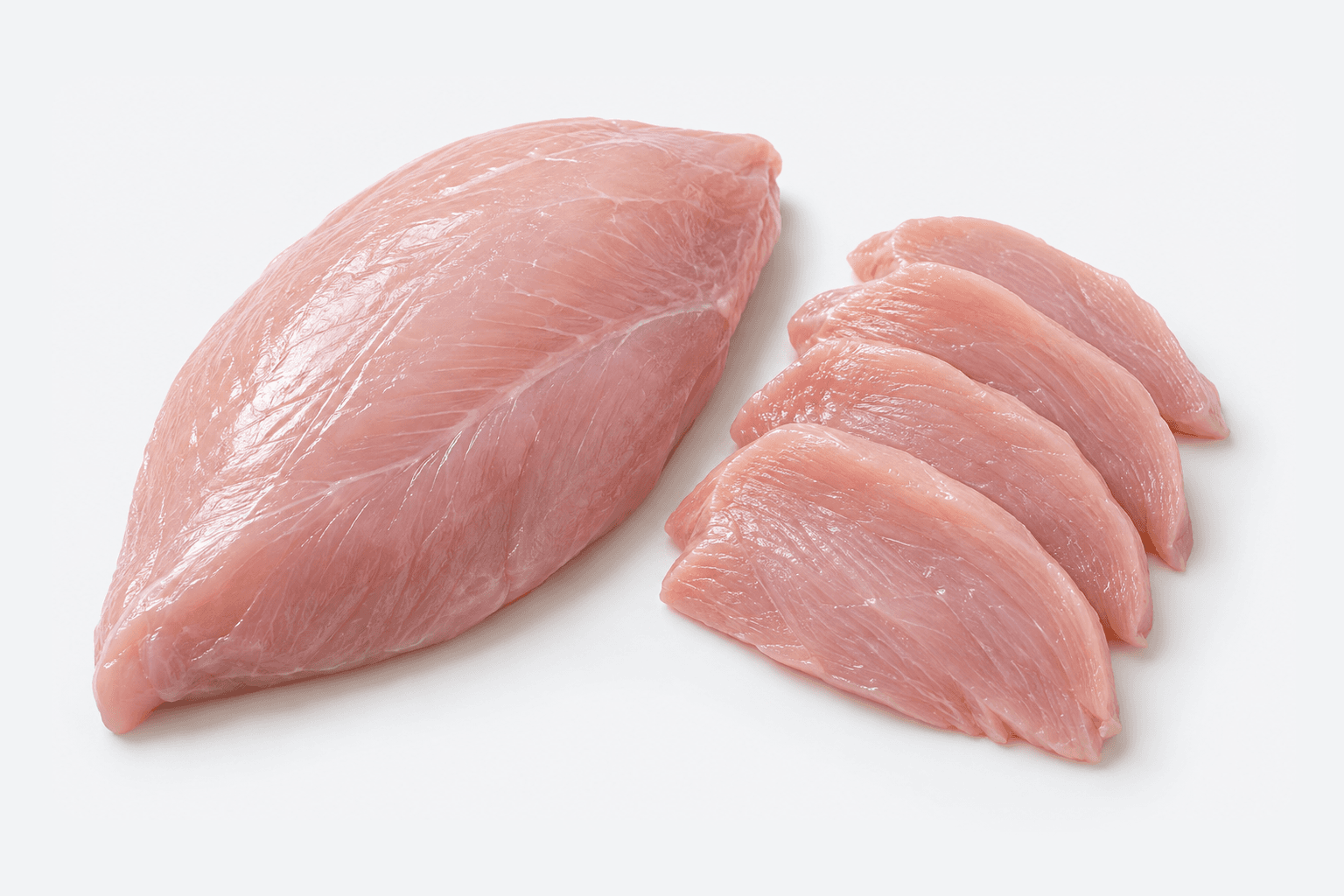
The turkey is a large bird native to North America. It belongs to the same family as the chicken but is far bigger, a single bird running from a few kilograms to more than ten. As with chicken, the breast is white and lean while the legs are dark and fatty. The breast holds so little fat that roasting a whole bird dries it out easily, which is why brining is such a fixture of American Thanksgiving cooking. Turkey is uncommon in Korea, where most people meet it as sliced breast or as deli ham.
The most repeated claim about turkey is that it makes you sleepy because it is high in tryptophan. Let us settle that first: the numbers do not work.
In a 2022 Nutrition Reviews meta-analysis, the tryptophan dose that moved sleep was 1 g a day or more. Raw turkey breast holds 0.252 g per 100 g. Reaching 1 g means 400 g of turkey. And dietary tryptophan competes with other amino acids for entry to the brain, so it does not behave like an isolated supplement.
So why the holiday drowsiness? The carbohydrate and fat loaded into one meal, the alcohol, and the night before spent cooking. Not the bird.
Turkey's actual evidence sits elsewhere. A dose-response meta-analysis of 16 prospective cohorts found a relative risk of 0.89 (95% CI 0.81–0.97) for colorectal cancer incidence per 50 g/day of poultry. But mortality was unrelated — RR 0.97 (0.79–1.20) — and this is observational.
And sliced deli turkey is processed meat. None of the above applies to it.
Key benefits
- Moderate evidence
RR 0.89 for colorectal cancer incidence per 50 g/day of poultry — not for mortality
[1]A 2015 dose-response meta-analysis in the European Journal of Nutrition, pooling prospective studies from 1966 to 2013: 16 on incidence and 4 on mortality, together covering 13,949 incident colorectal cancers and 983 deaths.
The results:
- RR 0.89 (95% CI 0.81–0.97) for colorectal cancer incidence per 50 g/day increase in poultry. The upper bound stays below 1, so it is statistically significant.
- Similar for colon and rectal cancer, and removing any single study did not shift it.
- Mortality was unrelated — RR 0.97 (95% CI 0.79–1.20) per 50 g/day. The interval contains 1 comfortably.
The authors' own wording is careful: poultry intake "may be moderately associated" with reduced incidence.
Three things must be read alongside this.
First, it is observational. People who eat more poultry eat less red meat. This design cannot separate whether the 0.89 comes from eating turkey or from not eating red meat. Note that the World Cancer Research Fund and IARC assigned classifications to red and processed meat, and not to poultry.
Second, mortality did not move. A result where incidence is lower but death is unchanged should not be overstated.
Third, this is about the meat. The processed meats IARC classifies as Group 1 carcinogens include sliced turkey deli meat. Turkey cured with salt and nitrite is not the food this meta-analysis studied.
- Not established
The tryptophan story: the effective dose is 1 g, and 100 g of turkey holds 0.252 g
[2]This entry corrects a common belief rather than reporting a benefit.
2022, Nutrition Reviews: a systematic review, meta-analysis and meta-regression of tryptophan supplementation and sleep quality. Eighteen articles were collected; four entered the random-effects meta-analysis.
Only one thing moved.
- Wake after sleep onset shortened — −81.03 min/g (P = 0.017); SMD −1.08 (95% CI −1.89 to −0.28).
- Dose mattered — WASO 56.55 min on under 1 g a day against 28.91 min on 1 g or more (P = 0.001).
- "Trp supplementation did not affect other sleep components." Not total sleep time, not sleep onset latency, not efficiency.
Now hold turkey's numbers against that.
- Dose that worked: 1 g a day or more
- Raw turkey breast, 100 g: 0.252 g tryptophan
- Amount needed for 1 g: about 400 g
And 400 g would still not be equivalent. Tryptophan crosses into the brain on the same transporter as the other large neutral amino acids — valine, leucine, isoleucine, phenylalanine, tyrosine. Eating a protein food does not deliver tryptophan alone; it delivers more of its competitors. A high-protein meal actually lowers the tryptophan ratio reaching the brain. That is why an isolated supplement and a food behave differently.
Turkey is not even unusually high in it. Chicken breast, tuna, cheese, pumpkin seeds and soybeans match or beat it per 100 g.
The honest conclusion: there is no evidence that eating turkey makes you sleepy. Holiday drowsiness is explained by meal size, alcohol, and the short night before.
- Nutrition data
23.7 g of protein on 1.48 g of fat — with selenium and B6 standing out
Per 100 g of raw turkey breast, meat only, skinless:
- 114 kcal, protein 23.7 g, fat 1.48 g, cholesterol 57 mg
- Selenium 22.7 µg — 41% of the 55 µg requirement
- Niacin 9.92 mg — 62%
- Vitamin B6 0.813 mg — 63%
- Choline 61.3 mg
The 1.48 g of fat is what defines this food. It is among the lowest of any meat — about the level of skinless chicken breast, and not in the same conversation as pork belly by weight.
Protein at 23.7 g is essentially skinless chicken breast. A 150 g portion passes 35 g.
On micronutrients, B6 and niacin are the strengths — one portion brings more than half a day of each. Selenium adds 41%.
Thigh and breast are not the same. Thigh carries more than three times the fat and more iron. Leaving the skin on raises the fat sharply again.
This composition bears on the "is it red meat" question. In nutritional epidemiology poultry is white meat and falls outside IARC's red meat classification. Turkey thigh is dark because it holds more myoglobin — but the classification follows the species, not the colour.
How to eat it well
- Separate the meat from the products. All the evidence above is about meat. Deli slices, sausage and smoked turkey are processed meat.
- Breast dries out easily. Pull it at 74°C internal and rest it ten minutes. Past that, the moisture leaves.
- Brining genuinely helps — 40 g salt per litre of water, two to four hours. It raises the sodium.
- Removing the skin cuts the fat sharply. Roasting skin-on keeps the meat moist, so roast with it and remove it after: both goals met.
- Thigh suits braises and soups. Its fat and connective tissue stay tender through long cooking.
- It need not be a once-a-year meat. Ground turkey substitutes naturally for ground beef.
- Eating turkey for sleep is not worth doing — the amounts do not line up.
How to read the grades
Each benefit carries a label showing how far research on people supports it. Grades differ between items even within the same ingredient.
- Nutrition data
- A fact verifiable from food composition databases or health authorities. This is a different kind of statement from a clinical effect.
- Strong evidence
- Consistently confirmed across randomised controlled trials or meta-analyses.
- Moderate evidence
- Human studies exist, but effect sizes are small or results are mixed.
- Early research
- Cell or animal work, or small preliminary studies.
- Not established
- Commonly claimed, but not confirmed in studies on people.
What to watch out for
- Processed turkey is processed meat, within IARC's Group 1 classification, and the meta-analysis above does not apply to it.
- The colorectal result is observational and cannot separate poultry-eaters from red-meat-avoiders.
- Colorectal mortality showed no difference (RR 0.97, 95% CI 0.79–1.20).
- Eating it for sleep has no evidential basis. Reaching the effective 1 g means 400 g, and amino acid competition means a food will not reproduce the supplement result.
- Raw poultry is a common vehicle for Salmonella and Campylobacter. Cook to 74°C internal and keep boards and hands separate.
- Do not thaw a large bird at room temperature. Refrigerator thawing needs roughly 24 hours per 4.5 kg.
- If you restrict protein for kidney disease, a 150 g portion holds 35 g.
Nutrition
Per 100 g of raw turkey breast, meat only, skinless. A portion is 120–150 g. Sliced deli turkey is a different food entirely.
- Calories
- 114 kcal6%
- Protein
- 23.7 g47%
- Fat
- 1.48 g2%
- Selenium
- 22.7 µg41%
- Vitamin B3
- 9.92 mg62%
- Vitamin B6
- 0.813 mg48%
- Choline
- 61.3 mg11%
Percentages are of the US FDA Daily Value for adults and children 4 and over. National reference intakes differ by sex and age.
Calculate this alongside other ingredients →
Key nutrients
By health concern
Dishes with this ingredient
Sources
The databases and health authorities this article's nutrition figures and health statements draw on.
- 1Dose-response meta-analysis of poultry intake and colorectal cancer incidence and mortalityMeta-analysisShi Y, Yu PW, Zeng DZ European Journal of Nutrition 2015PMID 24788671
- 2The impact of tryptophan supplementation on sleep quality: a systematic review, meta-analysis, and meta-regressionMeta-analysisSutanto CN, Loh WW, Kim JE Nutrition Reviews 2022PMID 33942088
- 3USDA FoodData CentralFood composition database
- 4NIH Office of Dietary SupplementsHealth authority
- 5World Health Organization · Healthy dietHealth authority
- 6PubMedResearch literature