Contents
What it is
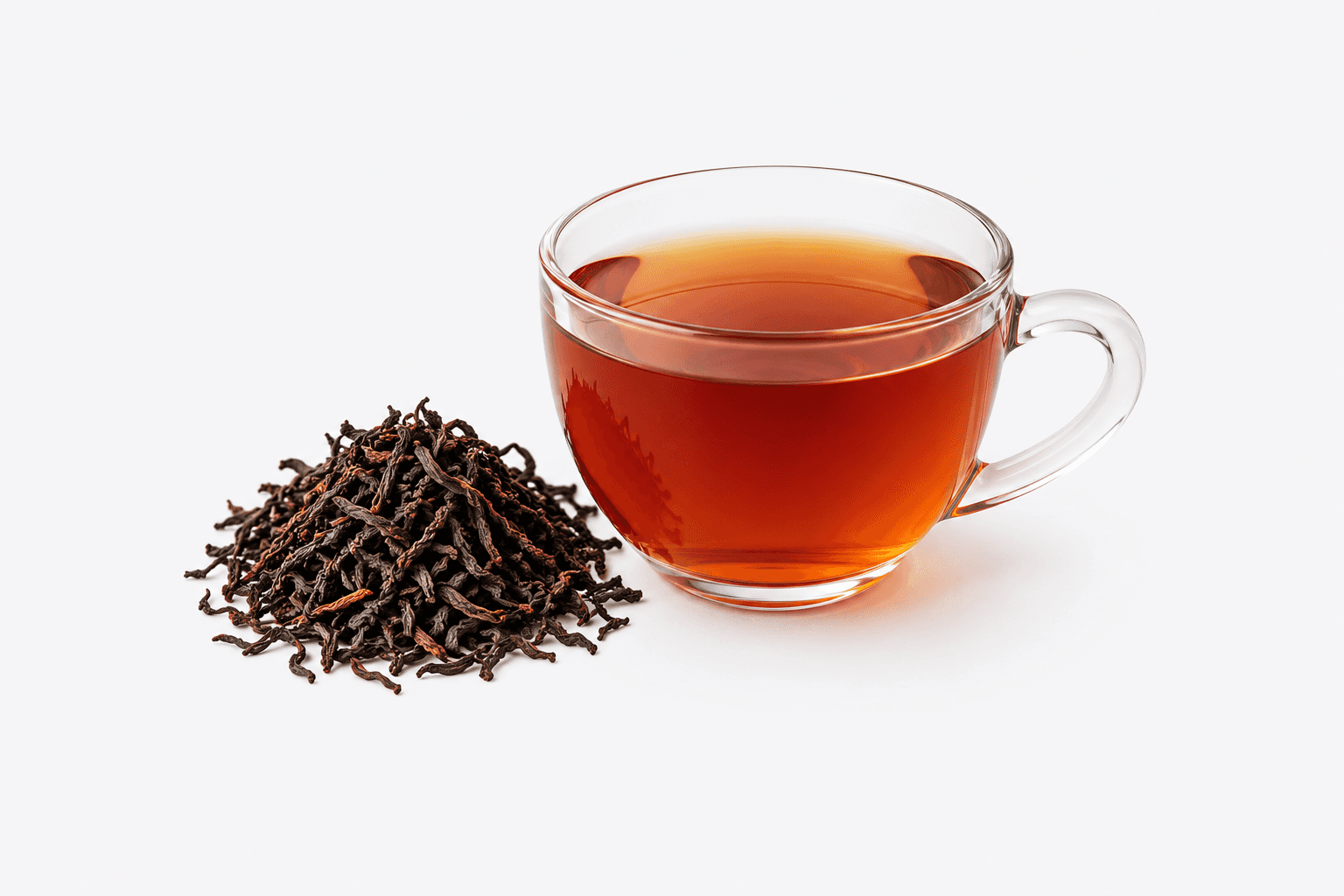
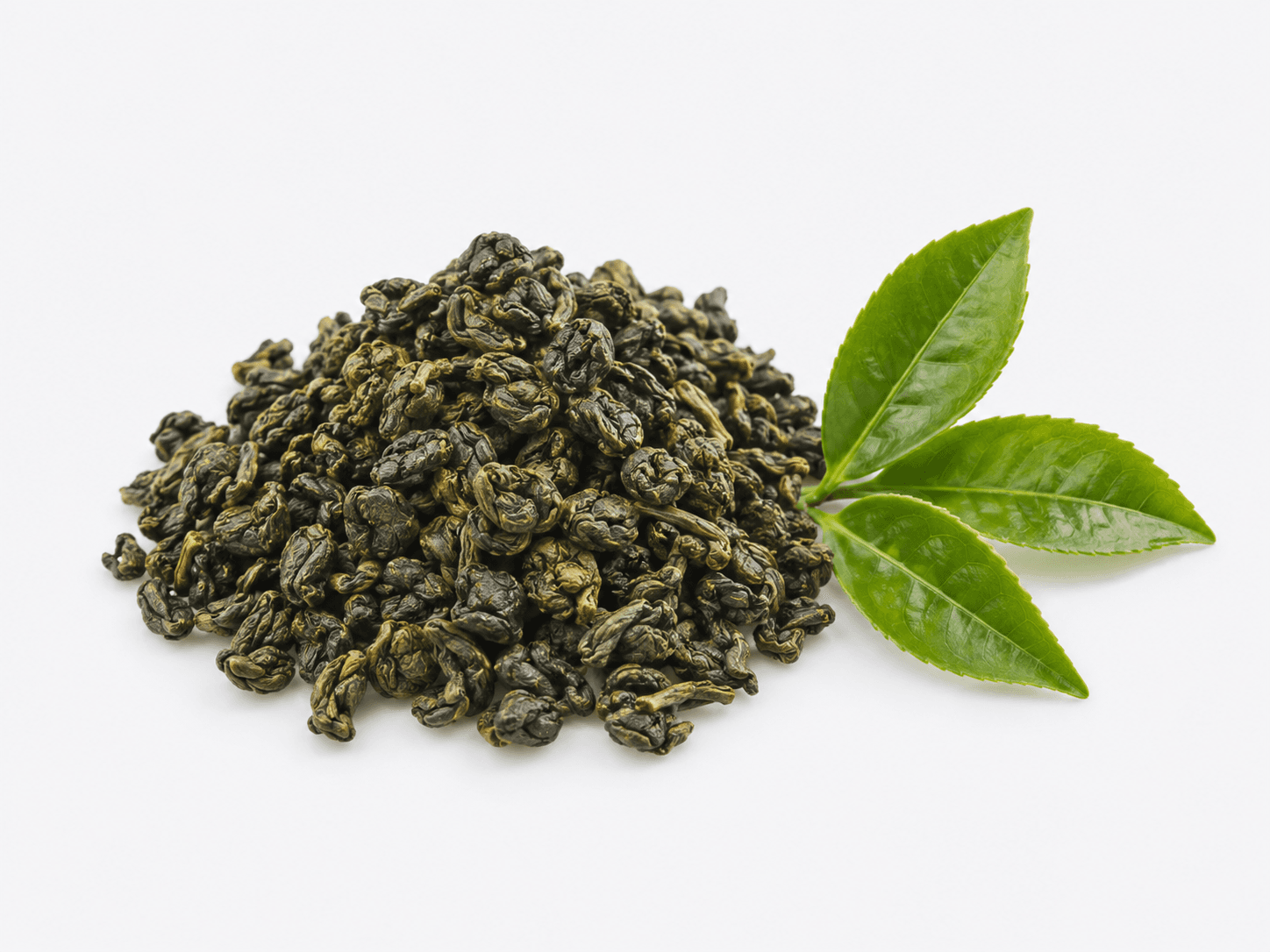
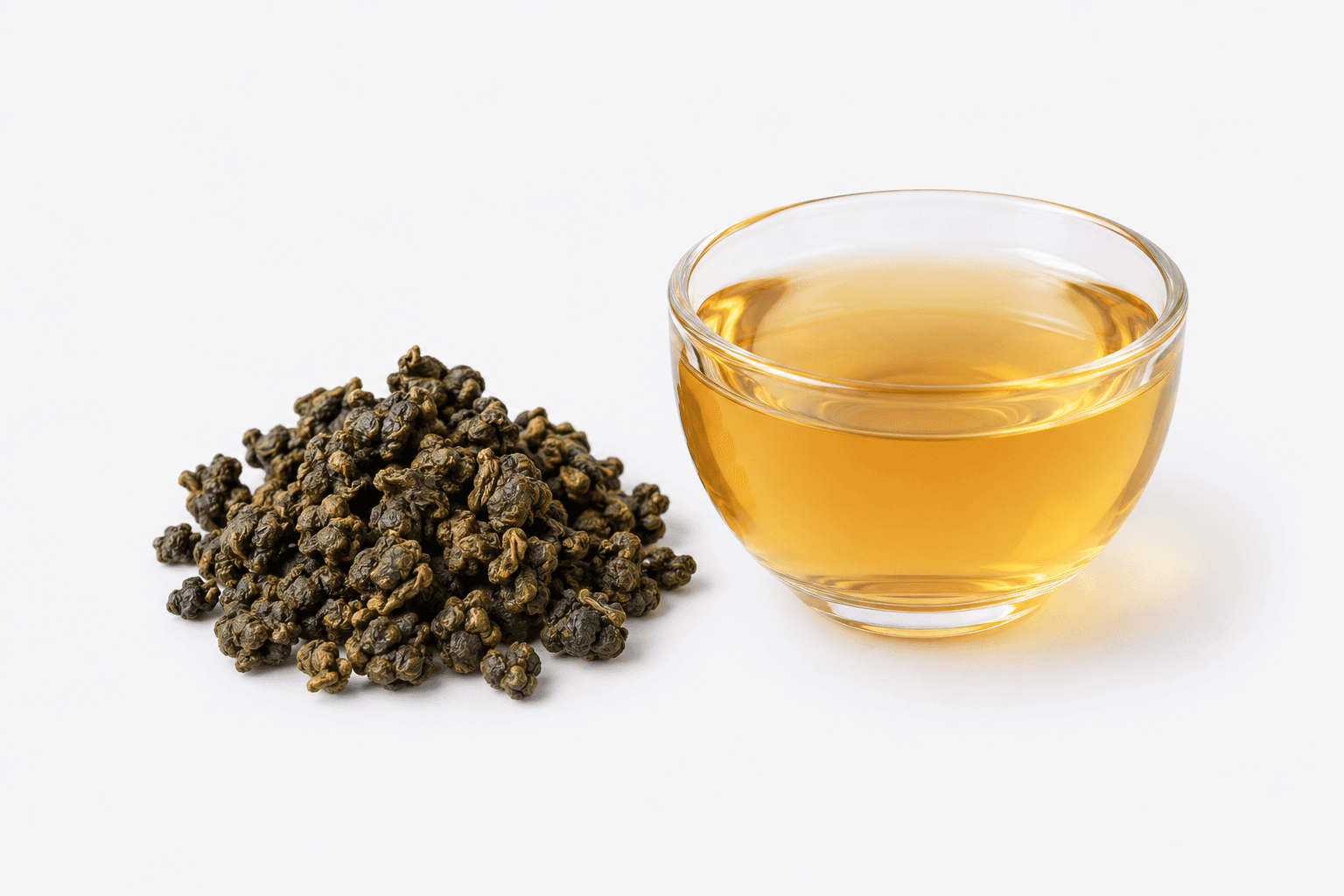
Oolong is tea whose leaves are allowed to oxidise only partway. Green tea is kept from oxidising and black tea is taken all the way; oolong stops somewhere in between. The degree ranges from around ten percent to seventy, so oolongs at one end taste close to green tea and at the other close to black. The defining step is bruising the leaf edges by tossing, so oxidation starts there first. Fujian and Guangdong in China, and Taiwan, are the main producers.
Scientific name Camellia sinensis
Oolong sits between green and black tea — partly oxidised. Same leaf, Camellia sinensis, different degree of fermentation.
The "oolong diet" has been around a long time. There is a real trial behind it, and a carefully built one: published in Nutrients in 2020.
Twelve non-obese men took oolong tea, caffeine or placebo at breakfast and lunch, for 14 days each. On day 14 they spent 24 hours in a metabolic chamber with indirect calorimetry, plus a full polysomnographic sleep recording.
The result is two lines.
- Fat oxidation rose about 20%.
- 24-hour energy expenditure did not change.
The distance between those lines is the point of this page. The body spent the same energy and shifted its fuel towards fat. It did not spend more.
Key benefits
- Early research
Fat oxidation was still about 20% higher after 14 days
[1]A 2020 randomised, placebo-controlled, double-blinded crossover trial in Nutrients.
The design is what makes it worth citing. It looked at two weeks in, not at the first dose. Caffeine's acute effects — raised heart rate, disturbed sleep — fade within one to four days as tolerance develops, so a single-day result tells you nothing about habitual drinkers.
Participants: twelve non-obese men, through three conditions of 14 days each.
- Oolong tea — 100 mg caffeine, 21.4 mg gallic acid, 97 mg catechins, 125 mg polymerised polyphenols
- Caffeine — 100 mg
- Placebo
Taken split across breakfast and lunch, with 24-hour indirect calorimetry and polysomnography on day 14.
What came out:
- Both caffeine and oolong raised fat oxidation by about 20%.
- 24-hour energy expenditure was unchanged in both.
- The drop in respiratory quotient during sleep was larger with oolong than with caffeine — more fat being used while asleep.
- The effect was salient in the post-absorptive state and partly suppressed after meals.
- Sleep was not disturbed, confirmed by polysomnography.
The authors concluded there is something in oolong that caffeine does not account for, since the caffeine dose was identical across the two conditions but the sleeping response was not.
But it is twelve people. Non-obese men only, and body weight and body fat were never measured. That is why this is graded as early evidence.
- Nutrition data
Caffeine lands between green and black tea
Brewed oolong carries 16 mg of caffeine per 100 g, so about 38 mg in a 240 g cup.
Cup for cup:
- Green tea about 29 mg
- Oolong about 38 mg
- Black tea about 48 mg
- Coffee 95–200 mg
400 mg a day is the usual ceiling for healthy adults — more than ten cups of oolong. In pregnancy the ceiling is 200 mg, about five cups.
Energy is 1 kcal per 100 g, effectively zero. That is where the benefit of replacing a sweetened drink comes from.
Minerals: manganese 0.21 mg — a cup is roughly 20% of the adult requirement — and potassium 12 mg. Not a mineral source.
The trial above delivered 100 mg of caffeine a day. At 38 mg a cup, that is about two and a half cups.
- Not established
Weight loss is not established
Burning more fat and losing weight are not the same thing.
That 24-hour energy expenditure did not change means the body spent the same total energy. It simply tilted the fuel mix towards fat.
Losing weight requires spending more energy than comes in. If total expenditure holds steady, that condition is not created.
And the trial never measured weight or body fat. Fourteen days, twelve people, non-obese men — it was not built to see a weight change.
The other claims are in the same position. Cholesterol, blood sugar, cancer, skin — there are no large trials looking at disease outcomes in people. What exists is cell and animal work, or small preliminary studies.
There are good reasons to drink it. No calories, less caffeine than coffee, and in this trial it did not disturb sleep. The reasons stop there.
How to eat it well
- 90–95°C for one to two minutes — hotter than green tea, shorter than black.
- The same leaves take several infusions. Many drinkers prefer the second and third. Note that most of the caffeine comes out in the first.
- No sugar. Some bottled oolong drinks are sweetened; the evidence above is about unsweetened tea.
- Keep it away from meals if iron matters to you — tea tannins block iron absorption. An hour after eating is better.
- Watch the late-afternoon cups. Sleep held up in that trial, but caffeine sensitivity varies.
- To match the trial's conditions: two to three cups a day, for at least two weeks.
How to read the grades
Each benefit carries a label showing how far research on people supports it. Grades differ between items even within the same ingredient.
- Nutrition data
- A fact verifiable from food composition databases or health authorities. This is a different kind of statement from a clinical effect.
- Strong evidence
- Consistently confirmed across randomised controlled trials or meta-analyses.
- Moderate evidence
- Human studies exist, but effect sizes are small or results are mixed.
- Early research
- Cell or animal work, or small preliminary studies.
- Not established
- Commonly claimed, but not confirmed in studies on people.
What to watch out for
- It contains caffeine — about 38 mg a cup. Count it with your other drinks against 200 mg in pregnancy, 400 mg for adults.
- It interferes with iron absorption. With iron-deficiency anaemia, separate it from meals.
- Avoid it on an empty stomach if your stomach is sensitive; tannins irritate.
- With anxiety disorders or arrhythmia, discuss your total caffeine with a clinician.
- Oolong extracts sold as diet supplements are not tea. Concentrated products need their own safety check.
- The evidence above is a single trial in twelve people over 14 days. No weight-loss effect has been shown.
Nutrition
Per 100 g of brewed oolong, about half a cup. A cup is 240 g, which puts the caffeine at about 38 mg a cup.
Percentages are of the US FDA Daily Value for adults and children 4 and over. National reference intakes differ by sex and age.
Calculate this alongside other ingredients →
Key nutrients
- Caffeine
- Manganese
- Catechins
Sources
The databases and health authorities this article's nutrition figures and health statements draw on.
- 1Subacute Ingestion of Caffeine and Oolong Tea Increases Fat Oxidation without Affecting Energy Expenditure and Sleep Architecture: A Randomized, Placebo-Controlled, Double-Blinded Cross-Over TrialClinical trialZhang S, et al. Nutrients 2020PMID 33260552
- 2USDA FoodData CentralFood composition database
- 3European Food Safety Authority (EFSA)Health authority
- 4MFDS Food Composition Database · 식품안전나라Food composition database
- 5PubMedResearch literature