Vegetables
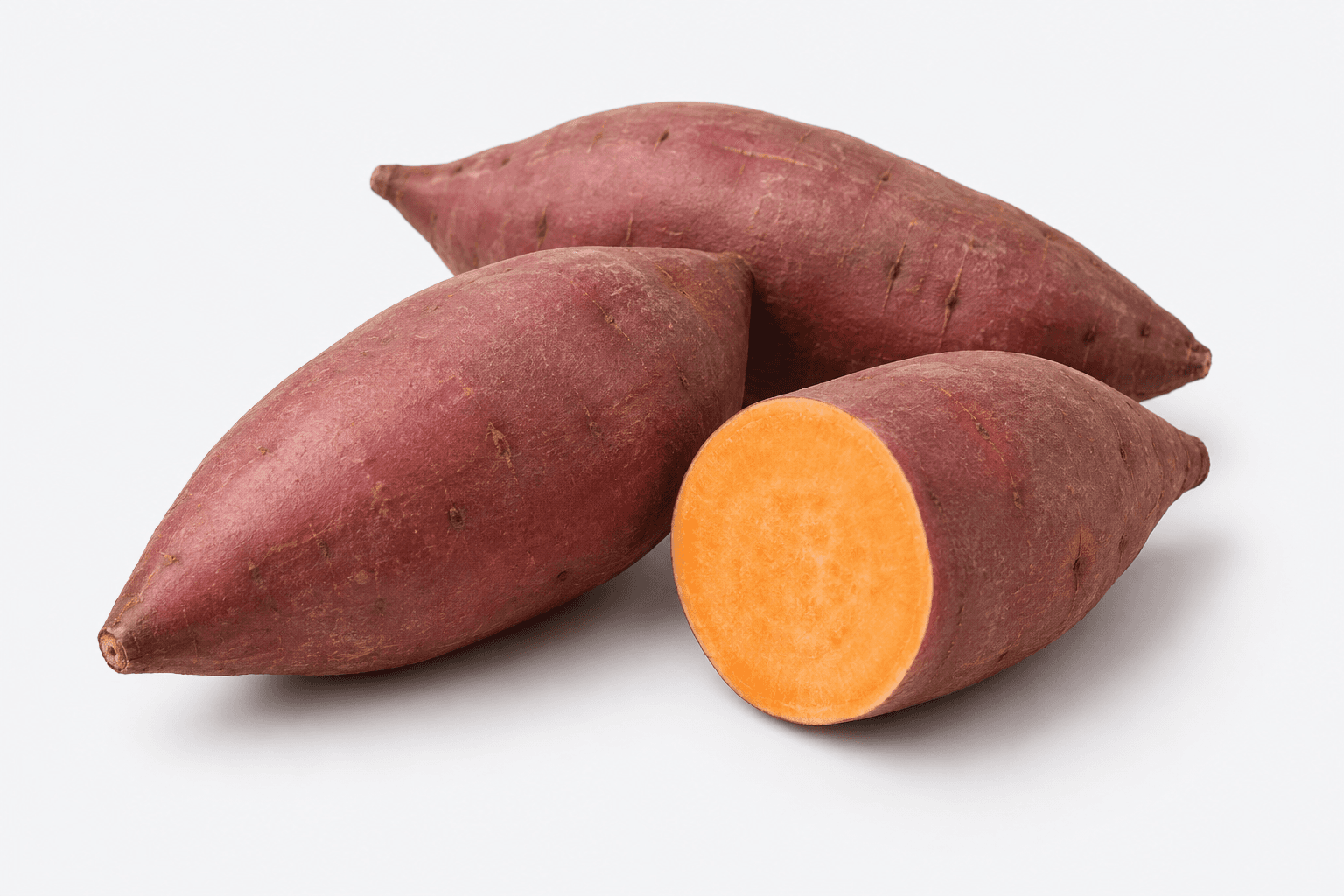
Moderate evidenceSweet potato
The beta-carotene and fibre are a clear win, but how you cook a sweet potato can nearly double its effect on blood sugar.
Cooling the sweet potato is the trick: resistant starch increases, and the avocado's fat carries the beta-carotene.
2 servings30 min
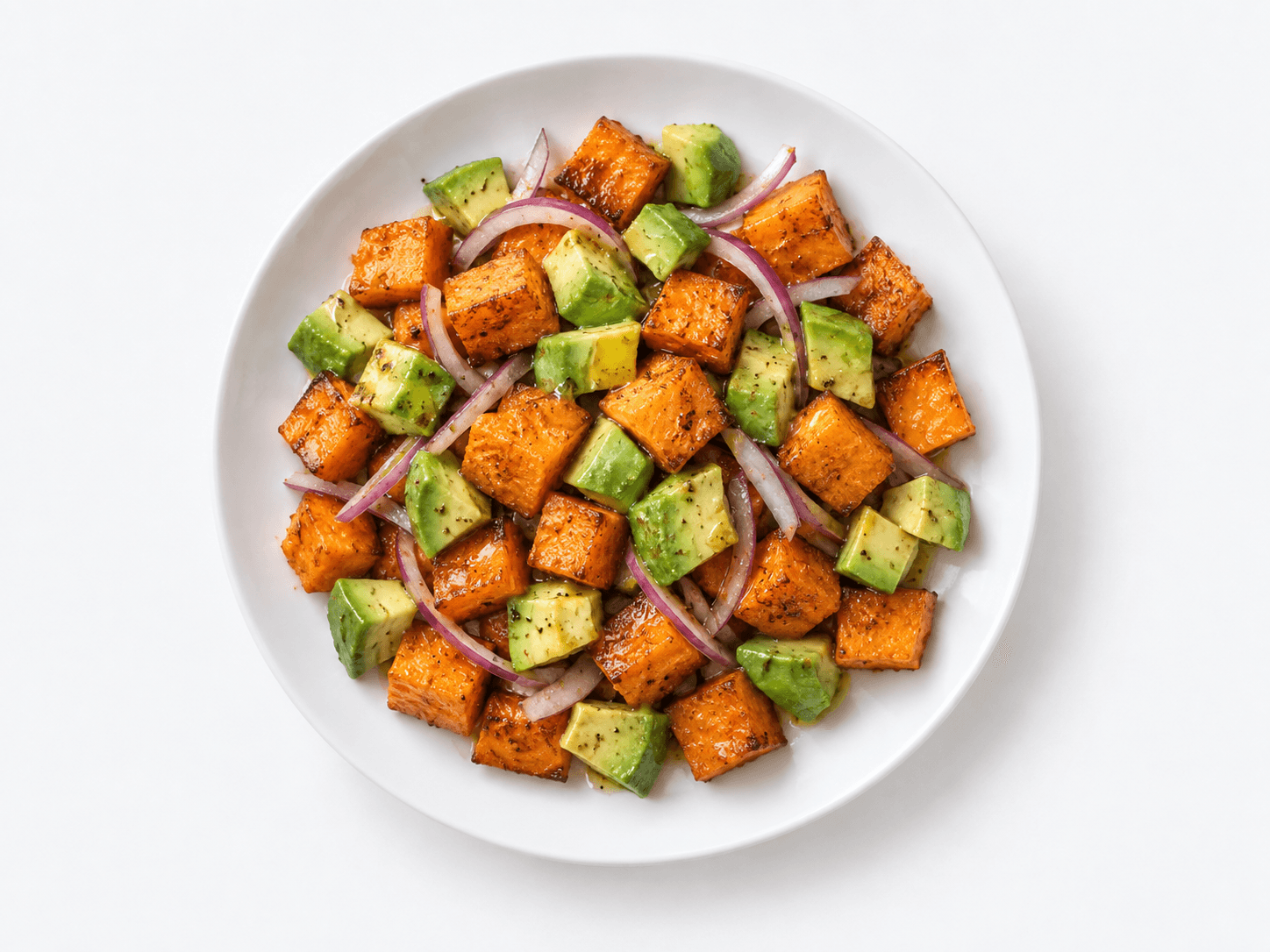
Scrub the sweet potatoes and steam them whole, skin on, for 20 minutes. Steaming raises blood sugar more gently than roasting.
Let them lose their steam, then chill in the fridge for at least 30 minutes.
Peel and dice — or leave the skin on if you prefer.
Dice the avocado; slice the red onion thinly and soak it in cold water for five minutes, then drain.
Whisk the olive oil, lemon juice, salt and pepper into a dressing.
Toss everything gently so the avocado does not break down.
There is a reason for steaming rather than roasting. Roasting breaks more of the starch down into sugar, so the same sweet potato lands at a markedly higher glycaemic index baked than boiled or steamed. Chilling then converts part of the starch into resistant starch, which passes the small intestine unabsorbed and reaches the colon.
Vegetables
Moderate evidenceThe beta-carotene and fibre are a clear win, but how you cook a sweet potato can nearly double its effect on blood sugar.
Fruits
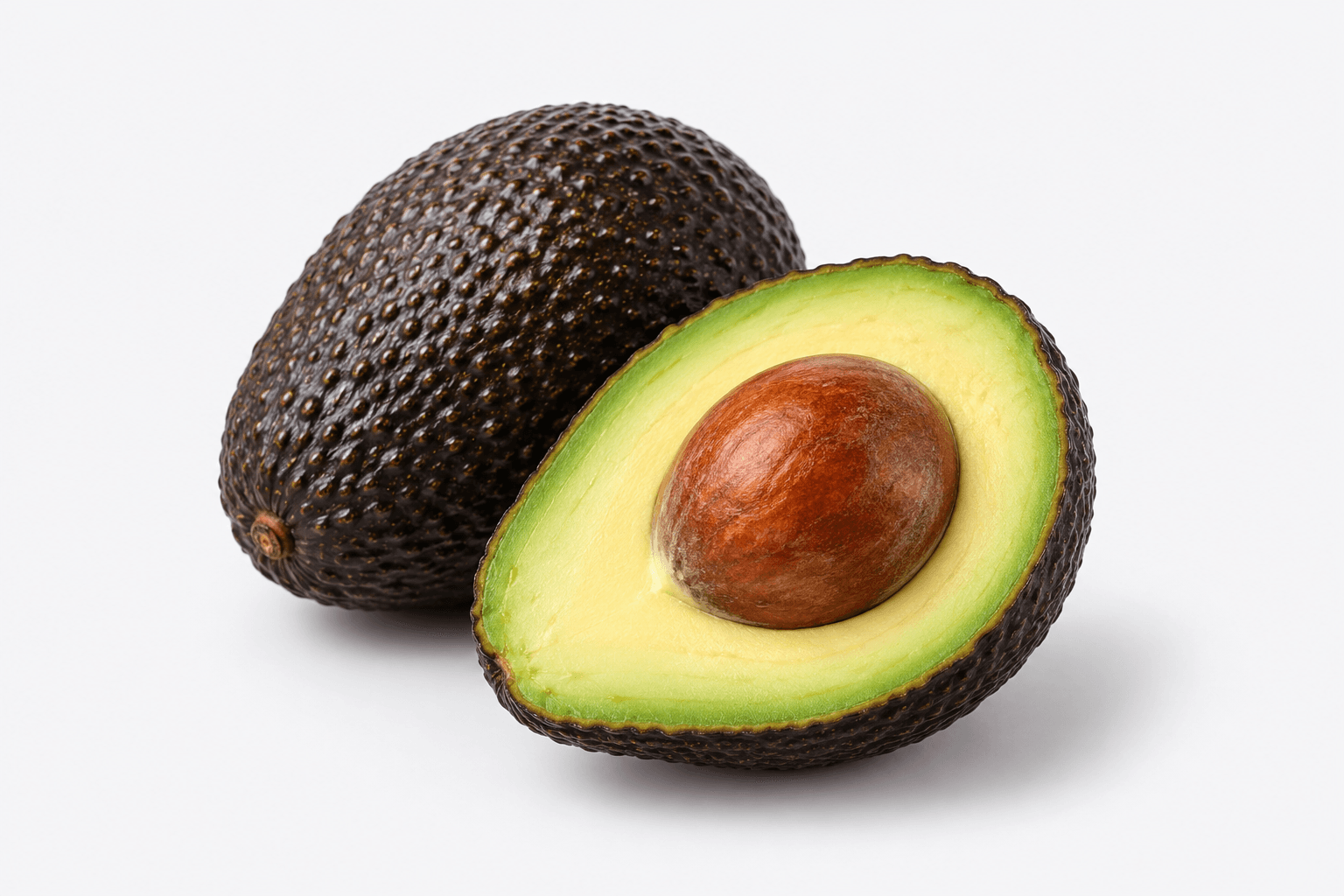
Moderate evidenceMonounsaturated fat and 6.7 g of fibre are the headline, but the most interesting part is what avocado does to the vegetables you eat alongside it.