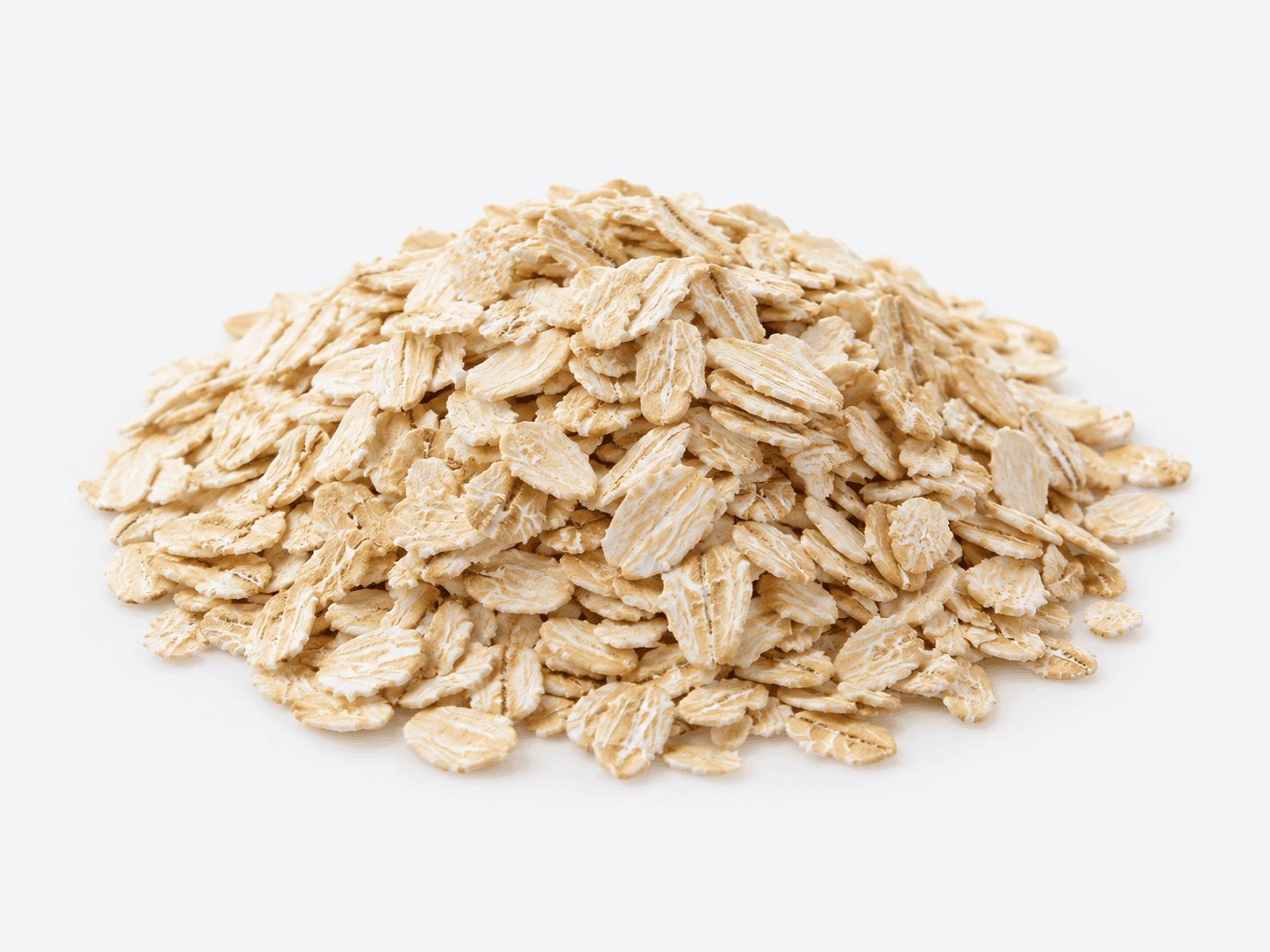
Grains & legumes
Strong evidenceOats
Three grams a day of oat beta-glucan lowers LDL cholesterol — a claim regulators have actually approved.
Milk supplies the lysine oats lack. One bowl brings in two thirds of the daily beta-glucan threshold.
1 servings12 min
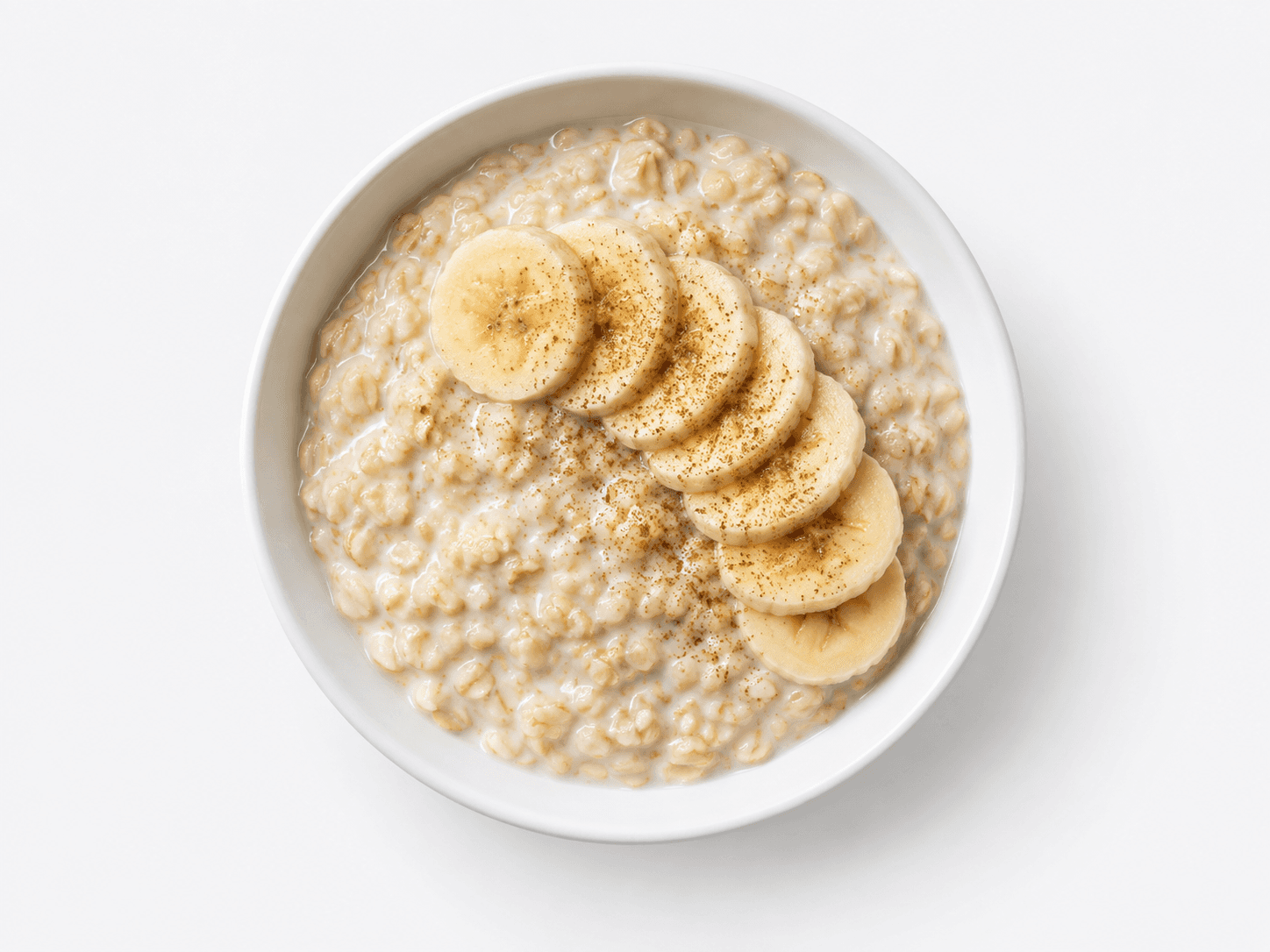
Put the oats, milk and a pinch of salt in a pot over medium-low heat.
Lower the heat just before it comes to a boil — milk scorches and boils over easily on high.
Simmer for 6–8 minutes, stirring and scraping the base. The thickening you feel is the beta-glucan dissolving out.
Take it off the heat and let it stand two minutes; it thickens further.
Slice the banana over the top and dust with cinnamon if you like.
Cooking it in milk has a nutritional reason. Oat protein is short on lysine and milk protein is rich in it, so together their amino acid profiles fill each other's gaps. And 50 g of oats carries roughly 2 g of beta-glucan — two thirds of the 3 g a day tied to the cholesterol claim. If lactose bothers you, use lactose-free milk; the calcium and protein are unchanged.
Grains & legumes
Strong evidenceThree grams a day of oat beta-glucan lowers LDL cholesterol — a claim regulators have actually approved.
Dairy & eggs
Moderate evidenceFew foods deliver calcium this conveniently. But in much of the world, adults stop producing the enzyme that digests lactose.
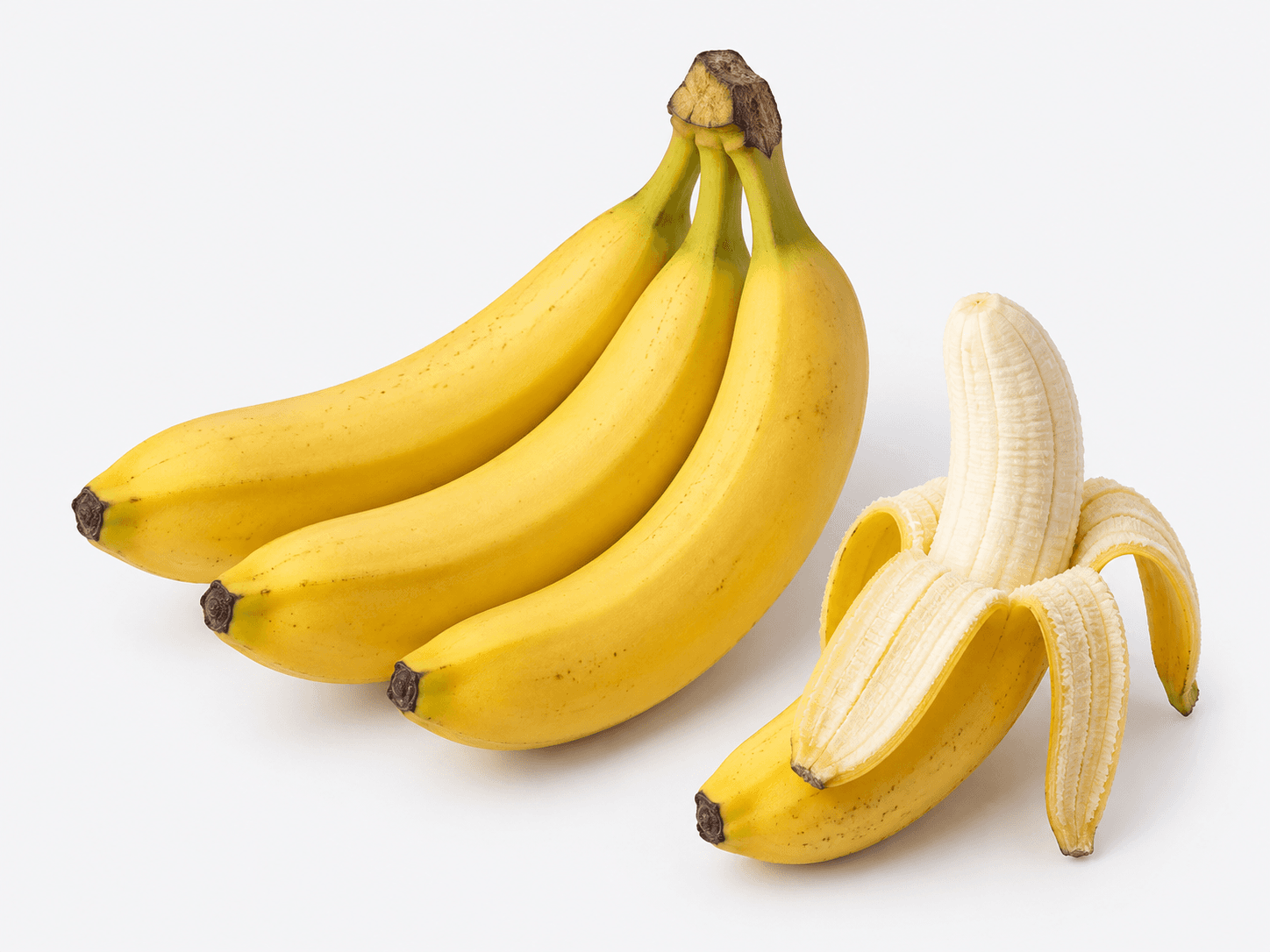
Fruits
Moderate evidenceA green banana is mostly resistant starch; a ripe one is fast sugar. Choose the stage that matches what you want from it.