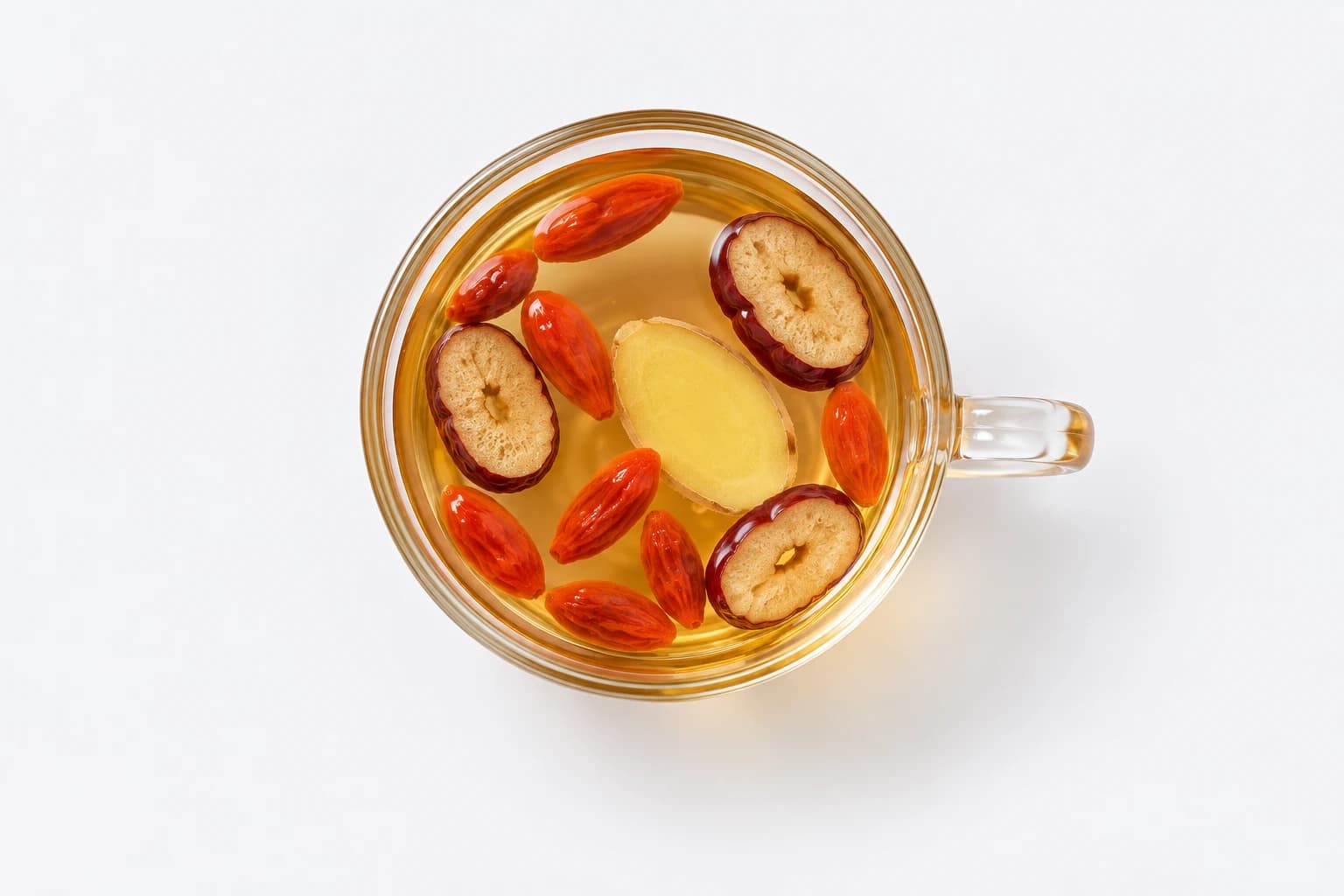
First, what this tea does and does not do.
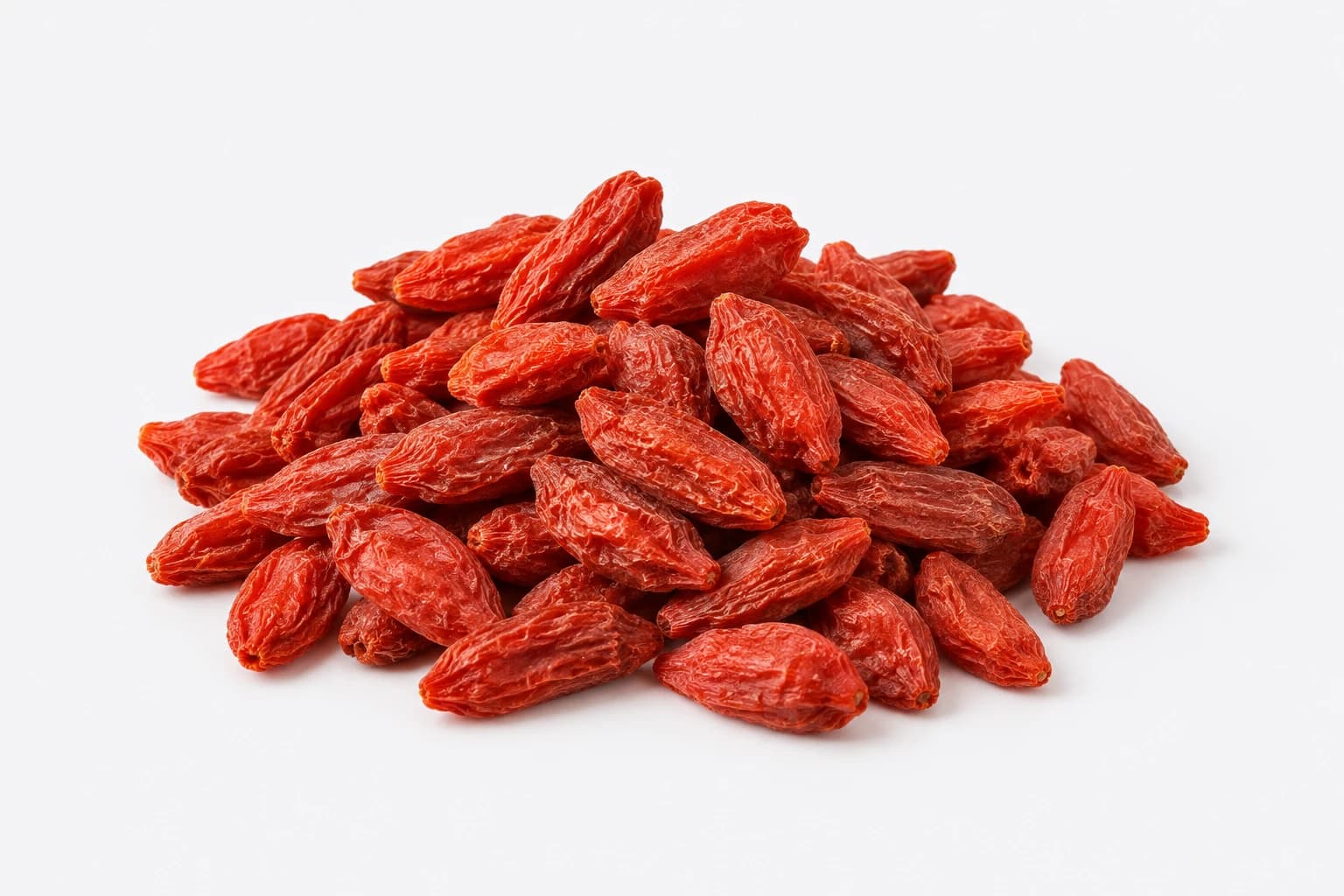
The human evidence on goji berries is one trial, 2021 in Nutrients. Macular pigment optical density rose in the arm eating 28 g of dried berries five times a week for 90 days.
Its limits carry over in full.
- Twenty-seven people, thirteen or fourteen per arm
- No masking. The paper calls itself a pilot
- The comparator was another supplement, not a placebo
- Macular pigment is not eyesight. The trial did not measure vision
And that trial had people chew the berries, not drink them as tea.
That is where the limit of steeping lies.
Steeping extracts only what dissolves. Goji's 13.0 g of fibre and 14.3 g of protein stay mostly in the solids. Which is why this recipe says not to strain. Fish out the swollen berries and chew them, and those come with.
Per serving:
| Per serving |
|---|
| Goji berries 10 g | 35 kcal, sugar 4.6 g, fibre 1.3 g |
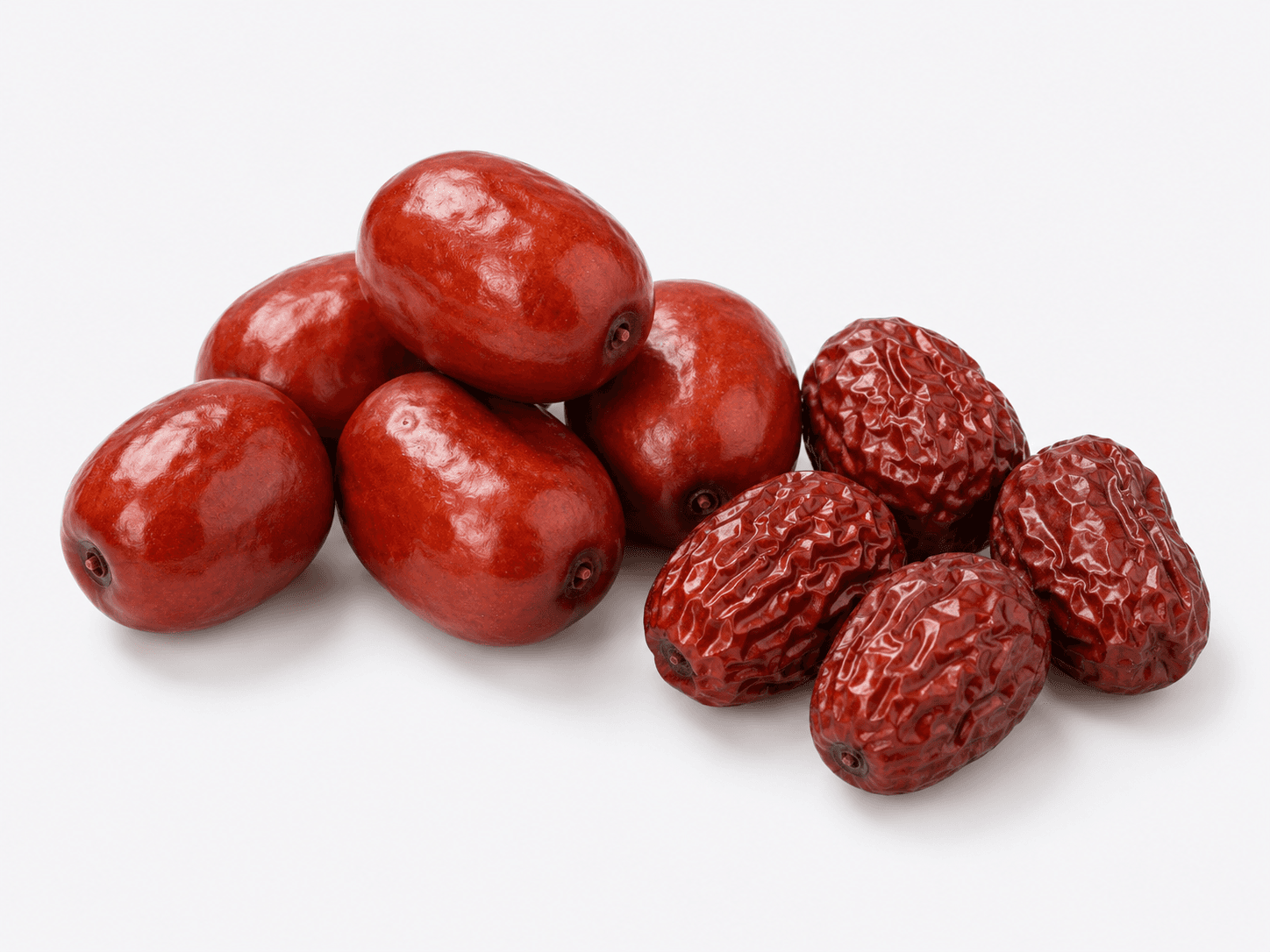
| Jujube, 3 (about 25 g) | about 20 kcal |
| Total, solids included | about 55 kcal |
Against the trial's 28 g a day, a cup of this holds 10 g — a little over a third. Scale up if you want to match the trial, but count that 28 g of goji carries 12.8 g of sugar.
Why the berries only go in for the last five minutes. Two reasons.
First, form. Boiled long, the skins burst, the insides loosen and the liquid clouds. The seeds come out and turn it astringent. Five minutes on low heat swells them just right.
Second, heat. Goji carries 48.4 mg of vitamin C, and vitamin C does not survive heat and water. The longer it boils, the less is left.
Why the jujubes boil 15 minutes first. Their sweetness comes out slowly. Draw it out properly and there is no reason to add sugar or honey. Put them in with the goji and the berries collapse before the jujube has given anything.
Why remove the jujube stones. They are where the astringency comes from. Cut a ring around the stone and twist; it comes out easily.
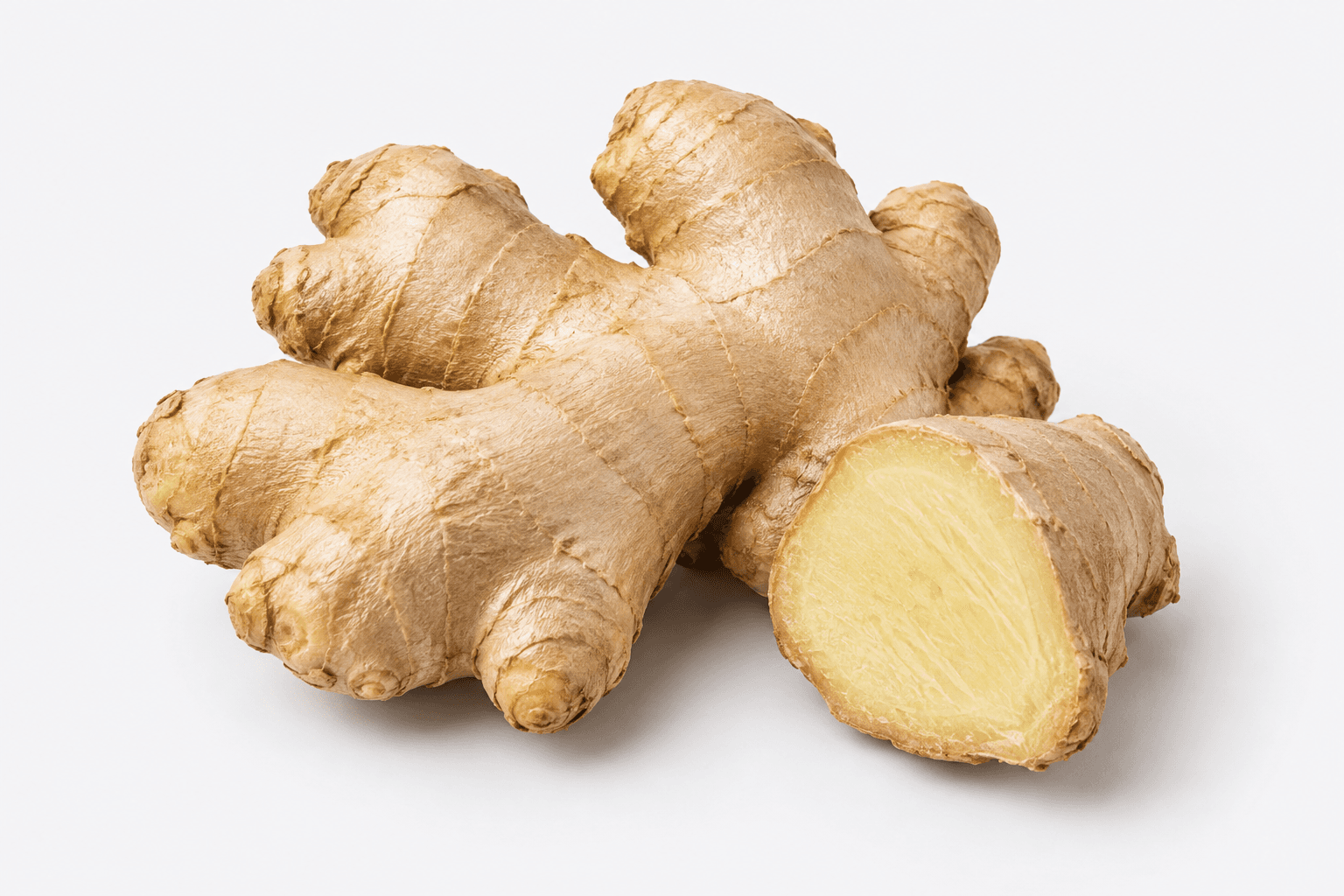
Ten grams of ginger is enough. More and it covers the sweetness of the goji and jujube. For more heat, add a slice in the last five minutes.
From here is the most important part.
If you take warfarin, talk to your clinician before drinking this.
There are several case reports of a rising INR and bleeding after goji juice or tea. The mechanism is not fully established, but an effect on the enzymes that metabolise warfarin has been proposed.
Tea is the form to be most careful with, because it easily becomes a daily habit and the amount stops being counted.
Caution has also been reported for people on blood pressure or blood glucose medication.
It is not recommended in pregnancy. There is a traditional record linking it to uterine contraction, and no trial has established safety.
If eye health is the goal, the evidence behind lutein and zeaxanthin from kale and spinach is far thicker. This tea is not a substitute for that.