Seafood
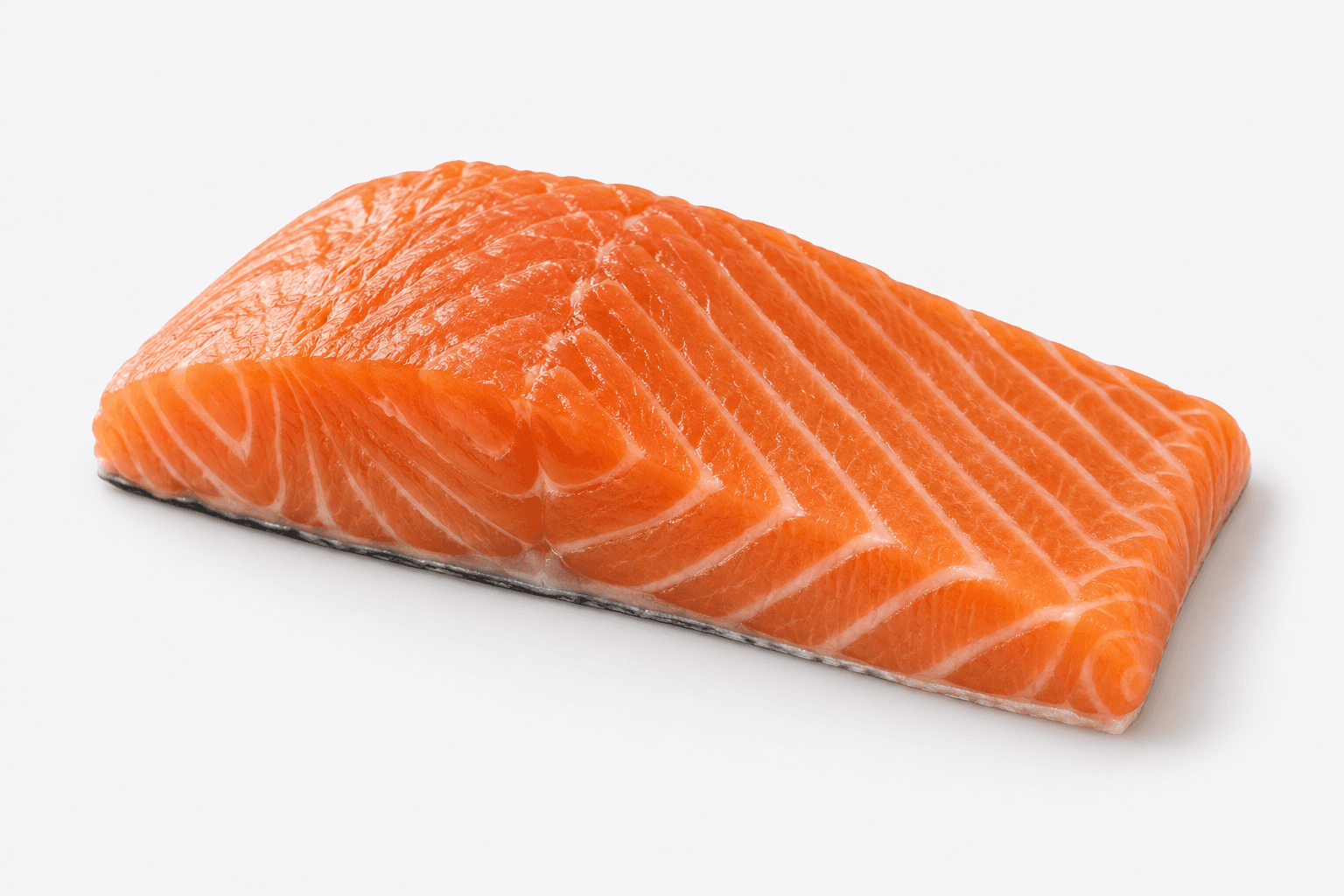
Salmon
One portion covers a large share of your weekly omega-3 and delivers vitamin D — a nutrient almost no other food supplies in useful amounts.
Salmon carries 2.2 g of omega-3 against canned tuna's 0.22 g — ten times. But the tuna here is canned in water with the liquid drained, and tuna brings a separate consideration: mercury.
Seafood
One portion covers a large share of your weekly omega-3 and delivers vitamin D — a nutrient almost no other food supplies in useful amounts.
Seafood
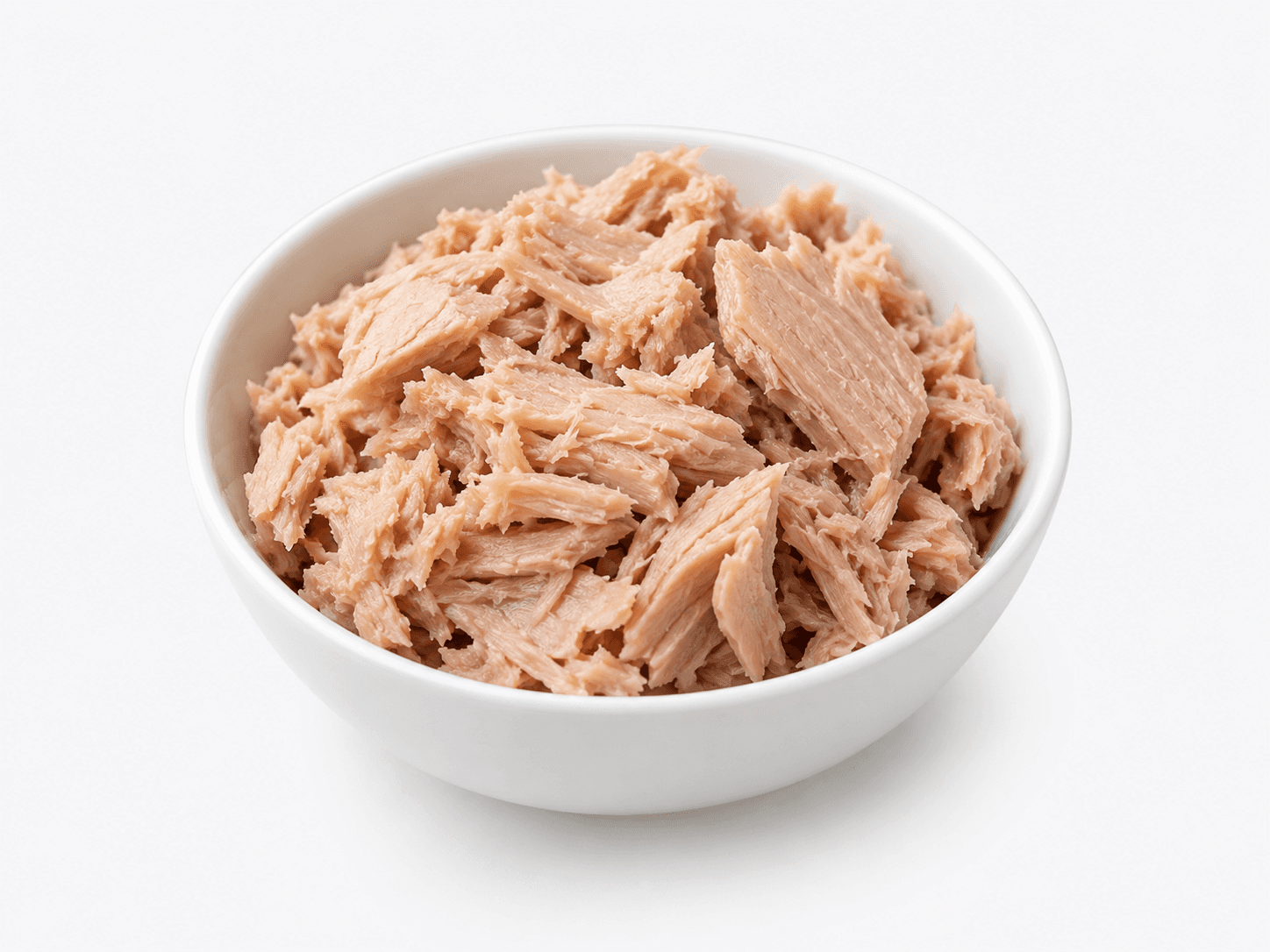
Canned tuna in water packs 19 g of protein into 85 kcal per 100 g. But its omega-3 is one-twelfth of salmon's.
Salmon — Leads on
Tuna — Leads on
Per 100 g edible portion. Only rows where both have a figure are shown, and no winner is marked for items like calories or sugars where more is not better.
Basis for these figures
| Nutrition | Salmon | Tuna |
|---|---|---|
| Calories | 208 kcal | 85 kcal |
| Protein | 20.4 g | 19.0 g |
| Fat | 13.4 g | 0.9 g |
| Omega-3 | 2.2 g | 0.22 g |
| Vitamin D | 11 µg | 1.2 µg |
| Vitamin B12 | 3.2 µg | 2.6 µg |
| Selenium | 24 µg | 67.8 µg |
| Iodine | 3.2 µg | 0 µg |
Match the basis before reading the table. The salmon figures are for raw farmed Atlantic salmon; the tuna figures are for canned-in-water tuna, drained. These are different forms of fish, so a good share of the 208 kcal against 85 kcal gap is simply fat that left with the liquid.
Even allowing for that, omega-3 separates them: 2.2 g against 0.22 g, a factor of ten. Canned tuna uses leaner cuts and loses more fat in processing. If omega-3 is the point, salmon is the clear answer. Vitamin D follows, 11 µg against 1.2 µg — nine times.
Tuna wins rows too. Selenium runs 67.8 µg against 24 µg, nearly three times, and niacin at 9.9 mg is a row the salmon table does not have. Protein is close, 20.4 g against 19.0 g, which means that per calorie tuna is far ahead. For protein while watching weight, canned tuna is efficient.
Now mercury. It is not in the table and it is the most important row.
Tuna is a predator high in the food chain, so methylmercury accumulates in it. The type matters enormously: skipjack (light) is relatively low, while albacore (white) and bluefin are high. European and US advice generally caps white tuna at once a week during pregnancy and breastfeeding and allows more room for canned light tuna. The same applies to children. Salmon is largely free of this problem and sits among the fish recommended in pregnancy.
Tuna's selenium is known to offset some of mercury's toxicity. That is not the same as raising the ceiling.
Watch the sodium too. Canned tuna carries 219 mg per 100 g, a row fresh salmon does not have.
The conclusion. To meet fish twice a week, make salmon the default and mix tuna in — that fits both the numbers and the advisories. If you are pregnant, or feeding children, the type of tuna is not optional information.