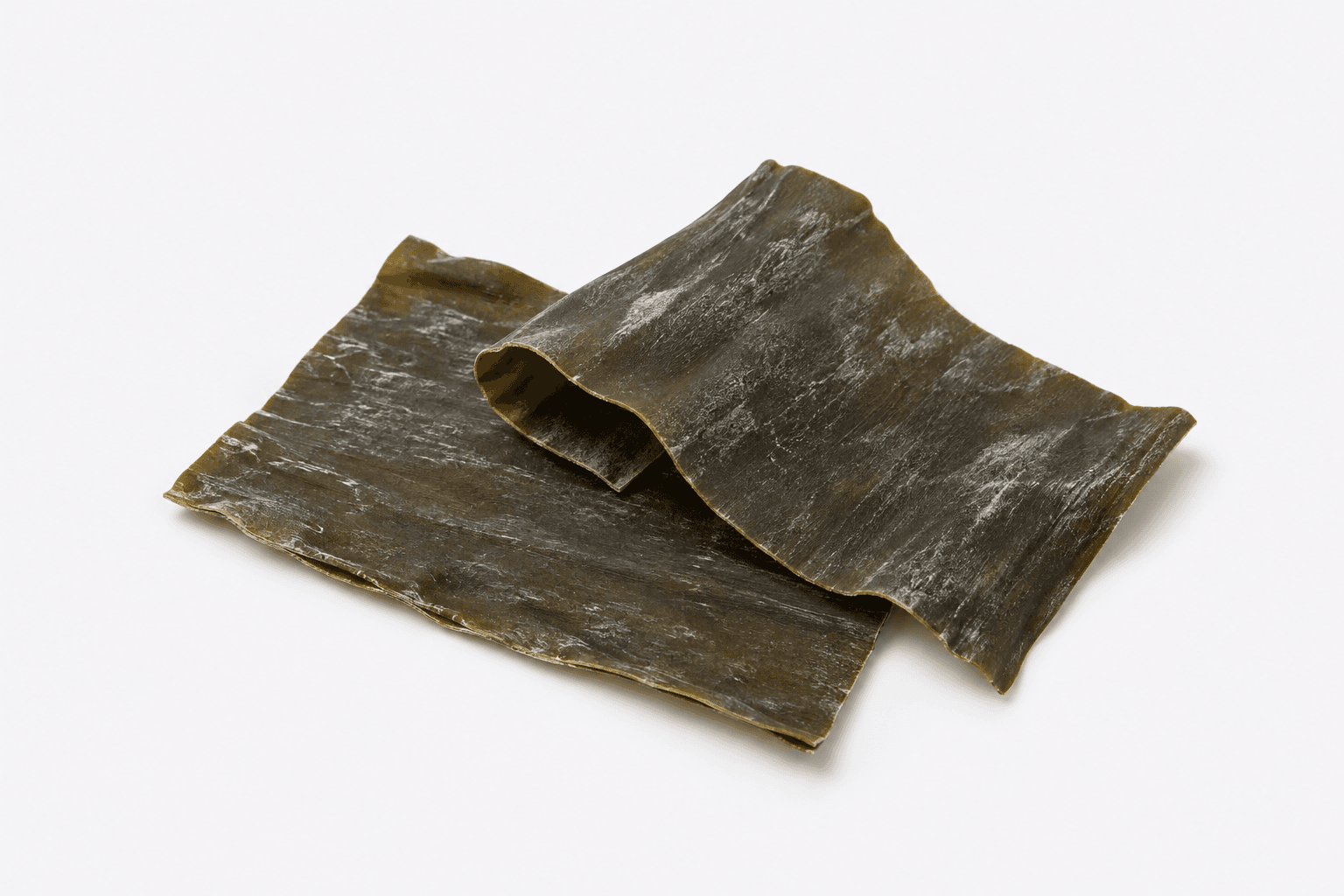
Seafood
Kelp
Koreans take three times more iodine from kelp broth than from kelp itself: 348 µg a day against 116 µg. Fishing the kelp back out does not take the iodine with it.
The composition is similar, but kelp carries roughly seven times the iodine. Twenty grams of kelp passes the upper limit — this is not a table for picking which to eat more of.
Seafood
Koreans take three times more iodine from kelp broth than from kelp itself: 348 µg a day against 116 µg. Fishing the kelp back out does not take the iodine with it.
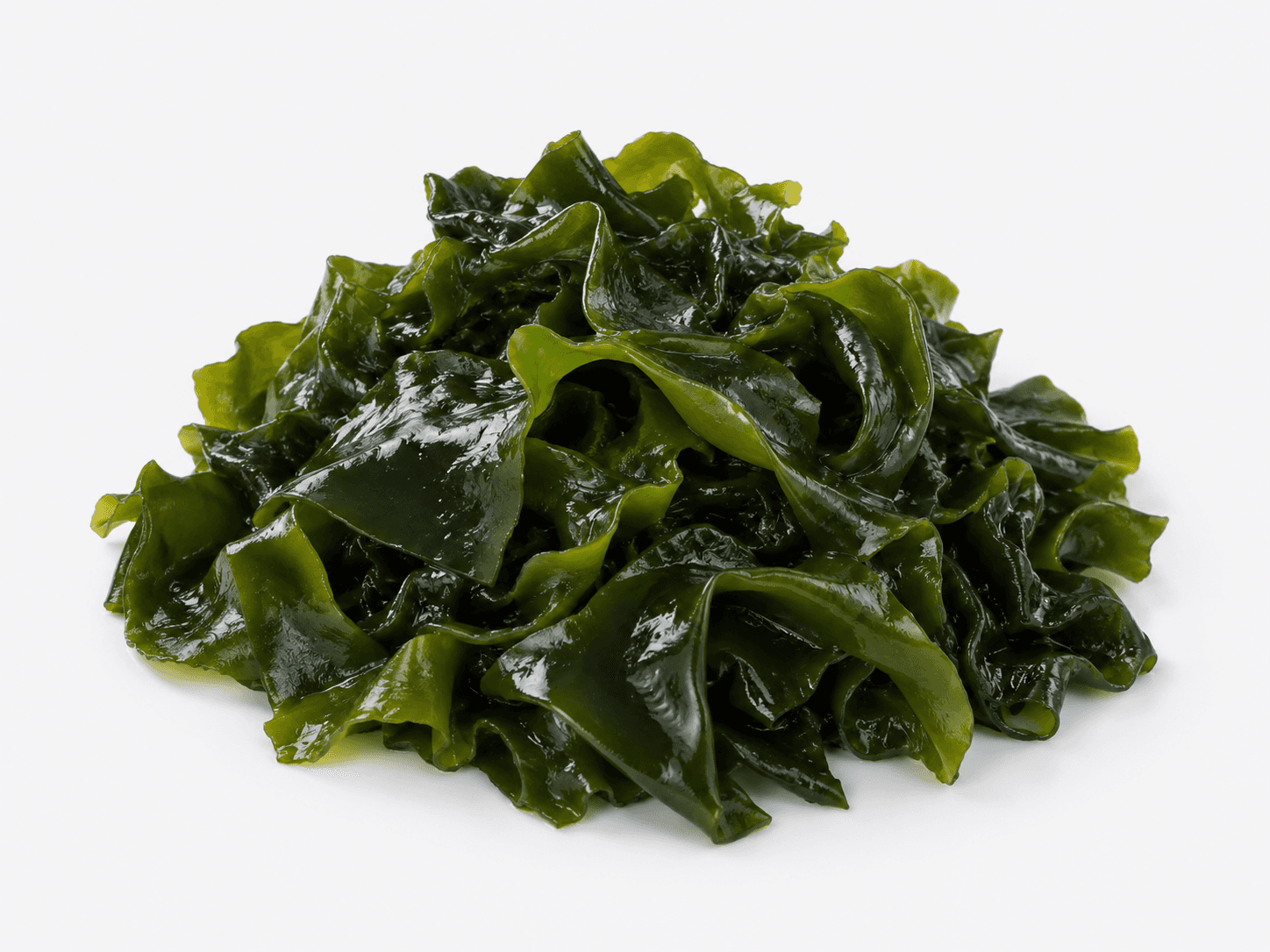
Seafood
Its iodine and calcium made it a postpartum food. That same iodine is why thyroid conditions call for caution.
Kelp — Leads on
Sea mustard (wakame) — Leads on
Per 100 g edible portion. Only rows where both have a figure are shown, and no winner is marked for items like calories or sugars where more is not better.
Basis for these figures
| Nutrition | Kelp | Sea mustard (wakame) |
|---|---|---|
| Calories | 43 kcal | 45 kcal |
| Protein | 1.68 g | 3.0 g |
| Carbohydrates | 9.57 g | 9.1 g |
| Fiber | 1.3 g | 0.5 g |
| Folate | 180 µg | 196 µg |
| Calcium | 168 mg | 150 mg |
| Magnesium | 121 mg | 107 mg |
| Iodine | ~11,000 µg | ~1,600 µg |
Energy, calcium, magnesium and folate are all close. One row separates these two, and it differs by an order of magnitude.
Iodine: about 11,000 µg in kelp against about 1,600 µg in wakame.
The adult upper limit for iodine is 1,100 µg a day. Twenty grams of fresh kelp is about 2,200 µg — twice the limit — while 30 g of fresh wakame is about 480 µg, or 44% of it. Two seaweeds, and one clears the ceiling in a single serving while the other does not.
First, where the number comes from. Kelp's iodine is not in the USDA data, so this site applies the ratio measured by Korea's food and drug authority — kelp at roughly seven times wakame — to its own wakame figure. It is an estimate. Iodine in seaweed varies several-fold with origin, season and drying, so treat this number as an order of magnitude and nothing finer.
The conclusion does not change either way. In every source, kelp sits at the top of the highest-iodine foods.
Iodine causes thyroid problems both when short and when excessive. Deficiency brings goitre and developmental harm; excess can produce either an overactive or an underactive thyroid. Autoimmune thyroid disease such as Hashimoto's makes a person more sensitive to excess. If you have thyroid disease or are pregnant, talk to your clinician before making kelp a habit.
In practice it works out like this. Kelp is mostly used to make stock and then lifted out, so actual intake is far below the table. Wakame is eaten as it is, in soup or dressed. Keeping wakame as the one you eat often and kelp as a stock ingredient matches what these numbers say.
Put both into this site's intake calculator and you can see the upper-limit warning fire.