Vegetables
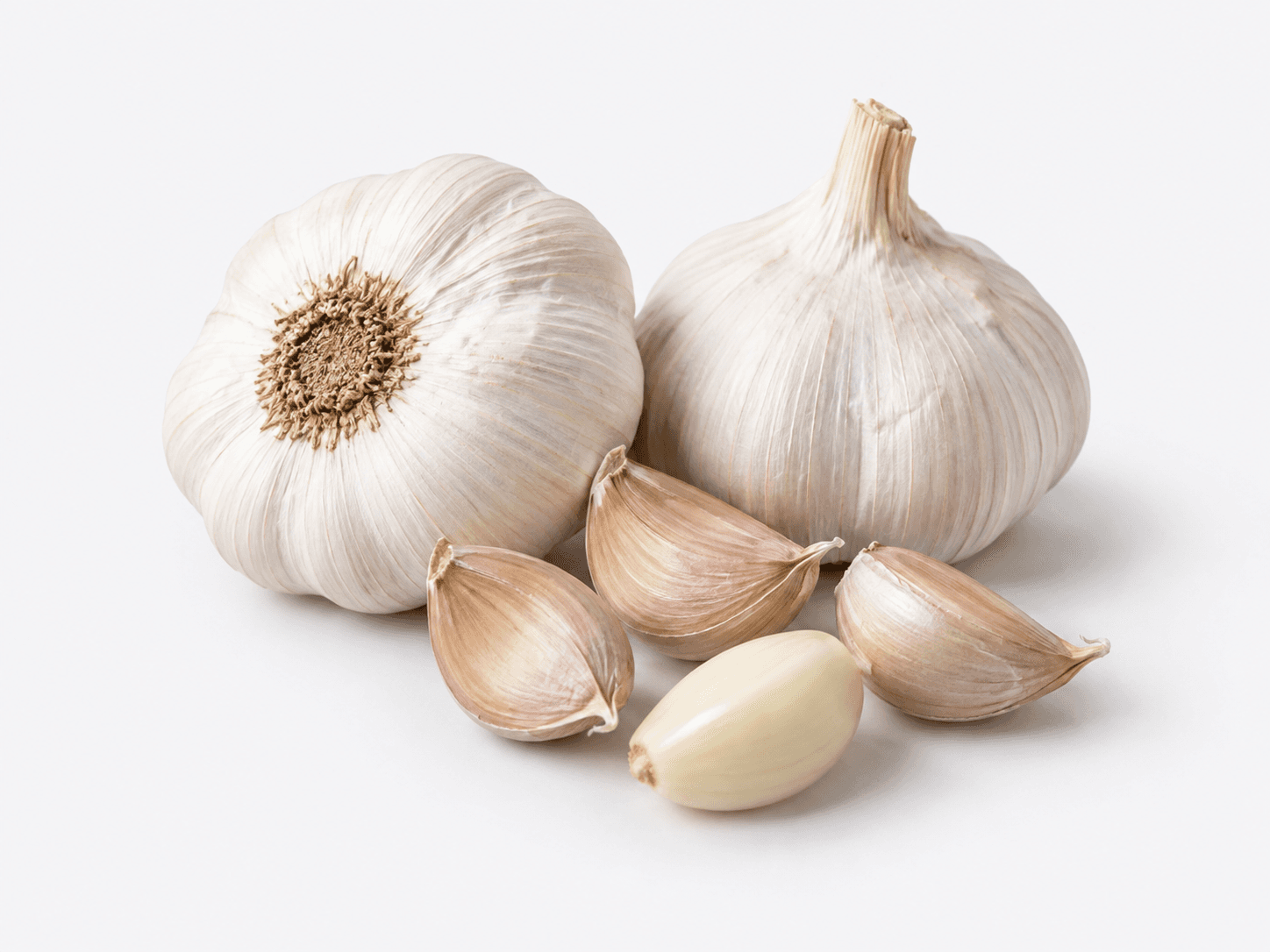
Garlic
The evidence for garlic points to a modest drop in blood pressure and cholesterol. The trick is to crush it and wait ten minutes before it hits the heat.
Both are allium vegetables whose active compounds only form once cut. Garlic gives allicin, onion gives quercetin, and they act along different lines.
Vegetables
The evidence for garlic points to a modest drop in blood pressure and cholesterol. The trick is to crush it and wait ten minutes before it hits the heat.
Vegetables
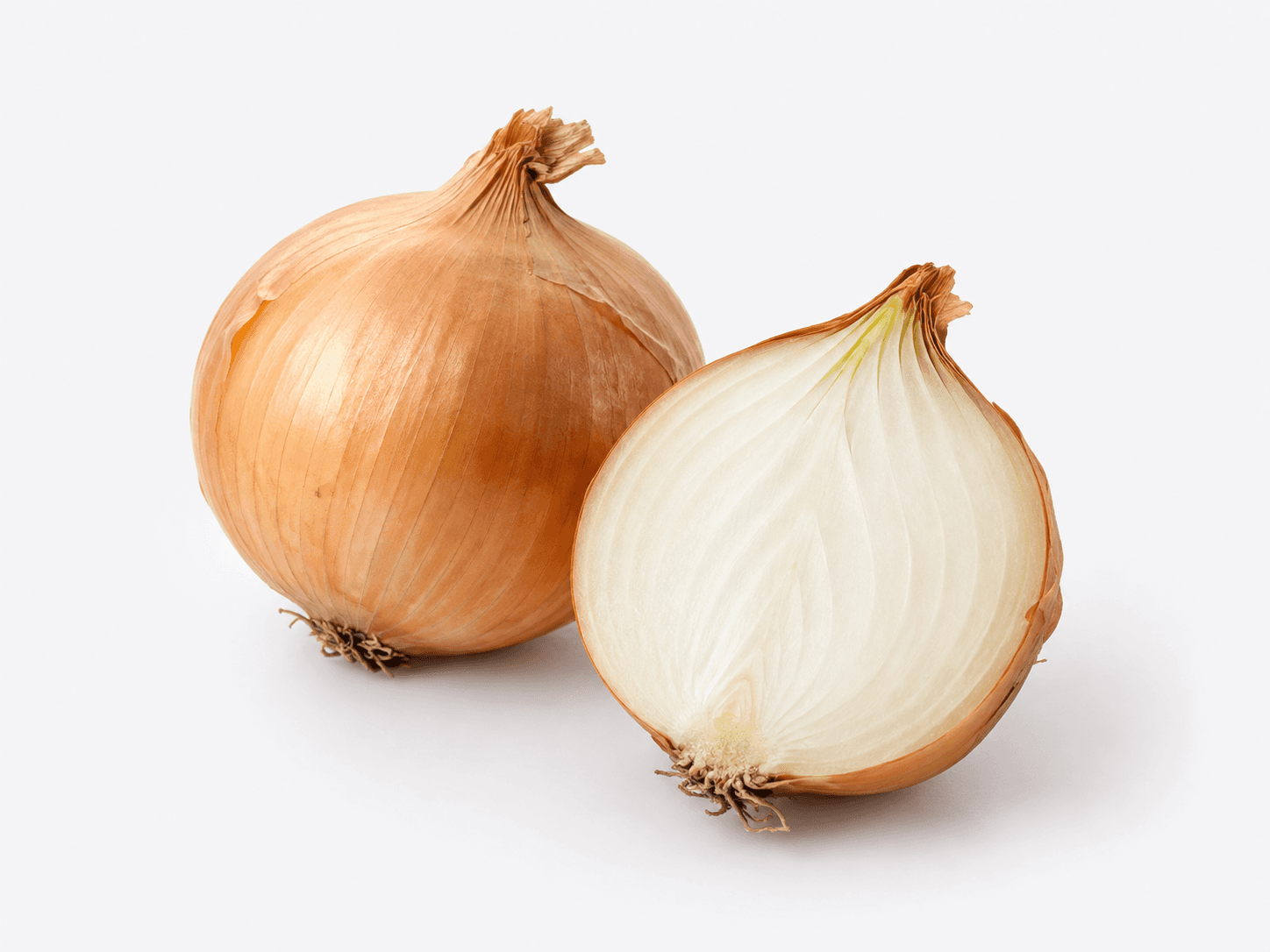
Onion's antioxidant quercetin concentrates in the outer layers. Peeling two extra layers out of habit throws much of it away.
Garlic — Leads on
Onion — Leads on
About equal
Per 100 g edible portion. Only rows where both have a figure are shown, and no winner is marked for items like calories or sugars where more is not better.
| Nutrition | Garlic | Onion |
|---|---|---|
| Calories | 149 kcal | 40 kcal |
| Protein | 6.4 g | 1.1 g |
| Carbohydrates | 33.1 g | 9.3 g |
| Fiber | 2.1 g | 1.7 g |
| Vitamin C | 31 mg | 7.4 mg |
Start with what they share: in neither does the key compound exist before you cut or crush it. Breaking the cells triggers an enzyme reaction, which is why the same trick — chop, wait ten minutes, then heat — works for both.
The difference is what forms. Garlic's allicin is a sulphur compound with an accumulated body of research on antimicrobial action, blood pressure and cholesterol. Onion's quercetin is a flavonoid studied for antioxidant activity and blood pressure. Both show modest blood pressure reductions, but garlic has more studies behind it and slightly larger effects.
In practice the quantities differ. One or two cloves of garlic a day is plenty, while onion goes into cooking generously. In absolute terms you may take in more polyphenols from onion. Worth knowing: onion's quercetin concentrates in the outer two layers, so peeling extra out of habit throws it away.