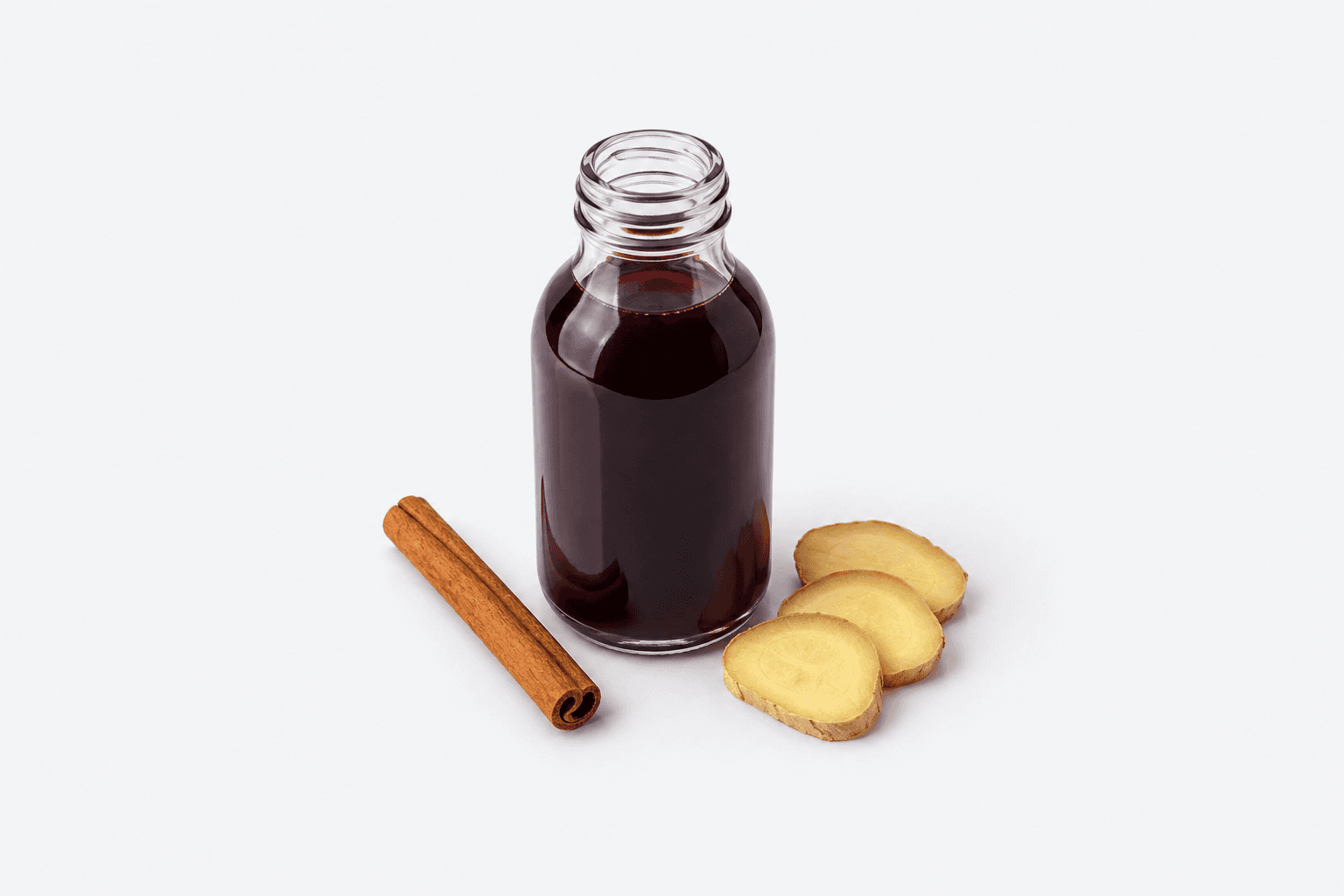
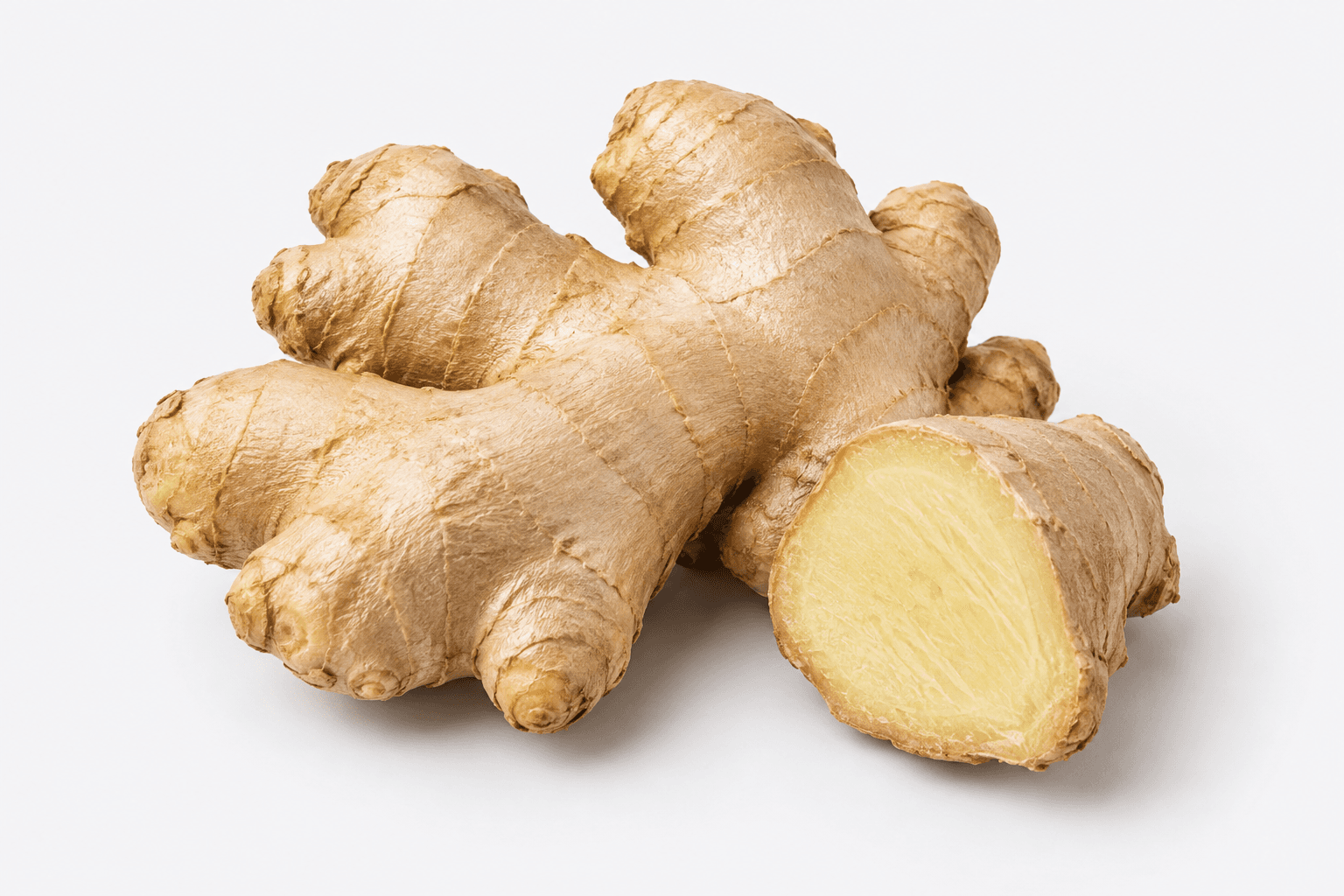
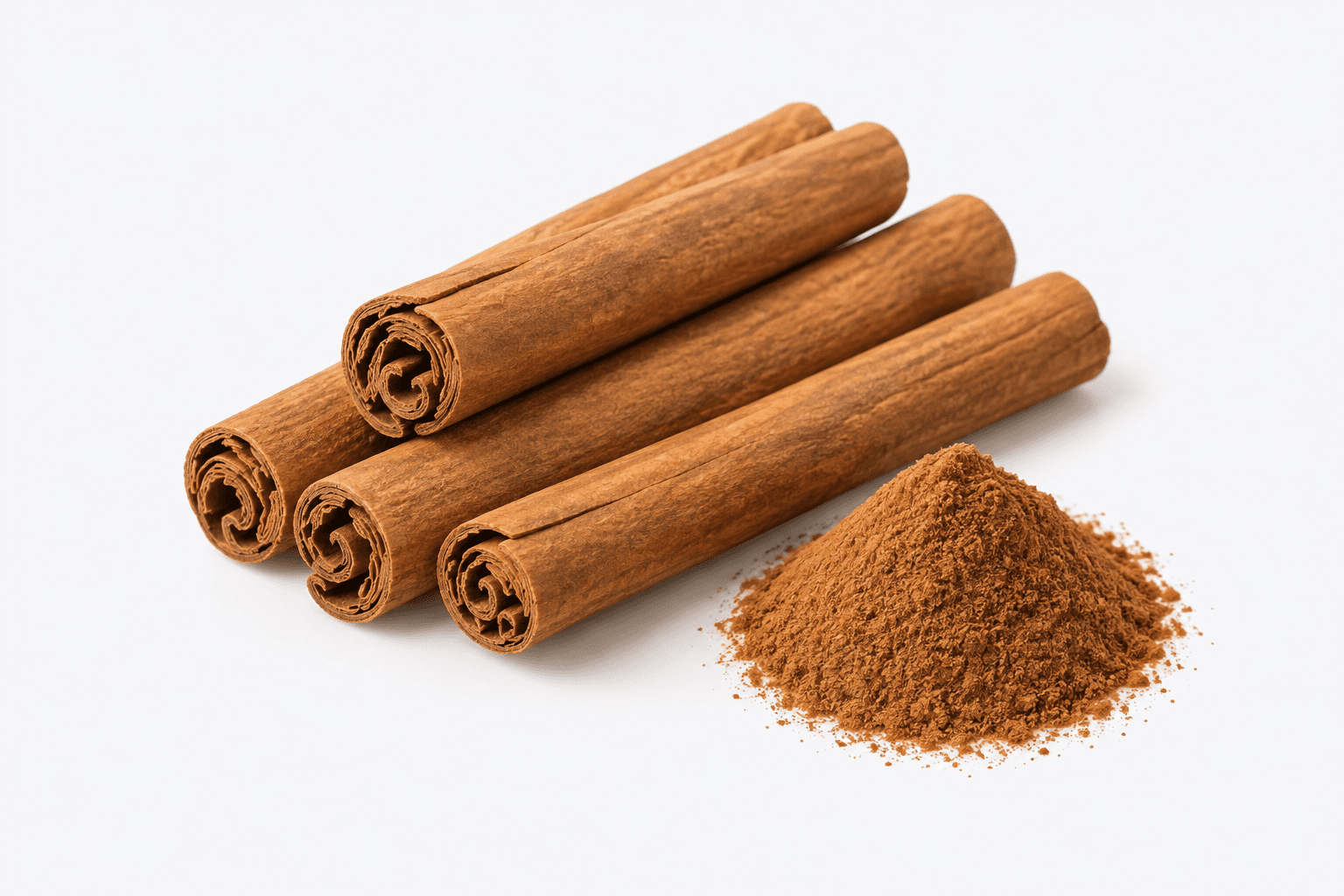
The most important thing about this syrup is not flavour but safety.
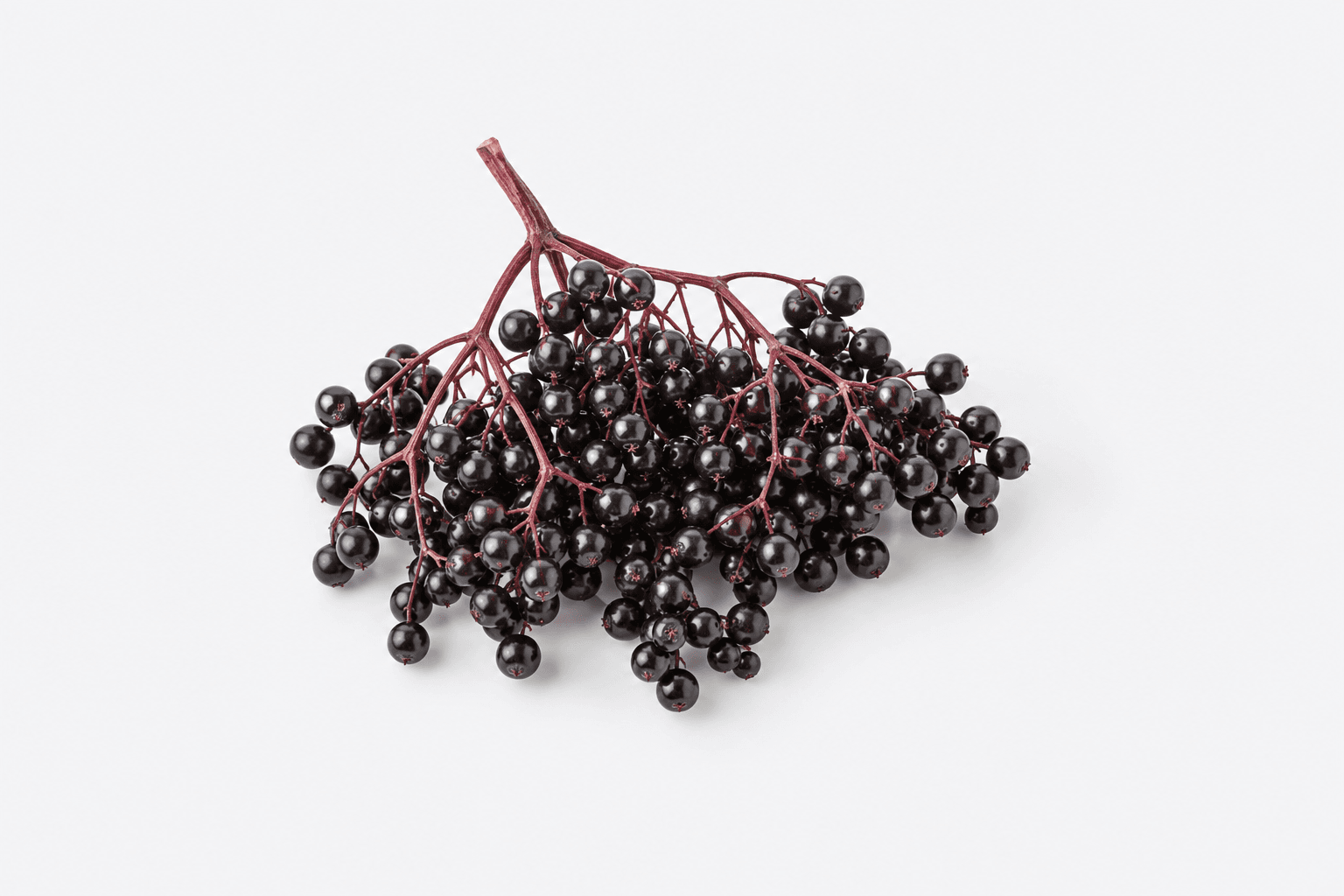
Raw elderberries must not be eaten, and leaves, stems and unripe berries even less so. The US CDC's weekly report (MMWR) carries a 1984 case of poisoning from elderberry juice. The 45-minute simmer is partly for concentration, but first of all for this.
Do not skip picking out the stems. Dried product carries them too.
Adding the honey after cooling has two reasons. First, honey's aroma and enzymes are heat-sensitive. Second, stirred into hot liquid the aroma simply leaves. Poured into boiling syrup, honey is not far from sugar water.
Not squeezing the solids is about clarity: fine particles escape, the syrup clouds, and sediment settles out in storage.
And an honest note on the evidence.
Elderberry's clinical evidence is not about preventing colds. A 2021 GRADE-assessed systematic review of five randomised trials concluded that it may not reduce the risk of developing a cold. It may shorten duration and severity, but the authors themselves called the evidence "uncertain".
And those trials used standardised extracts, not a syrup simmered at home. Expecting the trial effect from this syrup goes past what the evidence supports.
Count the sugar too. 150 g of honey holds about 120 g of sugar. Divided into 16 servings that is about 7.5 g each — roughly two sugar cubes. Taken several times a day, you are adding that much sugar.
One tablespoon (about 15 ml) is the usual amount, taken neat or stirred into warm water. Do not stir it into boiling water — that undoes the reason for adding the honey late.
If you have an autoimmune condition, take immunosuppressants, or are pregnant or breastfeeding, speak to your doctor first.