Fruits
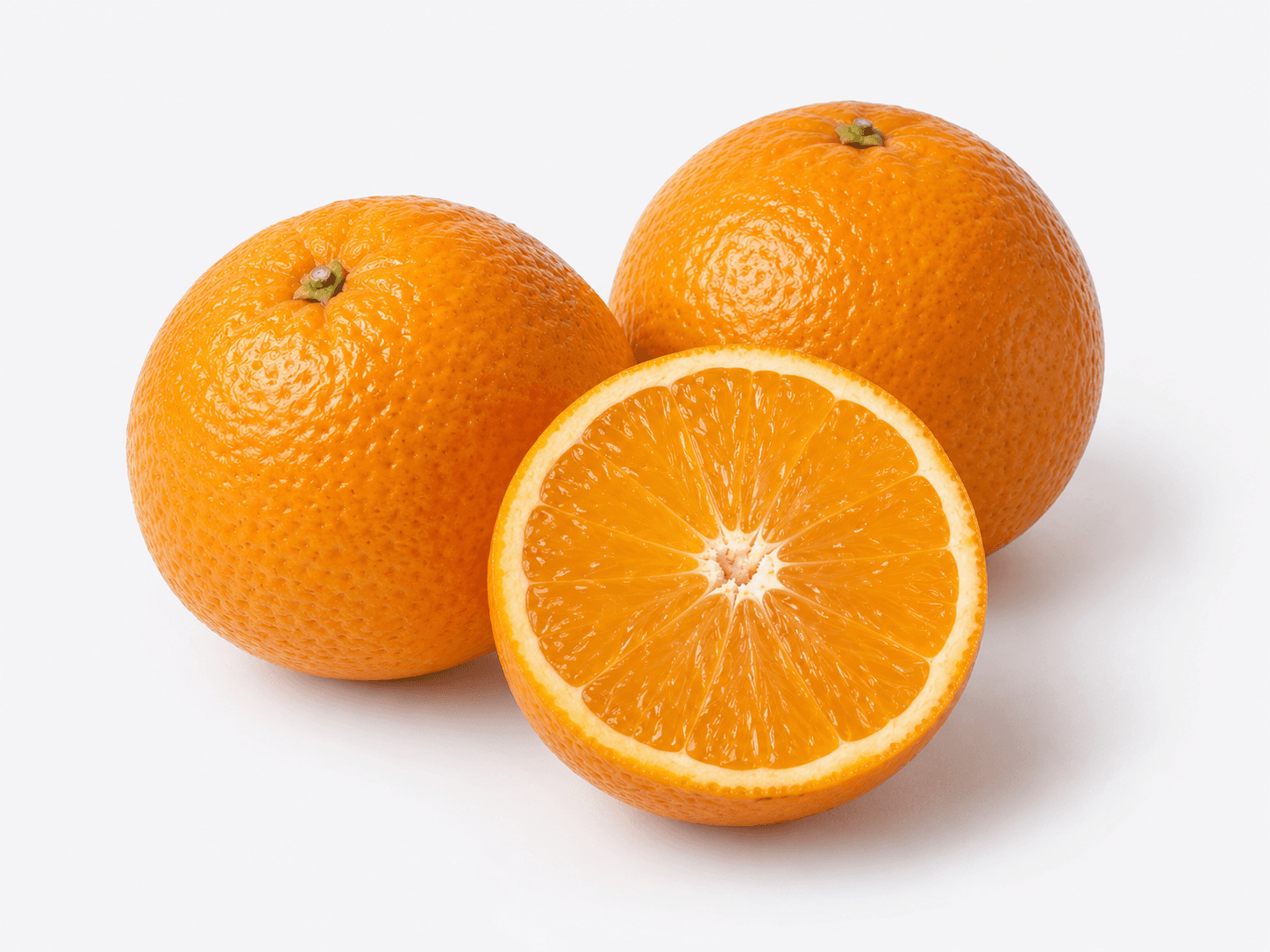
Orange
Everyone knows about the vitamin C. Less known is that the white pith people pick off carries the fibre and flavonoids.
Kiwi carries nearly twice the vitamin C of an orange, and more fibre too.
Fruits
Everyone knows about the vitamin C. Less known is that the white pith people pick off carries the fibre and flavonoids.
Fruits
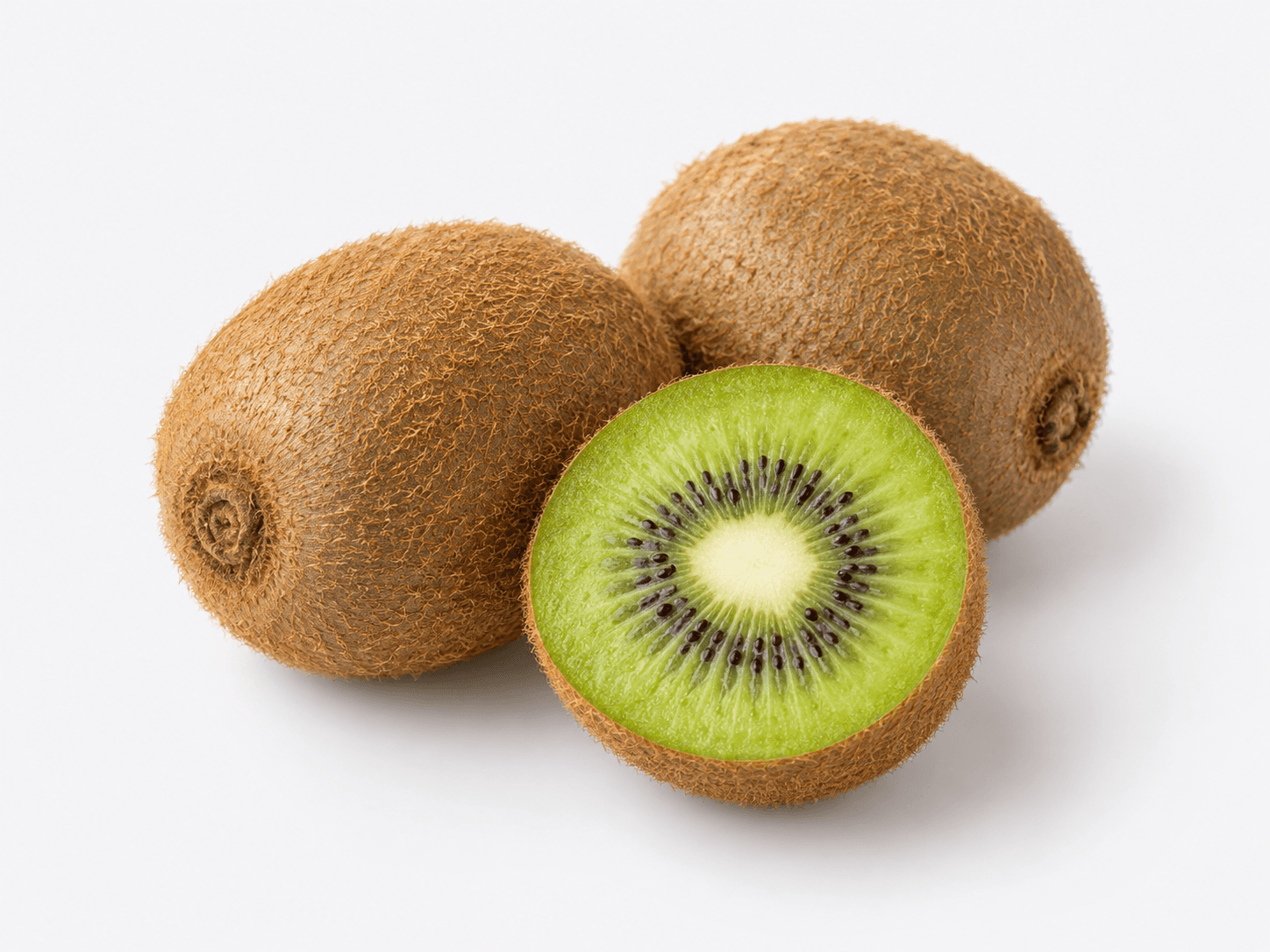
Kiwi is one of very few fruits with trial evidence for improving bowel movements at two a day. It also carries a protein-digesting enzyme.
Orange — Leads on
About equal
Kiwi — Leads on
Per 100 g edible portion. Only rows where both have a figure are shown, and no winner is marked for items like calories or sugars where more is not better.
| Nutrition | Orange | Kiwi |
|---|---|---|
| Calories | 47 kcal | 61 kcal |
| Protein | 0.9 g | 1.1 g |
| Carbohydrates | 11.8 g | 14.7 g |
| Fiber | 2.4 g | 3.0 g |
| Sugars | 9.4 g | 9.0 g |
| Vitamin C | 53 mg | 93 mg |
| Potassium | 181 mg | 312 mg |
Vitamin C makes people think of oranges, but the numbers favour kiwi: 93 mg per 100 g against 53 mg, close to double, with fibre at 3.0 g against 2.4 g. Kiwi is slightly higher in calories.
The real difference lies elsewhere. Kiwi is one of very few fruits with randomised trial evidence for chronic constipation, where two a day improved bowel movements. Oranges have no such body of work. On the other hand, orange citrate raises urinary citrate and is recommended in diets aimed at preventing kidney stones.
Both share a rule: the part people discard matters. Orange keeps hesperidin and pectin in the white pith; kiwi keeps fibre in the skin. Strip either away out of habit and what remains moves closer to plain sugar.
For vitamin C alone, kiwi. For stone prevention, orange.