Herbs & spices
Ginger
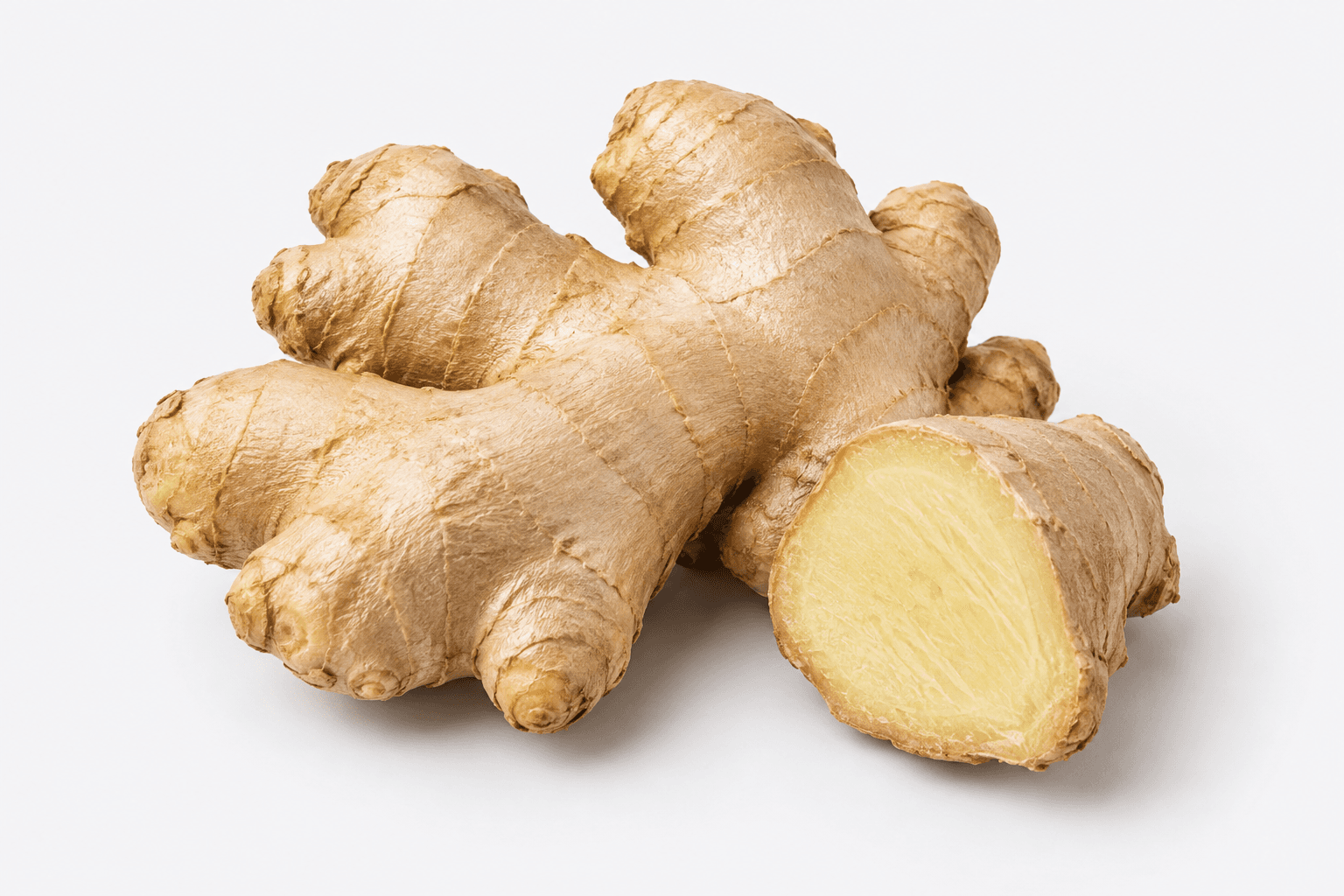
Gingerol, the pungent compound in ginger, has its strongest evidence for easing nausea and aiding digestion. One to three grams a day is enough.
Both get filed under anti-inflammatory, but the evidence sits in different places. Ginger's is nausea; turmeric's is joint pain.
Herbs & spices
Gingerol, the pungent compound in ginger, has its strongest evidence for easing nausea and aiding digestion. One to three grams a day is enough.
Herbs & spices
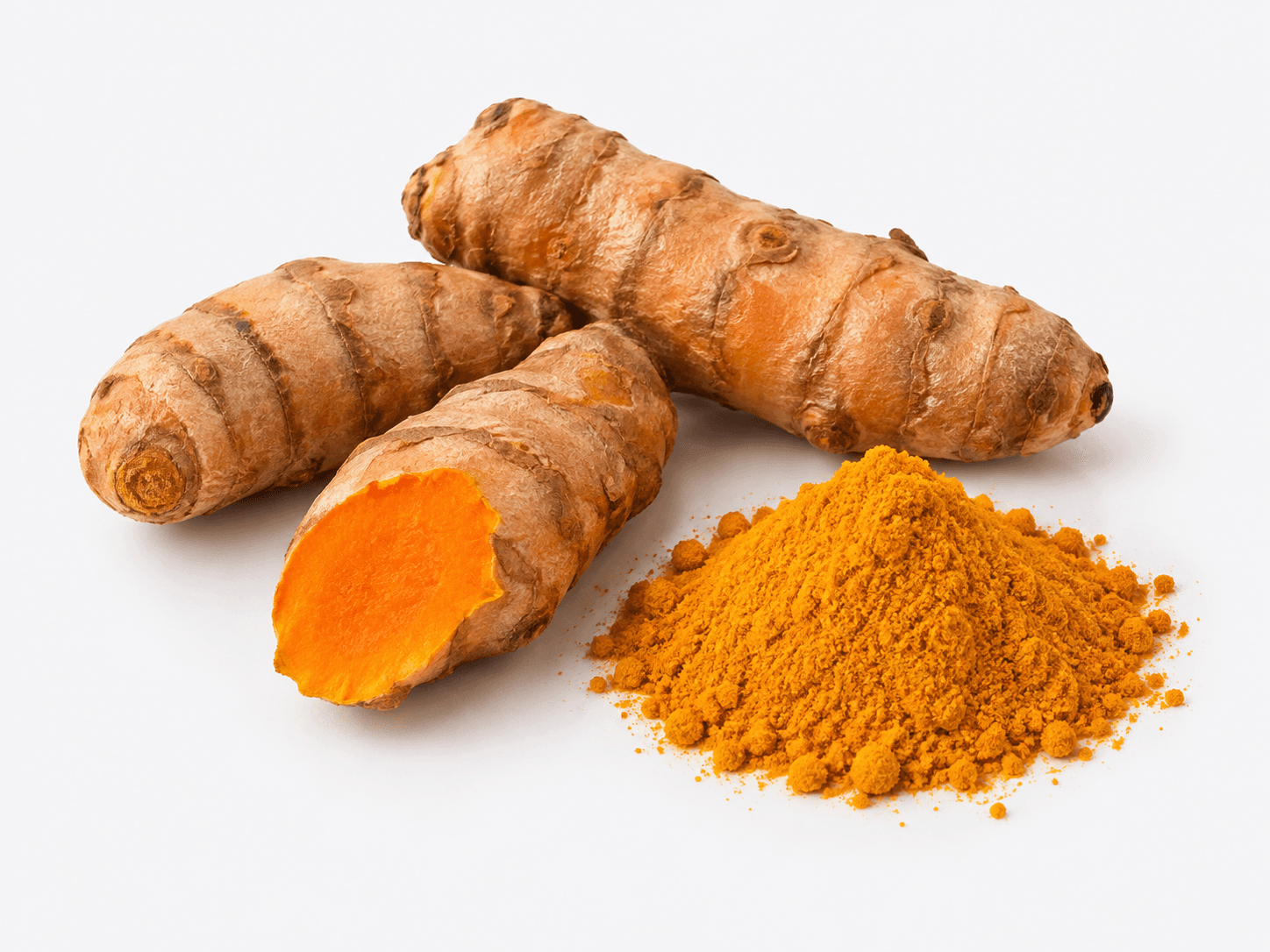
Turmeric's anti-inflammatory reputation rests on curcumin — which is barely absorbed on its own. That is why pepper and fat matter.
Ginger — Leads on
About equal
Turmeric — Leads on
Per 100 g edible portion. Only rows where both have a figure are shown, and no winner is marked for items like calories or sugars where more is not better.
| Nutrition | Ginger | Turmeric |
|---|---|---|
| Calories | 80 kcal | 312 kcal |
| Protein | 1.8 g | 9.7 g |
| Fat | 0.8 g | 3.3 g |
| Carbohydrates | 17.8 g | 67.1 g |
| Fiber | 2.0 g | 22.7 g |
| Potassium | 415 mg | 2,080 mg |
Ginger's firmest evidence is for nausea. Morning sickness, motion sickness, post-operative nausea and chemotherapy-induced nausea have repeatedly favoured it over placebo, at around a gram a day. Turmeric has no equally consistent area.
Turmeric's strength is joints. In knee osteoarthritis trials, curcumin extract improved pain and function, in some cases comparably to ibuprofen. A large caveat attaches: those trials used 500–1,500 mg of curcumin a day, and turmeric powder is only 2–5% curcumin. A bowl of curry does not get close.
Absorption separates them too. Ginger's gingerol absorbs without special measures, while curcumin barely dissolves in water and is cleared quickly by the liver, which is why it needs piperine from black pepper and some fat.
In practice the purposes differ. For an unsettled stomach, ginger tea acts directly. If joints are the goal, a standardised extract deserves more consideration than the culinary spice.