Fruits
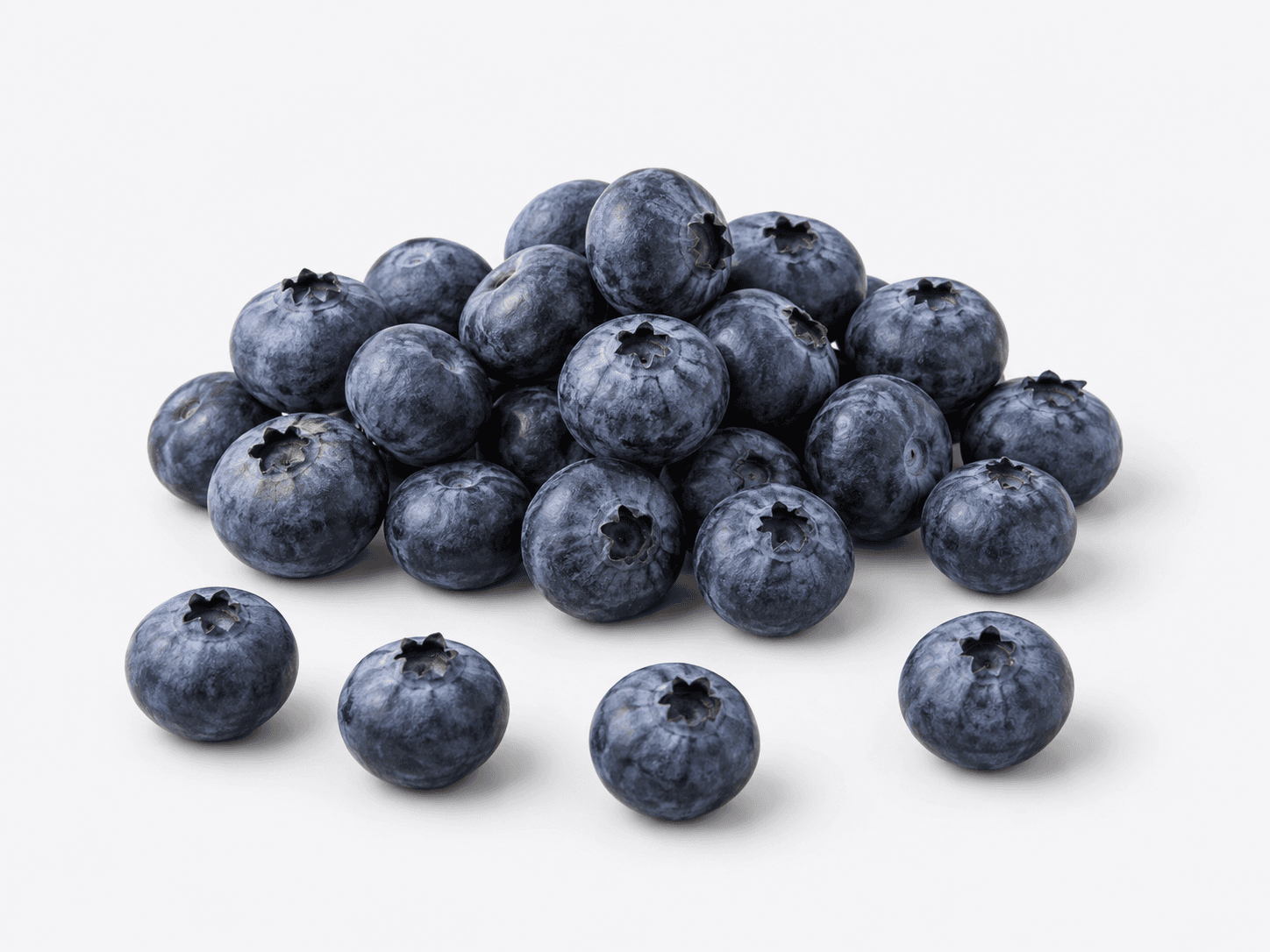
Blueberry
Anthocyanins — the pigment behind the blue — are the compound that keeps showing up in vascular and cognitive research. A handful a day is the studied dose.
Aronia wins on paper by a wide margin, but its astringency decides how much you actually eat.
Fruits
Anthocyanins — the pigment behind the blue — are the compound that keeps showing up in vascular and cognitive research. A handful a day is the studied dose.
Fruits
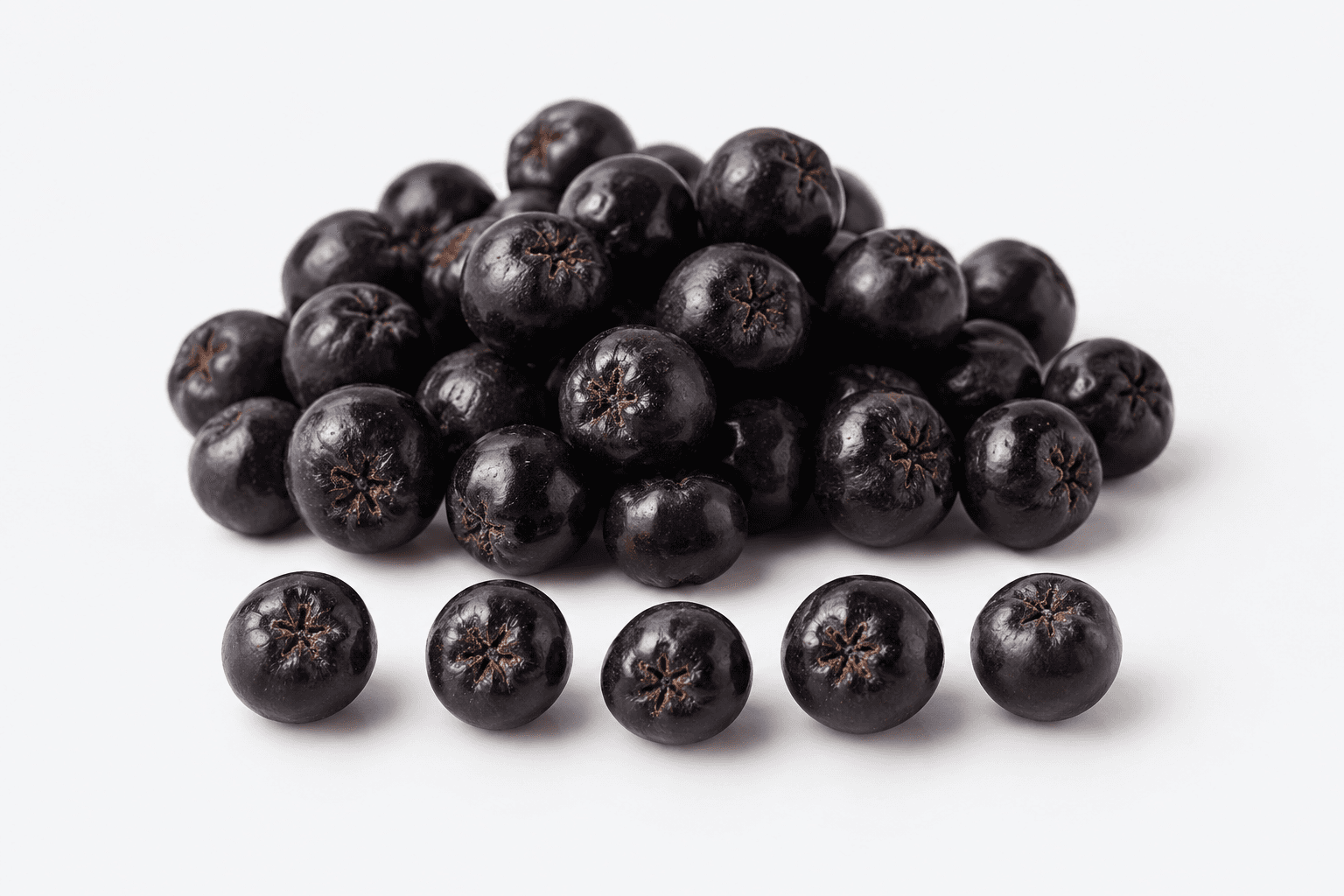
Aronia sits at the very top of fruits for anthocyanin content. The problem is that it is too astringent to eat plain.
Blueberry — Leads on
About equal
Aronia (chokeberry) — Leads on
Per 100 g edible portion. Only rows where both have a figure are shown, and no winner is marked for items like calories or sugars where more is not better.
| Nutrition | Blueberry | Aronia (chokeberry) |
|---|---|---|
| Calories | 57 kcal | 47 kcal |
| Protein | 0.7 g | 0.7 g |
| Carbohydrates | 14.5 g | 9.6 g |
| Fiber | 2.4 g | 5.3 g |
| Vitamin C | 9.7 mg | 21 mg |
On numbers alone it is not a contest. Aronia holds 1,480 mg of anthocyanins per 100 g against blueberry's roughly 300 mg — more than four times — and more than double the fibre, 5.3 g against 2.4 g.
Those numbers do not translate into intake, though. Aronia's English name, chokeberry, refers to how astringent it is. The tannins behind that astringency are antioxidants, but they also interfere with iron absorption. Eating a handful plain is hard work, so aronia usually arrives as juice or powder — often with sugar added along the way.
Blueberry is the opposite. Lower density, but you can simply eat it, and the human research behind it is far deeper. Randomised trials on cognition and vascular function have been repeated, and the amounts they used — about a handful a day — are realistic.
Blueberry is the one you will actually keep eating; aronia is the one that wins on concentration. If you go with aronia, freeze and thaw it to cut the astringency, and eat it with yoghurt so the dairy protein binds some of the tannins.