Fruits
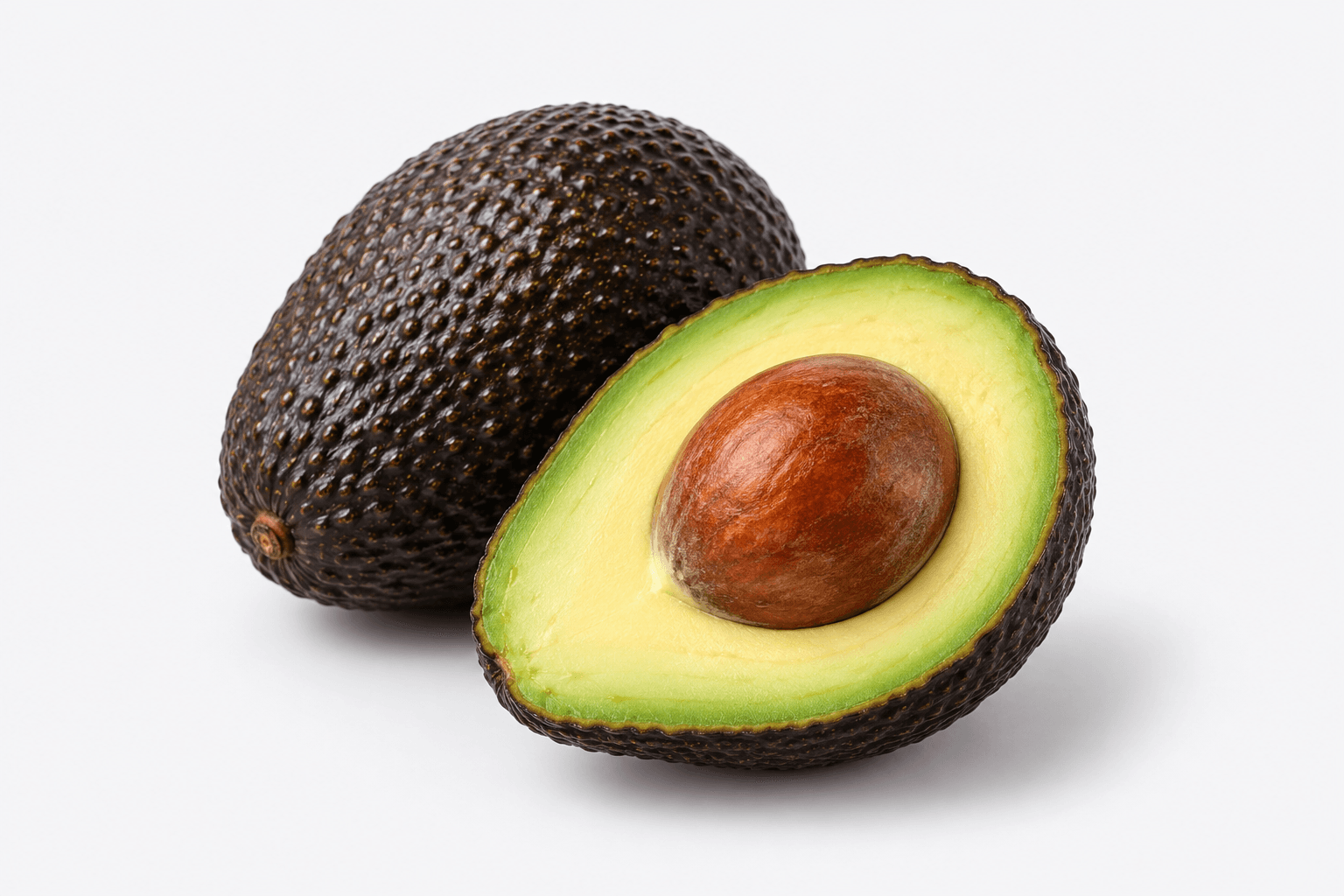
Avocado
Monounsaturated fat and 6.7 g of fibre are the headline, but the most interesting part is what avocado does to the vegetables you eat alongside it.
Potassium makes people think of bananas, but avocado leads. It also carries nearly twice the calories.
Fruits
Monounsaturated fat and 6.7 g of fibre are the headline, but the most interesting part is what avocado does to the vegetables you eat alongside it.
Fruits
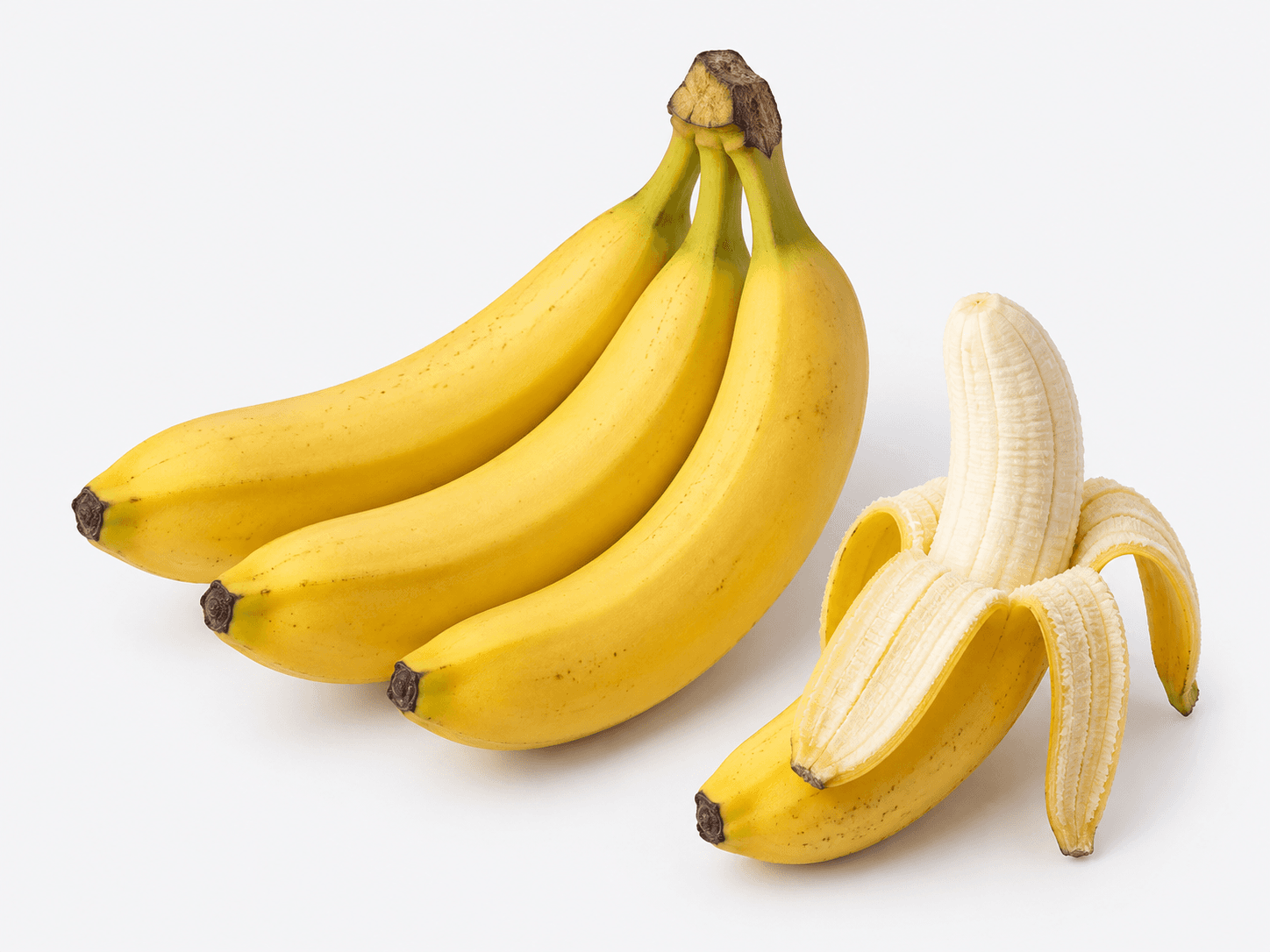
A green banana is mostly resistant starch; a ripe one is fast sugar. Choose the stage that matches what you want from it.
Avocado — Leads on
Banana — Leads on
About equal
Per 100 g edible portion. Only rows where both have a figure are shown, and no winner is marked for items like calories or sugars where more is not better.
| Nutrition | Avocado | Banana |
|---|---|---|
| Calories | 160 kcal | 89 kcal |
| Protein | 2.0 g | 1.1 g |
| Carbohydrates | 8.5 g | 22.8 g |
| Fiber | 6.7 g | 2.6 g |
| Potassium | 485 mg | 358 mg |
Banana is the byword for potassium, yet avocado holds more: 485 mg per 100 g against 358 mg. Calories run 160 against 89, though — close to double — so the energy cost of the same potassium ends up similar.
The decisive difference is the fat. Avocado carries 14.7 g per 100 g, mostly oleic acid, the same monounsaturated fat that dominates olive oil. That fat means avocado does not only deliver its own nutrients: it multiplies the absorption of carotenoids from the vegetables eaten alongside it, an effect measured in trials that added avocado to a salad.
Banana's strengths are convenience and timing. It needs only peeling, and a ripe one digests quickly, which suits it to fuelling exercise. An underripe banana carries resistant starch that feeds gut bacteria instead.
Fibre strongly favours avocado, 6.7 g against 2.6 g. For satiety, avocado. For quick energy, banana.