Fruits
Apple
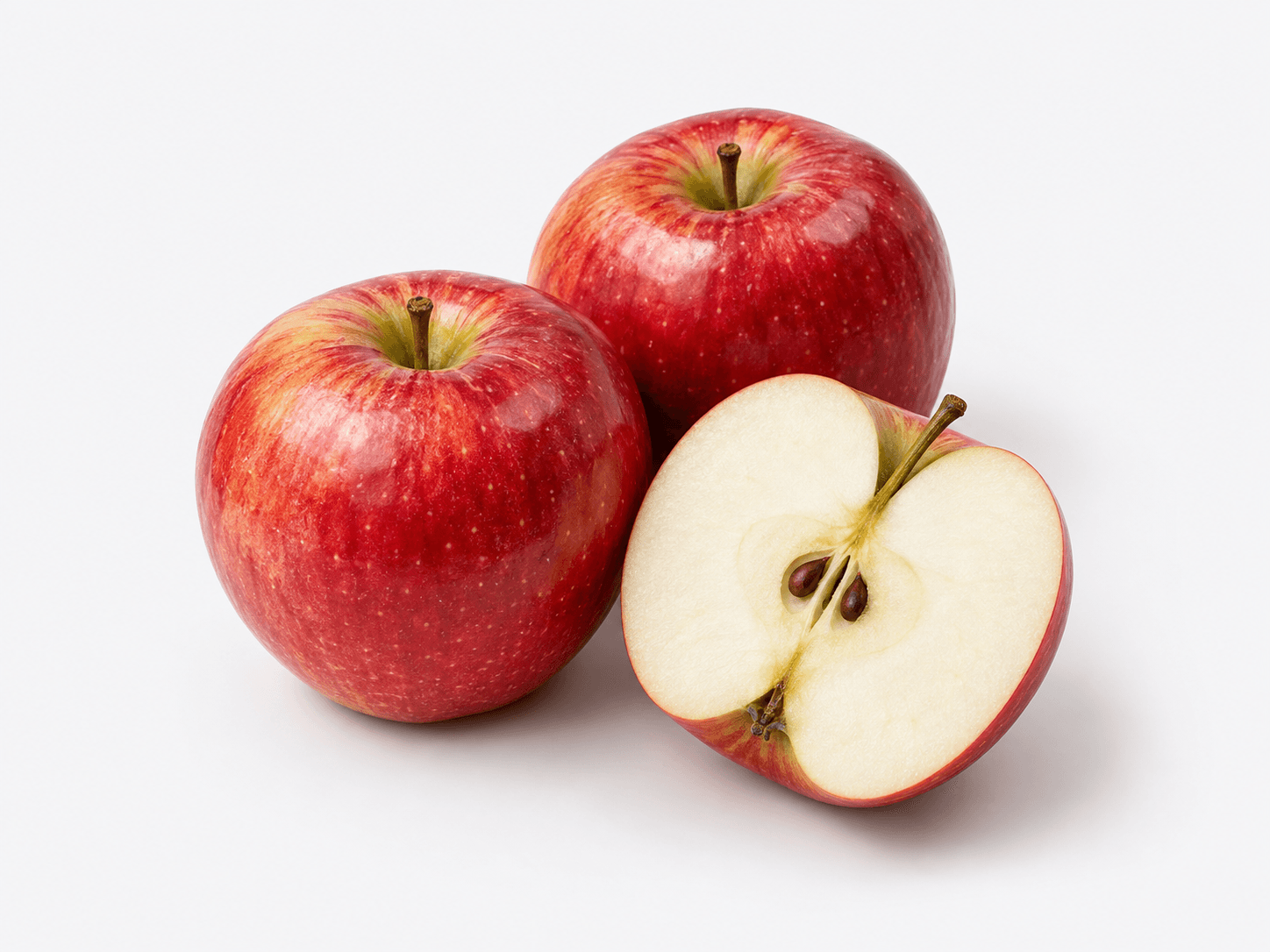
Most of an apple's fibre and polyphenols live in the skin. Peel it and what remains is mostly sugar and water.
Banana leads on potassium and energy; apple on water content and satiety. Whether it is around exercise or between meals decides the answer.
Fruits
Most of an apple's fibre and polyphenols live in the skin. Peel it and what remains is mostly sugar and water.
Fruits
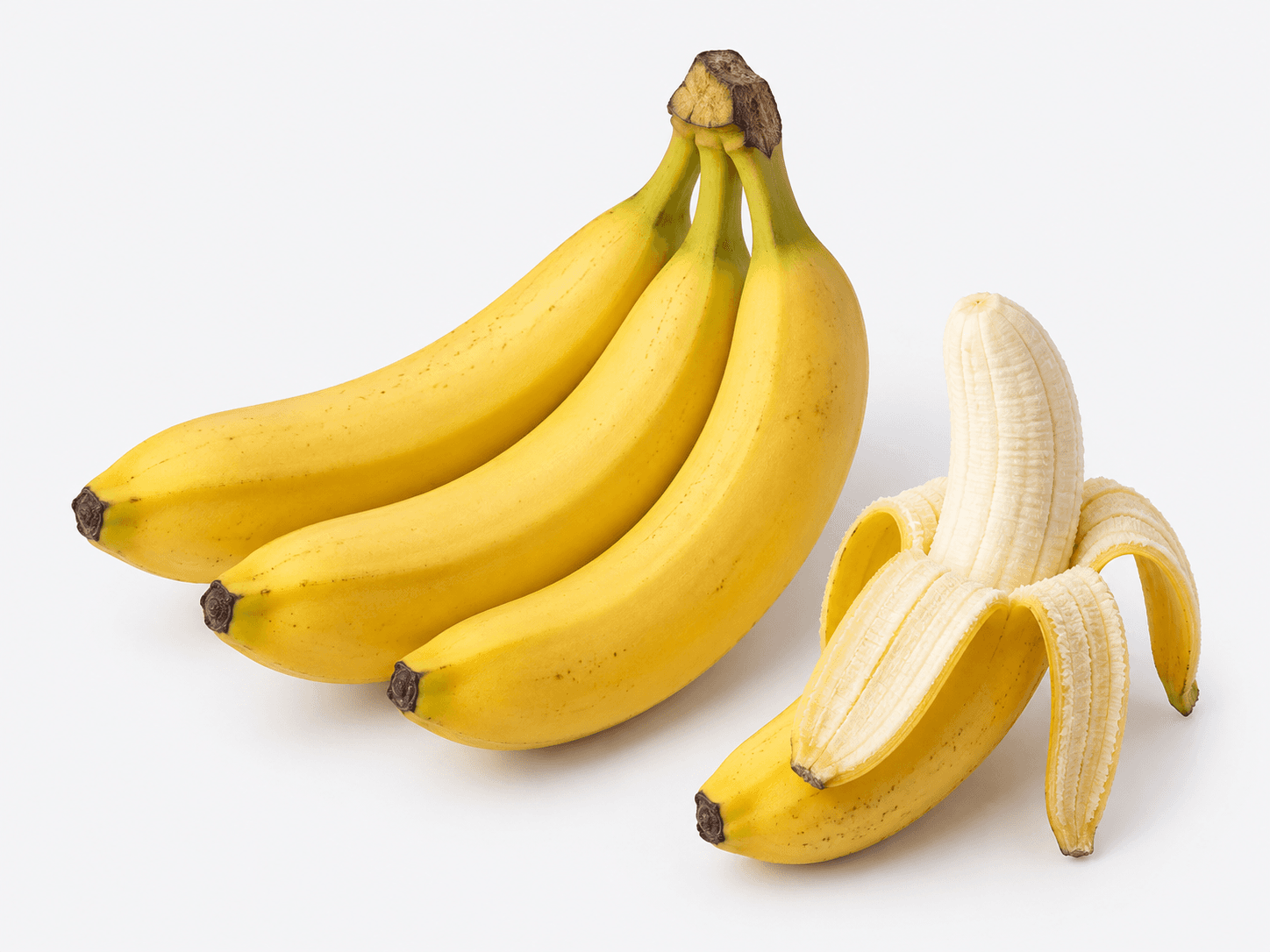
A green banana is mostly resistant starch; a ripe one is fast sugar. Choose the stage that matches what you want from it.
Apple — Leads on
About equal
Banana — Leads on
Per 100 g edible portion. Only rows where both have a figure are shown, and no winner is marked for items like calories or sugars where more is not better.
| Nutrition | Apple | Banana |
|---|---|---|
| Calories | 52 kcal | 89 kcal |
| Protein | 0.3 g | 1.1 g |
| Carbohydrates | 13.8 g | 22.8 g |
| Fiber | 2.4 g | 2.6 g |
| Sugars | 10.4 g | 12.2 g |
| Vitamin C | 4.6 mg | 8.7 mg |
| Potassium | 107 mg | 358 mg |
Banana carries 89 kcal against apple's 52. In exchange it holds 358 mg of potassium to apple's 107 — more than triple — and more vitamin B6. Around exercise, where you want quick energy and electrolytes, banana is clearly the better pick.
As a between-meals snack, apple has the edge. It is mostly water and takes longer to chew, so it satisfies more per calorie. Eaten with the skin it adds fibre and polyphenols — though peeling it throws away much of that advantage.
On blood sugar both are gentle when eaten whole, but a ripe banana has converted its starch to sugar and rises faster. If glucose is a concern, pick an underripe banana or go with the apple.